
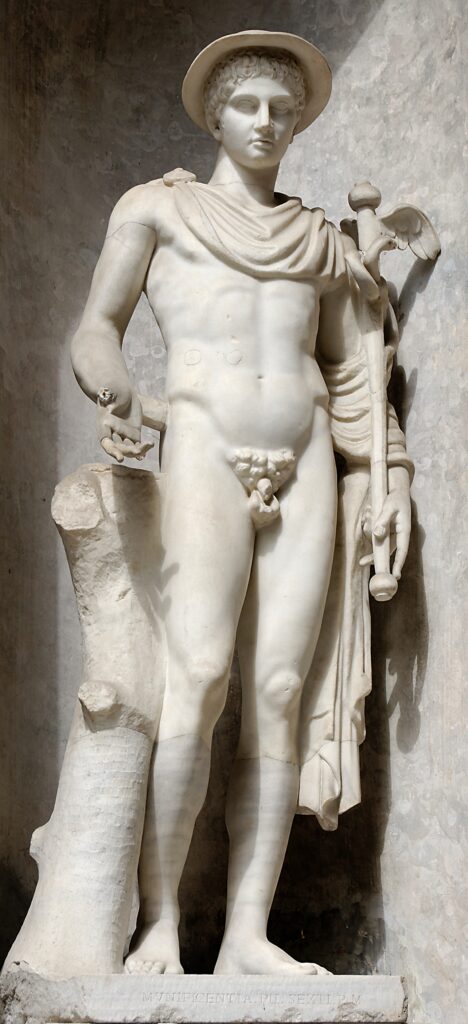
The Messenger of the Gods: Uncovering the Mysteries of Hermes
Hermes, the Greek messenger god, is often depicted carrying a caduceus, sandals, and a cap. But his story goes far beyond these symbols. As the son of Zeus and Maia, a Titan goddess, Hermes’ life was marked by adventure, cunning, and music. In this article, we’ll delve into the world of Hermes, exploring his characteristics, myths, and significance in Greek mythology.
The Birth of Hermes
Hermes’ birth story is shrouded in mystery, but it’s said that he was born inside a cave on Mount Cillene in Arcadia. His mother, Maia, was hiding from the goddess Hera (also known as Era) when she became pregnant with Zeus’ child. As an infant, Hermes proved to be incredibly talented and quick-witted. He even killed a giant turtle to create a lyre, which would become one of his most prized possessions.
The Protege of Thieves
Hermes was also known for being the protector of thieves and robbers. This might seem counterintuitive, but Hermes’ cunning nature made him an ideal ally for those who lived outside the law. He’d often help them escape detection and punishment, earning him a reputation as a trickster god.
The Messenger of the Gods
As his name suggests, Hermes was also the messenger of the gods. With his incredible speed and agility, he could deliver messages across the world in an instant. This made him an invaluable asset to the gods, who relied on him for their most important communications.
The Protector of Travelers
Hermes’ role as a protector of travelers is deeply connected to his duties as a messenger. In ancient Greece, traveling was a perilous and time-consuming endeavor, and Hermes’ assistance was crucial for those seeking adventure or commerce. He’d often guide travelers through treacherous landscapes and protect them from harm.
The God of Music
Hermes was also revered for his musical talents. As an infant, he used his lyre to charm Apollo, the god of music, into forgiving him for stealing a flock of sheep. This incident cemented Hermes’ reputation as a musician and composer, with many myths attributing his creation of the flutes and harps.
Hermes: Characteristics
So, what makes Hermes such an enigmatic figure? Here are some key characteristics that define his role in Greek mythology:
- Protector of thieves and robbers
- Messenger of the gods
- Guide for travelers
- God of music
- Cunning and trickster god
Hermes: Myths and Legends
Hermes appears in many myths and legends, often playing a crucial role in shaping the fates of heroes and mortals alike. Some notable examples include:
- The myth of Perseus, where Hermes aids the hero on his quest to slay Medusa
- The tale of Io, where Hermes helps the priestess escape the wrath of Zeus
- The legend of Demeter, where Hermes intervenes on behalf of the goddess to ensure the return of her daughter, Persephone
The Roman Equivalent: Mercury
In Roman mythology, Hermes is equivalent to Mercury, a god of commerce and eloquence. While not identical to Hermes, Mercury shares many similarities with the Greek messenger god.
Hermes in Homer’s Iliade and Odyssey
Hermes plays a significant role in two of ancient Greece’s most famous epics: the Iliade and the Odyssey. In the Iliade, he intervenes on behalf of Priam to protect him from the wrath of Zeus. In the Odyssey, Hermes helps Odysseus escape from Calypso’s island, ensuring his safe return home.
As we conclude our journey through the world of Hermes, it becomes clear that this enigmatic god was more than just a messenger – he was a guardian, a trickster, and a master of music. His legacy continues to captivate us, inspiring artists, writers, and philosophers for centuries.
Frequently Asked Questions
Here are some answers to common questions about Hermes:
- What is the significance of Hermes in Greek mythology?
- How did Hermes become the god of commerce and eloquence in Roman mythology?
- What role does Hermes play in Homer’s Iliade and Odyssey?
- Can you tell me more about Hermes’ relationship with Apollo?
- What are some of the key characteristics that define Hermes?
Conclusion
Hermes, the Greek messenger god, remains an enigmatic figure, shrouded in mystery and intrigue. Through his characteristics, myths, and legends, we gain insight into the complexities of ancient Greek culture and the enduring power of mythological storytelling. As we continue to explore the world of Hermes, we’re reminded that even the most seemingly trivial details can hold profound significance.
Frequently Asked Questions (FAQs)
- What is the significance of Hermes in Greek mythology?
Hermes’ role as a messenger and guide for travelers made him an indispensable figure in ancient Greek culture. - How did Hermes become the god of commerce and eloquence in Roman mythology?
The Romans adopted many Greek deities, including Hermes, who was assimilated to their own god Mercury due to his association with commerce and eloquence. - What role does Hermes play in Homer’s Iliade and Odyssey?
Hermes appears in both epics as a mediator between the gods and mortals, often intervening on behalf of key characters like Priam and Odysseus. - Can you tell me more about Hermes’ relationship with Apollo?
The story of Hermes stealing Apollo’s sheep showcases their complex and multifaceted connection, highlighting both their shared musical talents and competitive natures. - What are some of the key characteristics that define Hermes?
Hermes is often depicted as a cunning god, protector of thieves and robbers, messenger of the gods, guide for travelers, god of music, and trickster figure in Greek mythology.
Additional Resources
- For more information on Hermes’ role in Greek mythology, consult works by scholars such as Apollodorus and Pausanias.
- Explore the artistic representations of Hermes throughout history, from ancient Greek pottery to modern sculptures and paintings.
- Discover how Hermes has influenced literature and music, inspiring authors like Homer and artists like Bach.


