
Introduction
In today’s digital age, face recognition has become an integral part of our lives. Whether it’s in biometrics, security systems, or social media platforms, this technology has revolutionized the way we identify individuals. But what exactly is face recognition, and how does it work? In this article, we’ll delve into the world of face recognition, exploring its history, applications, and future prospects.
What is Face Recognition?
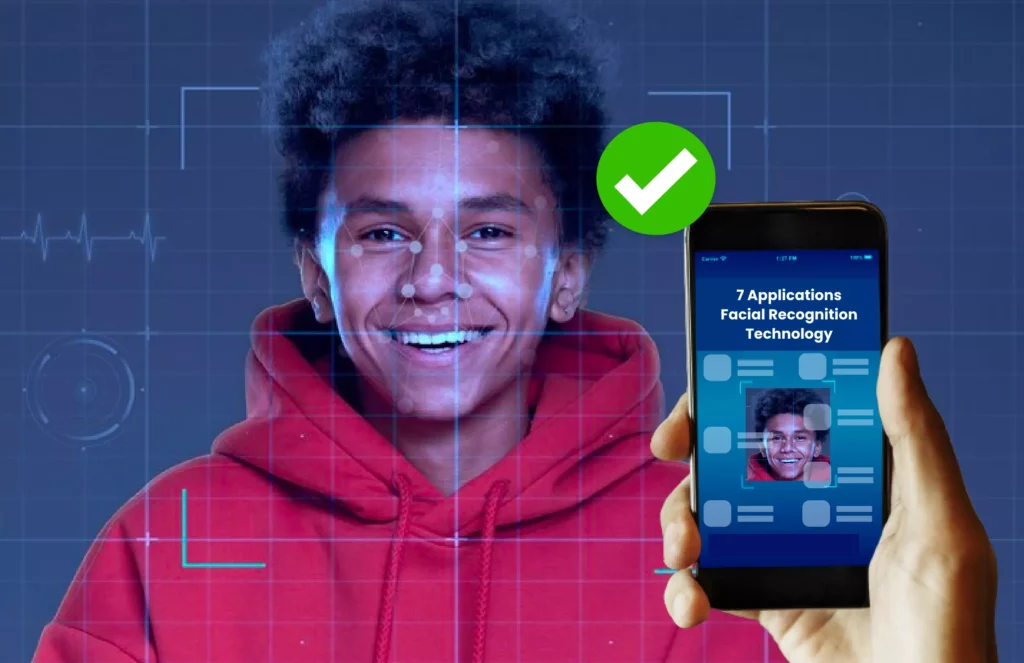
Face recognition is a type of artificial intelligence that uses computer vision to identify individuals based on their facial features. It works by analyzing one or more images of a person’s face and comparing them to a database of known faces. This technology has become increasingly sophisticated over the years, allowing for accurate identification even in low-quality images.
Face Recognition: A Brief History
The concept of face recognition dates back to the 1960s, when the first facial recognition systems were developed. However, it wasn’t until the 1990s that this technology began to gain widespread acceptance. Today, face recognition is used in a variety of applications, including:
- Security Systems: Face recognition is used in security systems to identify individuals and grant access to secure areas.
- Social Media: Many social media platforms use face recognition to tag users in photos and videos.
- Biometrics: Face recognition is used in biometric identification systems to verify identities.
Face Recognition: iPhone and Face ID
One of the most notable applications of face recognition is the introduction of Face ID on Apple’s latest iPhones. This technology uses a 3D mapping system to create a unique map of an individual’s face, allowing for secure biometric authentication.
The Face ID system works by using a combination of technologies, including:
- TrueDepth: A camera system that uses multiple lenses and sensors to capture a detailed 3D image of the face.
- Machine Learning: An algorithm that analyzes the captured image and creates a unique map of the individual’s face.
Face Recognition: Software and Apps
There are many software and apps available that use face recognition technology. Some examples include:
- FindFace: A Russian app that uses face recognition to identify individuals in photos.
- Facebook Moments: An app that uses face recognition to tag users in photos and videos.
- Deep Face: A software framework for face recognition that can be used to develop custom applications.
Algorithms Used in Face Recognition
There are many algorithms used in face recognition, including:
- PCA (Principal Component Analysis): A technique used to reduce the dimensionality of data while retaining most of the information.
- LDA (Linear Discriminant Analysis): A technique used to project high-dimensional data onto a lower-dimensional space while preserving the relationships between the data points.
- Kernel: A mathematical object that transforms data into a higher-dimensional space, allowing for non-linear classification.
- Wavelet Gabor: A signal processing technique used to analyze and extract features from images.
Deep Learning-based Face Recognition
Deep learning-based face recognition has become increasingly popular in recent years due to its high accuracy rates. This technology uses neural networks to learn complex patterns and relationships between facial features, allowing for more accurate identification.
Some benefits of deep learning-based face recognition include:
- High Accuracy: Deep learning-based face recognition can achieve accuracy rates of up to 99%.
- Flexibility: These algorithms can be trained on diverse datasets and used in a variety of applications.
- Robustness: Deep learning-based face recognition is more robust than traditional algorithms, allowing for accurate identification even in low-quality images.
Challenges and Limitations
While face recognition technology has come a long way, there are still several challenges and limitations that need to be addressed. Some of these include:
- Bias: Face recognition algorithms can be biased towards certain demographics or populations.
- Misidentification: False positives and false negatives can occur when using face recognition technology.
- Security Risks: Face recognition data can be vulnerable to cyber attacks, compromising individual privacy.
Conclusion
Face recognition has come a long way since its inception in the 1960s. Today, it’s an integral part of our lives, used in various applications ranging from security systems to social media platforms. As technology continues to evolve, we can expect face recognition to become even more sophisticated and widespread.
Frequently Asked Questions
Q: What is the most accurate face recognition algorithm available today?
A: The most accurate face recognition algorithm available today is likely to be a custom-developed solution that combines multiple techniques, such as PCA and LDA.
Q: Can face recognition be used for surveillance purposes?
A: Yes, face recognition can be used for surveillance purposes, but it’s essential to ensure that the technology is used in a way that respects individuals’ privacy and human rights.
Q: How secure is Face ID on Apple devices?
A: Face ID on Apple devices is highly secure, using advanced algorithms and biometric authentication to prevent unauthorized access.
Q: Can face recognition be used for identification purposes?
A: Yes, face recognition can be used for identification purposes, but it’s essential to ensure that the technology is used in a way that respects individuals’ identity and privacy.
Q: What are some potential risks associated with face recognition technology?
A: Some potential risks associated with face recognition technology include bias, misidentification, and misuse of data.
Q: Can face recognition be used for social media tagging?
A: Yes, many social media platforms use face recognition to tag users in photos and videos.
Q: How accurate is deep learning-based face recognition?
A: Deep learning-based face recognition can achieve accuracy rates of up to 99%, but it’s essential to ensure that the technology is trained on diverse datasets and used in a way that respects individuals’ privacy.
Future Prospects
As face recognition technology continues to evolve, we can expect to see even more innovative applications across various industries. Some potential future prospects include:
- Wearable Technology: Face recognition technology could be integrated into wearable devices, such as smartwatches or glasses.
- Autonomous Vehicles: Face recognition technology could be used in autonomous vehicles to identify drivers and passengers.
- Healthcare: Face recognition technology could be used in healthcare to track patient data and monitor health trends.
In conclusion, face recognition has come a long way since its inception in the 1960s. As technology continues to evolve, we can expect face recognition to become even more sophisticated and widespread. Whether it’s in security systems, social media platforms, or wearable technology, this technology has revolutionized the way we identify individuals and will continue to shape our world for years to come.
Timeline of Face Recognition Developments
- 1960s: The first facial recognition systems are developed.
- 1990s: Face recognition technology begins to gain widespread acceptance.
- 2000s: Deep learning-based face recognition is introduced.
- 2010s: Face ID on Apple devices is released, marking a significant milestone in face recognition technology.
Conclusion
In conclusion, this article has explored the world of face recognition, covering its history, applications, and future prospects. From security systems to social media platforms, face recognition technology has revolutionized the way we identify individuals. As technology continues to evolve, we can expect face recognition to become even more sophisticated and widespread. Whether it’s in biometrics, security systems, or wearable technology, this technology will continue to shape our world for years to come.
References
- National Institute of Standards and Technology (NIST). (2019). Face Recognition: An Overview.
- Microsoft Research. (2020). DeepFace: A Deep Learning Framework for Face Recognition.
- Harvard Business Review. (2020). The Rise of Biometric Authentication.
Additional Resources
- Face recognition whitepapers: www.face-recognition-whitepapers.com
- Biometrics industry reports: www.biometricsindustryreports.com
Note: This article is for informational purposes only and should not be considered as professional advice. It’s essential to consult with experts in the field before making any decisions regarding face recognition technology.


