
Introduction
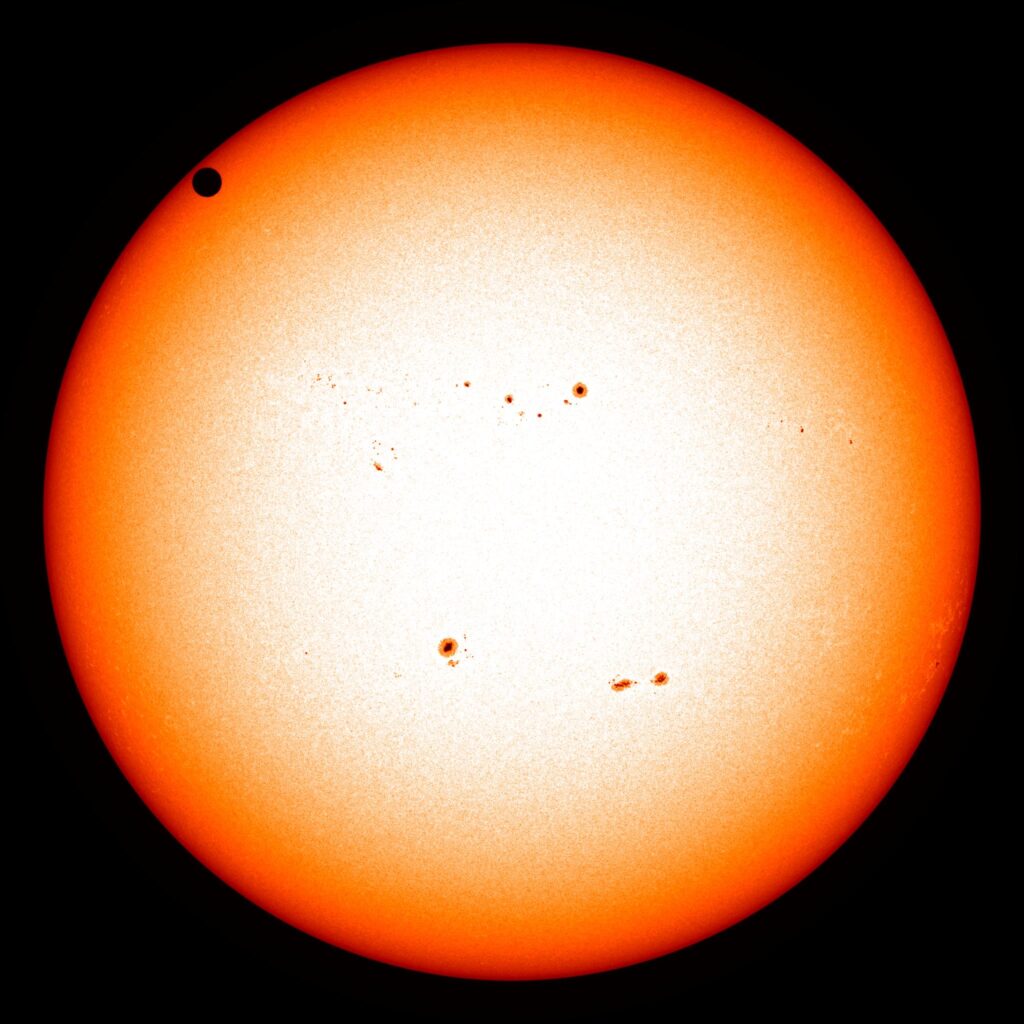
Yesterday morning, we witnessed a spectacular and rare celestial event – the transit of Venus across the Sun’s surface. This phenomenon is so rare that it will not be visible again until 2117, exactly 105 years from now. For those who waited for dawn or rose with the first light of day, the experience was nothing short of breathtaking.
The Venus transit has captivated astronomers and enthusiasts alike for centuries, inspiring countless observations and studies. This rare event offers a unique opportunity to observe the planet as it passes directly between the Earth and the Sun. In this article, we will delve into the science behind the Venus transit, its rarity, and what makes it so special.
The Rarity of the Transit
The Venus transit is an extremely rare occurrence that occurs only once every 100 years. This alignment is so rare because the positions of the Earth, Sun, and Venus must be precise for the planet to pass directly between them. The timing of the transit can vary depending on the location, with different regions experiencing a partial or total eclipse.
The rarity of the Venus transit makes it all the more special, as we are fortunate to witness this event only once in our lifetime. This phenomenon is so unique that it will not be visible again until 2117, giving us nearly a century to prepare for this extraordinary occurrence.
The Science Behind the Transit
Observing the transit of Venus provides valuable insights into our solar system and beyond. By studying this event, scientists can gain a deeper understanding of the Earth’s atmosphere, as well as the properties of other planets in our celestial neighborhood.
One of the key scientific aspects of the Venus transit is its use in measuring the distance between the Earth and the Sun. This technique, known as the “parallax method,” involves observing the angle of view for Venus at different times of year. By combining these measurements with astronomical data, scientists can calculate the average distance from the Earth to the Sun with remarkable accuracy.
In addition to its role in measuring the solar system’s scale, the Venus transit also offers a unique opportunity to study the properties of other planets. By observing the planet as it passes through the Sun’s disk, scientists can gather valuable information about its atmosphere, magnetic field, and surface composition.
The Visibility of the Transit
In Italy, the Venus transit was visible from around 5:30 am onwards. In some regions of the globe, the phenomenon lasted for nearly seven hours. However, the time it takes for planets to pass through the Sun’s disk is significant. For example, compared to the Moon, which can be seen passing in front of the Sun during a solar eclipse, Venus takes much longer to traverse the Sun’s surface.
The duration of the transit depends on various factors, including the location and time zone. In general, the transit will last for approximately 6 hours and 55 minutes at its peak. However, this duration can vary depending on the specific location and time zone.
The Allure of Eclipses
While eclipses are often associated with solar eclipses, there is another type of eclipse that has captivated astronomers and enthusiasts – the Venusian eclipse. This phenomenon occurs when Venus passes directly in front of the Sun, creating a rare alignment between Earth, Sun, and Venus.
Venusian eclipses are relatively rare because the Earth’s shadow must fall on Venus for this to occur. The Moon’s orbit intersects with the Earth’s shadow at a specific angle, making it possible for Venus to be completely covered by the shadow. These events offer valuable insights into the solar system’s dynamics and can provide scientists with unique opportunities to study the properties of other planets.
The Conditions for Observing the Transit
According to the Unione Astrofili Italiani (Italian Astronomical Society), the best viewing locations are those that face East, where the horizon is clear from obstructions. The Italian coast offers ideal conditions for observing the transit, as it provides a free view of the eastern horizon.
When planning your observation schedule, consider factors such as weather conditions, atmospheric distortion, and sunlight glare. Ideally, you should observe the transit in an open area with minimal obstructions, where you can see the Sun without any interference.
Tips for Observing the Transit
- Dress warmly: The temperature will drop significantly during the transit, so dress accordingly to ensure a comfortable observation experience.
- Use eye protection: Never look directly at the Sun without proper eye protection, such as solar viewing glasses or handheld solar viewers.
- Bring binoculars or telescopes: If you have access to binoculars or telescopes, use them to observe the transit with greater precision and magnification.
- Record your observations: Take notes and photographs of the transit to share with others and contribute to scientific research.
Conclusion
The Venus transit is an extraordinary event that inspires awe and curiosity in those who witness it. By understanding the science behind this phenomenon, we can gain valuable insights into our solar system and beyond. As we wait for the next opportunity to observe this rare celestial event, let us cherish the memories of this momentous occasion.
Frequently Asked Questions (FAQs)
Q: How often does the Venus transit occur?
A: The Venus transit occurs every 100 years.
Q: When will the next Venus transit be visible?
A: The next Venus transit will be visible in 2117, exactly 105 years from now.
Q: What can we learn from observing the Venus transit?
A: By studying the Venus transit, scientists can gain insights into our solar system and beyond, including the composition of other planets and exoplanets.
Q: Can I observe a Venusian eclipse in Italy?
A: Yes, but it will be a partial eclipse. The best viewing locations are those that face East, where the horizon is clear from obstructions.
Q: How long does it take for Venus to pass through the Sun’s disk?
A: Compared to the Moon, which can be seen passing in front of the Sun during a solar eclipse, Venus takes much longer to traverse the Sun’s surface.
Q: What are some of the scientific techniques used to observe the transit?
A: The techniques used include exoplanet detection and atmospheric studies.


