
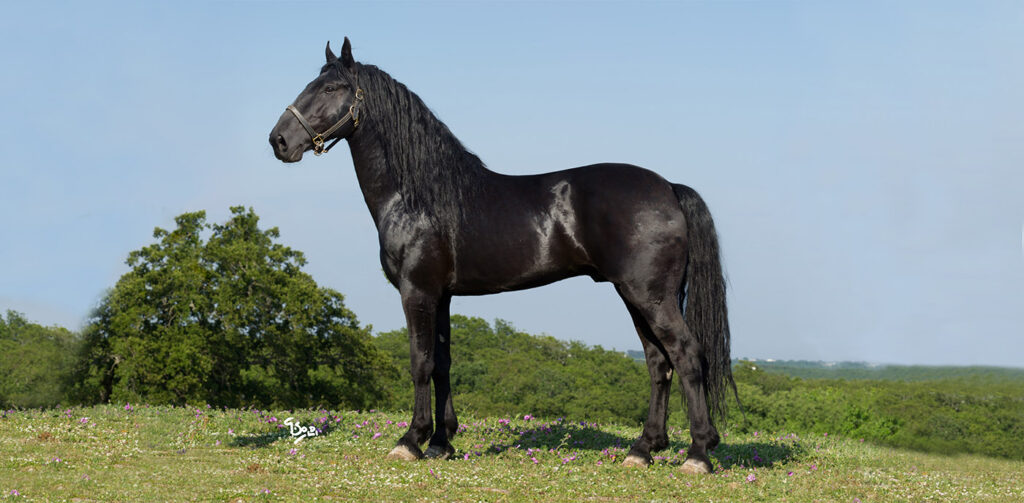
The Murgese horse breed, officially recognized since 1926, has a rich history that dates back much further. Originating from the Murge region in Puglia, Italy, this magnificent breed is known for its unique characteristics, both physical and personality-wise. In this article, we’ll delve into the world of the Murgese, exploring its origins, features, temperament, health, and uses.
The Ancient Roots of the Murgese
Legend has it that the Murgese’s ancestors were introduced to Italy during the Spanish reign in the southern part of the country. The stallions from Arabia, Berberia, and Andalusia played a significant role in shaping this breed. It was around 1500 when Andrea Matteo Acquaviva, Conte di Conversano, became fascinated with these horses and dedicated himself to their development and propagation.
According to historical records, the breed’s name is derived from the Latin word “murus,” meaning wall or barrier, which refers to the region where they were first bred. This name also highlights the breed’s ability to thrive in challenging environments, much like a wall that withstands adversity.
Physical Characteristics
The Murgese is a mesomorphic horse with a sturdy body, measuring between 150 cm (4’11”) and 162 cm (5’4″) for females and 155 cm (5′) to 168 cm (5’6″) for males. Its distinctive feature is its morel-red coat with a corvino sheen, accompanied by little to no white markings. While most Murgese exhibit this typical coloration, rare instances of a grizzle-gray coat have been recorded, making it an even more unique and sought-after breed.
The Murgese’s head is striking for its solidity and harmonious proportions. Its attachment to the neck is firm, with a gentle, yet pronounced profile that can be either montonine or rettilinear in shape. The ears are proportionate and stand upright from the forehead, while the wide nostrils showcase an expressive nose. Its eyes are notable for their deep emotionality, providing a sense of warmth and gentleness.
A Masterpiece of Anatomy
Upon first glance, the Murgese’s body is characterized by its well-muscled build, which begins with a broad chest and high back. The shoulder slope is slight, while the croup develops horizontally, creating an harmonious and balanced silhouette. The tail attaches firmly to the loin, accompanied by fluffy, ondulated hair.
The Murgese’s legs are strong and muscular, featuring well-proportioned limbs with a pronounced bone structure. Its bridle is sturdy, with long forelimbs that demonstrate a clear direction, while the hindlimb is proportionate to the rest of its body. The hooves are notable for their strength and elasticity.
Muscular Limbs
The Murgese’s muscular limbs are an essential aspect of its overall structure. Its legs are capable of supporting its sturdy body, allowing it to move with a fluidity and balance that is unmatched by many other breeds. This characteristic makes the Murgese well-suited for various equestrian disciplines.
A Temperament Fit for a Legend
The Murgese’s temperament is as impressive as its physical attributes. In terms of work ethic, it is considered nevarile but also robustly resistant to fatigue. Stallions are known for their gentle nature, making them easy to handle, even in the context of horse shows and performances.
The Bonding Process
When trained from a young age, Murgese stallions exhibit remarkable docility and obedience. They quickly adapt to new situations, demonstrating a high degree of submission to human control.
This ability to form strong bonds with humans is a testament to the Murgese’s unique temperament, making it an ideal choice for riders who value trust and companionship in their equine partners.
Resilience Against Disease
One notable trait that makes this breed particularly sought-after is its remarkable resistance to disease. Its ability to self-isolate during calving reduces the risk of illness transmission among the herd.
This unique characteristic has led many breeders to seek out Murgese stallions for their herds, as they provide a natural barrier against disease and promote overall health within the breeding program.
Disciplines and Uses
Today, the Murgese can be found competing in various equestrian disciplines, including dressage, where its elegant portamento wins over audiences. The breed has also proven itself to be adept at horse shows, making it a popular choice for tourism and equine events.
The Murgese’s robust build, combined with its gentle demeanor, have made it an ideal horse breed for riding lessons, campgrounds, and everyday activities. Its ability to thrive in a variety of environments makes it suitable for diverse climates and landscapes.
Allevamientos e Distribuzione Geografica
This magnificent breed is spread across Italy due to its appealing characteristics. The region of Puglia boasts several notable Murgese farms, such as the San Paolo farm at Martina Franca and the “Il Corsiero Italiano” facility in La Spezia.
The widespread distribution of the breed has led to a diverse gene pool, ensuring that each individual stallion or mare contributes its unique characteristics to the overall population.
FAQs
Q: What makes the Murgese breed unique?
A: The Murgese’s distinctive coloration, robust build, and gentle temperament make it a standout among horse breeds.
Q: Where did the Murgese originate from?
A: The breed is believed to have originated in southern Italy, during the Spanish reign.
Q: What are some common health issues associated with this breed?
A: While not as susceptible to disease as other horses, Murgese can still fall prey to various maladies. Regular veterinary check-ups and proper care are essential.
Q: Are stallions docile and easy to handle?
A: Yes, Murgese stallions exhibit remarkable docility and obedience, making them an ideal choice for horse shows and performances.
Q: How do you train a young Murgese stallion?
A: Early socialization and training from a reputable breeder are crucial in developing the best temperament and skills in this breed.
Q: What types of activities can I participate with a Murgese horse?
A: The Murgese’s sturdy build, combined with its gentle nature, make it suitable for riding lessons, campgrounds, and everyday activities.
Q: Are there any notable horse shows or competitions that feature the Murgese breed?
A: Yes, this breed often competes in dressage and horse shows due to its elegant portamento and agility.
Q: How does the Murgese’s social behavior compare to other breeds?
A: Stallions are known for their gentle nature, making them easy to handle and train.


