
As we explore the world around us, we often take for granted the incredible transformations that occur in the physical world. But have you ever stopped to think about what happens when a substance changes from one state to another? In this article, we’ll embark on a fascinating journey through the passages of state, exploring the amazing transformations that occur in matter.
What are Passages of State?
Passages of state refer to the different stages that a substance can exist in, depending on the conditions it’s exposed to. These stages include solid, liquid, and gas, as well as other states like plasma and superfluidity. Each passage of state has its own unique characteristics and properties, making them fascinating topics for study.
The Three Main Passages of State
Let’s start with the three main passages of state: solid, liquid, and gas.
- Solid: In this state, particles are tightly packed together, giving the substance a fixed shape and volume. This is what we experience when we touch a rock or hold an ice cube.
- Liquid: In this state, particles are close together but can flow past each other, allowing the substance to take the shape of its container. This is what we experience when we drink water or pour juice from a bottle.
- Gas: In this state, particles are widely spaced and move freely, giving the substance no fixed shape or volume. This is what we experience when we breathe air or feel the wind on our skin.
Other States of Matter
But that’s not all! There are many other states of matter beyond just solid, liquid, and gas. Some examples include:
- Plasma: A high-energy state in which atoms or molecules are ionized, creating a collection of charged particles.
- Superfluidity: A state in which a substance can flow without viscosity, even at extremely low temperatures.
- Supercriticism: A state in which the normal laws of physics break down, allowing substances to exhibit unusual properties.
The Science Behind Passages of State
So why do passages of state occur? The answer lies in the fundamental laws of physics that govern matter’s behavior. In a solid, particles are closely packed and vibrate at specific frequencies, giving them a fixed shape and volume. As the substance is heated or cooled, these vibrations increase or decrease, allowing the particles to transition from one state to another.
Thermal Expansion
One of the key factors influencing passage of states is thermal expansion. When a substance is heated, its particles gain kinetic energy and begin to vibrate more rapidly, causing them to spread out and occupy more space. This increased volume can lead to a change in state, such as from solid to liquid or from liquid to gas.
Phase Transitions
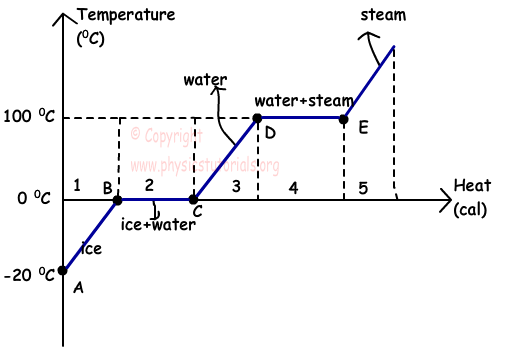
Another important concept related to passages of state is phase transitions. A phase transition occurs when a substance changes from one state to another, often accompanied by a significant change in properties. For example, water freezes at 0°C and turns into ice, while it boils at 100°C and turns into steam.
Real-World Applications
The passages of state have many real-world applications, from everyday life to advanced technologies. For example:
- Weather forecasting: Understanding the passage of states helps meteorologists predict weather patterns and track storms.
- Materials science: Studying the properties of different states can lead to breakthroughs in materials development, such as creating superconductors or nanomaterials.
- Food processing: The passage of state is crucial in food processing, where temperatures need to be controlled to ensure safe and healthy consumption.
Conclusion
The passages of state are an incredible aspect of matter’s behavior, revealing the fascinating transformations that occur when a substance changes from one state to another. By exploring these states and their characteristics, we gain a deeper understanding of the world around us and unlock new technologies for improving our lives.
Frequently Asked Questions (FAQs)
- What is the passage of state?
- The passage of state refers to the different stages that a substance can exist in, depending on the conditions it’s exposed to.
- How many states of matter are there?
- There are four main states of matter: solid, liquid, gas, and plasma.
- What is superfluidity?
- Superfluidity is a state in which a substance can flow without viscosity, even at extremely low temperatures.
- Can I make my own passages of state?
- Yes, by heating or cooling substances, you can create different passages of state and observe their properties.
Exploring the Passage of States
To further explore the passage of states, there are several activities you can try:
- Create a homemade lava lamp: Mix vegetable oil, water, and food coloring in a bottle to create a colorful, flowing substance.
- Make a density column: Layer different liquids with varying densities, such as oil, water, and corn syrup, to observe phase transitions.
- Conduct an experiment on thermal expansion: Measure the expansion of a substance, such as aluminum or copper, when heated or cooled.
By engaging in hands-on activities and exploring the fascinating world of passages of state, you’ll develop a deeper understanding of matter’s behavior and unlock new discoveries for yourself.


