
As we prepare and consume food, it’s natural to wonder why mould forms on our favorite dishes. In reality, it’s not the food that causes mould to grow, but rather the environmental conditions that allow microorganisms like fungi to thrive.
In this article, we’ll delve into the world of mould, exploring its origins, characteristics, and how to prevent its growth on food. Whether you’re a seasoned chef or an everyday home cook, understanding mould is essential for maintaining a safe and healthy diet.
What is Mould?
Mould represents a group of microorganisms belonging to the large family of fungi. These organisms organize themselves into clusters of hyphae, also known as miceli, which appear like “powdery” colonies on food or walls. Mould absorbs nutrients from organic matter and develops as masses of filamentous structures that produce millions of spores, releasing them into the air.
These spores are invisible to human eyes but can be transported through air currents, water, insects, or even our own hands! Spores have the ability to form new colonies wherever they find optimal humidity and temperature conditions.
Types of Mould
There exist a vast number of moulds, many of which share common requirements while others have unique needs. For instance, the green mould that typically grows on oranges cannot develop on apples or household furniture.
Understanding the basics of mould formation is key to grasping why it occurs on certain foods and not others.
Why Does Mould Form on Food?
Mould can grow anywhere there’s sufficient humidity in surface areas to sustain life. Some moulds are adaptable to various climates, making them capable of thriving even in refrigerators or freezers!
These organisms thrive where there is:
- Adequate humidity
- Oxygen present
- Organic substrate
How Does Mould Grow?
The process begins with spores already present in the air or on food we consume at home.
As long as environmental conditions are suitable, these spores “germinate” and form typical clusters of hyphae that resemble the powdery colonies we know as mould!
This is why keeping food refrigerated at low temperatures and sealed tightly can help prevent mould growth.
Factors Favoring Mould Growth on Food
Several factors contribute to mould formation on food:
- Temperature fluctuations
- Condensation (leading to water droplets)
- Presence of moisture or humidity
Coping with Mould in the Fridge
If you notice frequent mould growth in your refrigerator, it’s essential to thoroughly clean each surface, including containers. After cleaning, ensure that every surface is dry.
What to Do with Infected Food?
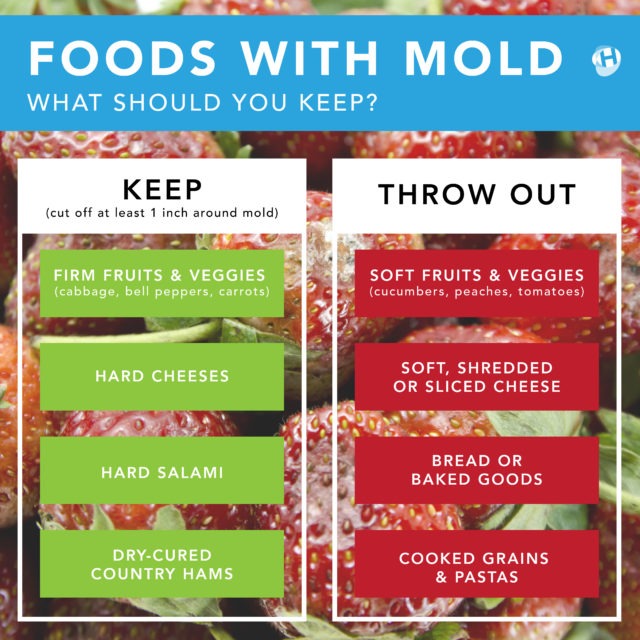
It’s not advisable to consume food with visible mould. If you’re dealing with a moldy item like cheese, only remove the visible layer of mould as this may not represent the entire extent of contamination. Be aware that mould can be present beneath the visible surface!
When handling infested food, take precautions to avoid spreading spores:
- Wear gloves or use utensils
- Avoid touching surfaces with your bare hands
Common Causes of Mould Growth
Mould growth is often linked to poor kitchen hygiene and inadequate storage. Common causes include:
- Poor Ventilation: Failing to ventilate the kitchen, particularly in areas prone to high humidity, can create an environment conducive to mould growth.
- Excess Moisture: Water leaks, condensation, or excessive moisture can lead to mould formation on surfaces and food items.
- Temperature Fluctuations: Temperature changes within the refrigerator or freezers can cause mould to grow.
- Poor Storage: Inadequate storage of food in airtight containers without proper ventilation can contribute to mould growth.
Preventing Mould Growth
To minimize the occurrence of mould, follow these guidelines:
- Store food items in sealed containers with adequate ventilation
- Keep your refrigerator and freezer at consistent temperatures between 40°F (4°C) and 50°F (10°C)
- Regularly clean surfaces with a solution of water and vinegar or baking soda to remove mineral deposits
- Monitor humidity levels using hygrometers to ensure they fall below the optimal range
Common Types of Mould
There are various types of moulds that can affect food and other surfaces:
- Aspergillus: A type of mould commonly found in cheese, bread, and other starchy products.
- Penicillium: A type of mould often associated with blue-green veins on certain cheeses and breads.
- Cladosporium: A common indoor mould that can grow on surfaces and food items.
Common Effects of Mould on Health
In rare cases, consuming mouldy foods can have adverse effects on human health:
- Allergic Reactions: Some individuals may experience allergic reactions to certain types of mould, such as Aspergillus or Penicillium.
- Respiratory Issues: Inhaling spores from mould-infested areas can exacerbate respiratory conditions like asthma.
Conclusion
In conclusion, understanding how and why mould forms on food is essential for maintaining a safe and healthy diet. By recognizing common factors that contribute to mould growth and adopting preventative measures, you can minimize the occurrence of these unwanted microorganisms.
Frequently Asked Questions (FAQs)
- What are the primary causes of mould formation on food?
- Environmental conditions (humidity, temperature)
- Presence of moisture or humidity
- Organic substrate available
- How often should I clean my refrigerator to prevent mould growth?
- Regular cleaning is recommended every week or two
- Pay special attention to areas around condensation and high-humidity zones
- Can I remove only the visible layer of mould from a food item?
- No, as hidden layers may still contain spores.
- It’s advisable to replace or discard the entire item if contaminated


