
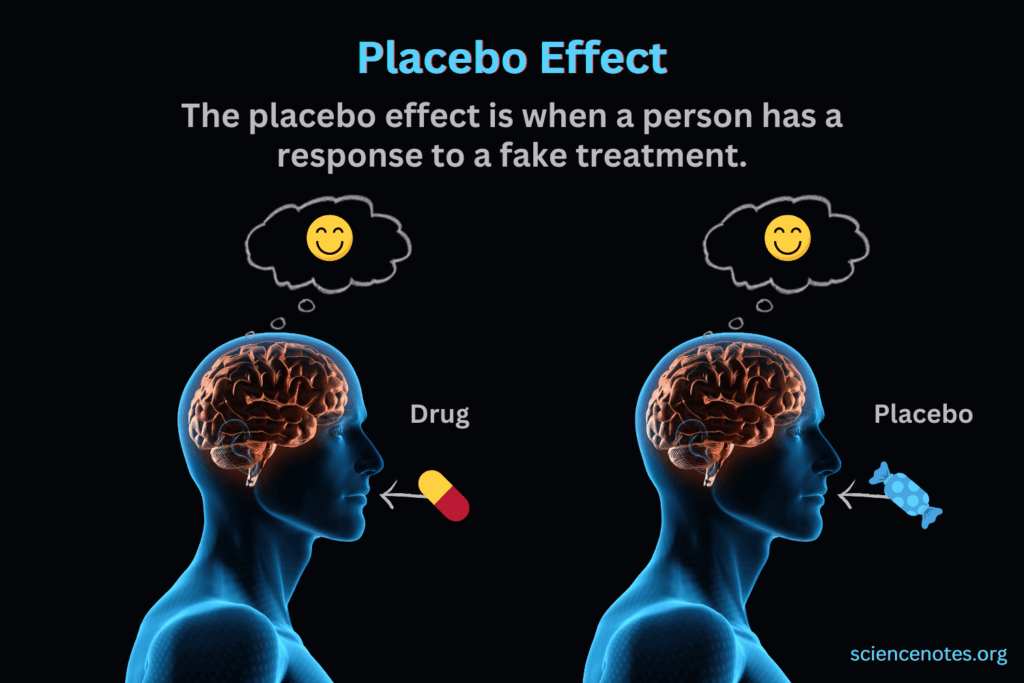
Have you ever wondered about the placebo effect? You’re not alone. This phenomenon has been discussed in recent discussions about homeopathy and beyond, but what exactly is it? Let’s dive into understanding this concept without getting bogged down in other conversations.
What is the Placebo Effect?
Today when we talk about the placebo effect, we mean all those substances or treatments that don’t have an intrinsic therapeutic activity and are essentially harmless. The key word here is “intrinsic”. By specifying that they don’t have an intrinsic therapeutic activity, we want to emphasize that they might have a therapeutic effect but not because of their biological properties.
Let’s take an example to understand this better. Imagine someone with a sore throat and cough who gets prescribed a mysterious potent syrup that is actually just a mix of sugar, water, and lemon. Although it’s just a placebo, the patient may still experience improvements due to the power of self-conditioning. The magic lies in the fact that the patient believes they’re taking a powerful medicine, which triggers a positive reaction that can help them recover.
We can also distinguish between pure Placebo (Puro) and Impure Placebo (Impuro). The first has no intrinsic therapeutic effect whatsoever, while the second has some but not specifically for the condition it’s prescribed to treat.
How Does the Placebo Effect Work?
Before simplifying things by saying it’s just a psychological thing, let’s delve deeper because what seems like a trick actually triggers a complex biological response. There is definitely a strong psychological component that plays in our favor and makes us react strongly positively, but the substance itself also acts on the nervous system. It triggers the production of specific endogenous substances with auto-healing properties like endorphins, which reduce pain sensation. Neurotransmitters are activated, cortisol and other hormones related to stress levels are produced, and even the immune system perceives our positive psychological state and is influenced by it.
The placebo effect doesn’t always work and isn’t effective for everyone. It requires specific conditions that aren’t always met. People who undergo this type of therapy must have a tendency to be easily persuaded, otherwise, they might not benefit from the effect at all. When someone believes strongly in the efficacy of a treatment or medicine, it can lead to positive outcomes even if the substance itself has no therapeutic value.
When Can the Placebo Effect Work?
Using the placebo effect requires caution and should never be an excuse for not following a doctor’s prescriptions. It is often used when dealing with conditions that have a strong psychological component such as irritable bowel syndrome, insomnia, migraines, headaches in general, anxiety, and certain digestive issues. In some cases, it can lead to significant improvements up to 80% of the time. Sometimes, it’s even used for surgical interventions and organic pathologies but the results are much less impressive.
There are specific conditions that doctors first recognize and which might suggest that the placebo effect could be successful applied to a certain individual. Among these are:
- Conditioning: The ability to connect the placebo or the doctor who prescribes it with previous successes
- Preconceived notions: Believing that one treatment is better than another, for example that capsules are more effective than pills, injectable placebos are more potent than oral ones, larger tablets are more effective than smaller ones, and even color can influence our mood.
- Genetic factors: A component related to the way neurotransmitters function in the brain which influences how susceptible we are to the placebo effect.
Uses of the Placebo Effect
Beyond its therapeutic purposes, the placebo is also used in situations where a patient needs reassurance that they’re receiving treatment even when it’s not necessary. It’s often used in clinical studies to compare the efficacy of treatments by pairing them with placebos and analyzing the results.
When studying new therapies, researchers look for evidence-based proofs of their effectiveness. A part of the participants is always treated with a placebo given in the same form and manner as the actual treatment being tested. This allows the researchers to analyze the outcomes of both groups and compare them.
To ensure fairness, the placebo must be indistinguishable from the real medicine in terms of appearance. Studies can be conducted in single-blind or double-blind conditions. In the first case, participants don’t know whether they’re receiving the actual treatment or a placebo, while in the second case, neither the participants nor the researchers are aware.
When done correctly, these studies allow for accurate comparisons and can shed light on what truly works.
Contraindications
While generally considered safe, using placebos can also have some limitations. There are certain situations where it’s not advisable to use placebos:
- Severe medical conditions: Placebos might not be sufficient to manage severe health issues, such as life-threatening diseases or serious injuries.
- Newborns and children: The placebo effect might not be relevant for young patients due to their limited understanding of the treatment they’re receiving.
- Patients with mental illnesses: Patients suffering from conditions like depression, anxiety disorders, or schizophrenia may require more personalized care than placebos can provide.
Conclusion
In conclusion, understanding the placebo effect is crucial to appreciating its potential benefits and limitations. This phenomenon showcases how our minds can play a significant role in physical healing and treatment outcomes.
By recognizing and utilizing the power of belief, we can tap into natural healing processes that lead to positive results even when it comes to seemingly unrelated ailments.
Frequently Asked Questions
- Is the placebo effect reliable?
- The placebo effect is generally considered reliable for conditions with a strong psychological component but less reliable for organic pathologies.
- Can everyone benefit from the placebo effect?
- No, people who are highly rational and logical may not be able to benefit from it as much.
- How does the placebo work on the body?
- It works by activating neurotransmitters, producing endogenous substances with healing properties like endorphins, influencing cortisol and other hormones related to stress levels, and affecting the immune system.
- Is the placebo effect a form of cheating in medical research?
- While it can be considered as a tool in medical research, it’s not seen as an outright deception but rather as a natural way for humans to heal themselves.
- Can I use the placebo effect on my own without a doctor’s help?
- While some people might experience improvements by using placebos on their own, relying solely on them without professional guidance can be dangerous and ineffective.
The placebo effect is an intriguing phenomenon that highlights the complex relationship between our minds and bodies. By understanding its mechanisms and limitations, we can unlock the full potential of this natural healing process.


