
Introduction
In recent years, we have witnessed a series of extreme weather events that have caused widespread damage and disruption to our daily lives. These events have also raised concerns about the impact of climate change on our planet. In this article, we will explore the definition of an extreme weather event, the evidence of climate change, and its effects on our environment.
Defining an Extreme Weather Event
An extreme weather event is a condition that deviates from the typical characteristics of a certain location and can affect both the physical and biological systems. According to the Intergovernmental Panel on Climate Change (IPCC), an extreme weather event is one that occurs less frequently than its 10th or 90th percentile, and is often associated with significant economic and social impacts.
Examples of extreme weather events include heatwaves, droughts, floods, and storms. These events can have devastating consequences, such as loss of life, property damage, and disruption to essential services like healthcare and transportation.
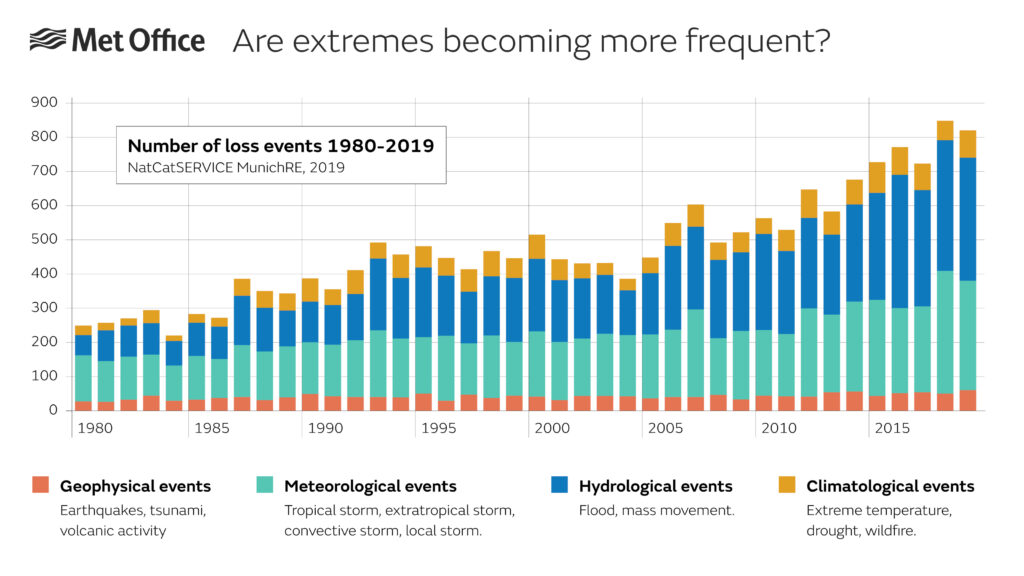
In the context of climate change, extreme weather events are becoming more frequent and intense. This is because a warmer planet can lead to an increase in atmospheric moisture, which can result in more intense precipitation events. Additionally, changes in sea level and ocean currents can also contribute to more frequent and severe storms.
The Evidence of Climate Change
The evidence of climate change is overwhelming, and it is clear that human activities are driving the increase in extreme weather events. The IPCC has concluded that it is “virtual certainty” (99%) that human activities have caused more than half of the observed warming since 1951.
One of the key indicators of climate change is the rise in global temperatures. The average temperature on Earth has increased by about 0.85°C since the late 19th century, and the last decade (2013-2022) was the warmest on record.
The evidence for climate change can be seen in various fields of study, including:
- Temperature Records: Global temperatures have been rising steadily over the past century, with the last decade being the warmest on record.
- Shrinking Ice Sheets: The Antarctic ice sheet has lost an estimated 150 billion tons of ice per year between 1993 and 2013, with a high degree of confidence. The Greenland ice sheet has also experienced significant melting, with some studies suggesting that it may have lost up to 10% of its mass since the 1980s.
- Sea Level Rise: The global sea level has risen by about 15-20 cm over the past century, and is projected to rise by another 26 cm to 82 cm by 2050 if greenhouse gas emissions continue to increase.
- Ocean Acidification: The oceans have absorbed about 93% of the excess heat since 1971, leading to ocean warming. This has also led to a decrease in pH levels, making it more acidic.
Energy and Ocean Warming
The main cause of energy imbalance is the increase in greenhouse gases emitted by human activities such as burning fossil fuels and deforestation. This has led to an increase in global temperatures, with oceans playing a crucial role in absorbing excess heat.
Studies have shown that the world’s oceans have absorbed about 93% of the excess heat since 1971, leading to ocean warming. This warming is evident from measurements of sea surface temperature and ocean acidification.
The impact of ocean warming on climate change can be seen in various ways:
- Increased Storm Intensity: Warmer oceans can lead to an increase in atmospheric moisture, resulting in more intense precipitation events.
- Sea Level Rise: The absorption of excess heat by the oceans can cause sea levels to rise, leading to coastal erosion and flooding.
- Disruption of Marine Ecosystems: Changes in ocean temperature and chemistry can disrupt marine ecosystems, leading to a loss of biodiversity and ecosystem function.
Ice Sheet Melting
The Antarctic ice sheet has lost an estimated 150 billion tons of ice per year between 1993 and 2013, with a high degree of confidence. The Greenland ice sheet has also experienced significant melting, with some studies suggesting that it may have lost up to 10% of its mass since the 1980s.
The melting of ice sheets can have significant consequences for climate change:
- Sea Level Rise: The loss of ice from ice sheets and glaciers contributes to sea level rise, leading to coastal erosion and flooding.
- Feedback Mechanisms: The melting of ice sheets can also trigger feedback mechanisms, such as the release of methane from thawing permafrost, which can accelerate climate change.
Conclusion
The evidence is clear: human activities are driving climate change, which in turn is leading to an increase in extreme weather events. It is essential that we take action to reduce greenhouse gas emissions and mitigate the impacts of climate change on our planet.
FAQs
- What is an extreme weather event?
An extreme weather event is a condition that deviates from the typical characteristics of a certain location and can affect both the physical and biological systems. - How do we know that human activities are causing climate change?
The evidence of climate change is overwhelming, and it is clear that human activities are driving the increase in extreme weather events. The IPCC has concluded that it is “virtual certainty” (99%) that human activities have caused more than half of the observed warming since 1951. - What is the impact of climate change on global temperatures?
The average temperature on Earth has increased by about 0.85°C since the late 19th century, and the last decade (2013-2022) was the warmest on record. - How much energy do oceans absorb from the atmosphere?
Oceans absorb about 93% of the excess heat since 1971, leading to ocean warming. - What is happening to ice sheets in Antarctica and Greenland?
The Antarctic ice sheet has lost an estimated 150 billion tons of ice per year between 1993 and 2013, with a high degree of confidence. The Greenland ice sheet has also experienced significant melting, with some studies suggesting that it may have lost up to 10% of its mass since the 1980s. - What can we do to mitigate the impacts of climate change?
We need to take action to reduce greenhouse gas emissions and adapt to the changes already underway. This includes transitioning to renewable energy sources, increasing energy efficiency, and implementing policies to protect vulnerable communities.
References
- IPCC (2013). Climate Change 2013: The Physical Science Basis. Contribution of Working Group I to the Fifth Assessment Report of the Intergovernmental Panel on Climate Change.
- Easterling, D., Meehl, G. A., Parmesan, C., Changnon, S. A., Karl, T. R., & Mearns, L. O. (2000). “Climate extremes: Observations, modeling and impacts.” Science, 289(5457), 2068-2074.
- IPCC (2001). Climate Change 2001: The Scientific Basis. Contribution of Working Group I to the Third Assessment Report of the Intergovernmental Panel on Climate Change.
- Wisner, B., Blaikie, P., Cannon, T., & Davis, I. (2004). At risk: natural hazards, people’s vulnerability and disasters. Routledge.
- Bagliani, M., Pietta, A., Bonati, S. (2019). Il cambiamento climatico in prospettiva geografica. Aspetti fisici, impatti, teorie. Il Mulino.
Note: The references provided are a selection of the sources used to compile this article and are not an exhaustive list.


