
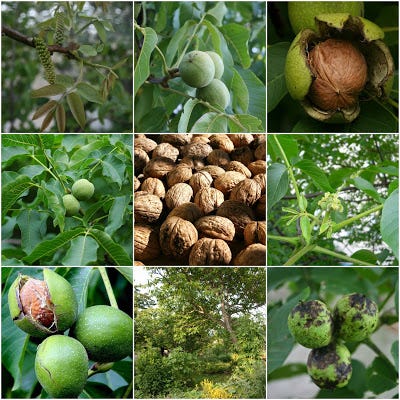
The walnut tree is one of the oldest living species on Earth, with its ancestors discovered in stratifications dating back to the Miocene era, around 23 to 5 million years ago. This majestic tree’s cultivation is linked to ornamental purposes (due to its expansive and globular canopy), nut production, or timber production (thanks to its impressive trunk and high-quality wood).
Introduction to Walnut Cultivation
Walnut trees thrive in temperate climates and can grow well up to 800-1000 meters of altitude. They are resistant to cold winters but fear late frosts: if the temperature drops below -2°C during flowering (April-May), it may damage the harvest. Most walnut varieties are self-fertile, and pollination occurs thanks to wind, as this tree doesn’t attract many insects.
Choosing the Right Location
To grow walnuts successfully, you need to select a location with suitable conditions. Walnuts prefer well-draining soils with a mix of clay and silt, at least 1-2 meters deep and rich in organic matter. They are not tolerant of standing water and don’t produce well in dry soils.
Optimal Growing Conditions
The ideal pH range for walnut cultivation is between 5 and 7. It’s essential to provide the right environment for optimal growth. In terms of temperature, walnuts can tolerate high temperatures during summer (up to 38°C) but may not reach their full potential without proper care in open areas.
Planting and Soil Preparation
Planting a walnut tree requires careful planning and preparation. The soil should be well-draining, and the pH level should be optimized for the specific variety of walnut tree you’re growing. To ensure quality yields, it’s crucial to provide regular fertilization, especially during the first three years after planting.
Combining Walnut Trees with Other Crops
While walnuts can grow alongside other crops, it’s recommended to plant a grassy understory around them. This approach will simplify harvest processes and enhance walnut production.
Selecting the Right Walnut Variety
Choosing the right walnut variety is crucial for your specific region. Consult our article “Walnut Varieties” to determine which variety best suits your area.
Common Walnut Diseases and Pests
To protect your walnut trees from diseases and pests, take preventative measures. Common threats include bacterial diseases like Xanthomonas and fungal diseases such as Necrotic Canker Brown caused by various pathogens. Regular applications of copper-based fungicides may be necessary to address these issues.
Managing Walnut Pests
Walnut trees are susceptible to pests like the walnut weevil (Carpocapsa). Effective pest control can be achieved through targeted treatments, with 2-4 first-generation and 2-3 second-generation interventions usually required.
Maintaining Healthy Walnut Trees
To keep your walnut tree healthy and thriving, it’s essential to maintain regular pruning, thinning, and training. Prune branches annually to promote a balanced structure and encourage fruiting. Thin out the center of the tree every few years to allow sunlight to reach the fruiting areas and improve air circulation.
Dust Management
Regularly inspect your walnut trees for signs of pests or diseases that can cause damage from dust accumulation, such as fungal infections. Maintain a healthy canopy by pruning and thinning trees to reduce competition among leaves, promoting optimal photosynthesis, growth, and fruit production.
Soil Conservation
Implement soil conservation techniques like mulching, cover cropping, and crop rotation to maintain fertile soils and prevent erosion. Mulch around the tree base, applying up to 3-5 cm of organic materials annually. Use cover crops to prevent soil compaction and add nutrients during off-seasons.
Understanding Walnut Nutrient Requirements
Walnut trees require a balanced diet of essential micronutrients like iron, zinc, copper, manganese, boron, and nitrogen. Consider using fertilizers containing these elements or incorporating nutrient-rich compost into the soil.
Pollination Strategies
To ensure optimal pollination, consider planting multiple varieties nearby to increase chances of natural cross-pollination. This can be done by choosing companion plants that attract bees and other beneficial insects.
Growing Walnut Trees in Containers
If you live in an urban area or have limited space for a full-sized tree, growing walnuts in containers is a viable option. Ensure the container is at least 1-2 meters deep to accommodate root growth. Use well-draining potting mixes specifically designed for trees and provide regular fertilization.
Common Walnut Cultivation Mistakes
Avoid making common mistakes when cultivating walnut trees, such as:
- Planting walnut trees in areas with high humidity or standing water
- Not providing adequate sunlight for optimal growth
- Overfertilizing the tree, leading to nutrient deficiencies
Conclusion
Growing walnuts requires careful attention to detail, a good understanding of the tree’s needs, and the right management strategies. By following these guidelines and choosing the right walnut variety for your region, you can enjoy the benefits of this magnificent tree.
Frequently Asked Questions (FAQs)
- What is the optimal pH range for walnut cultivation?
The ideal pH range for walnut cultivation is between 5 and 7.
2. How often should I fertilize my walnut trees?
Regular fertilization, especially during the first three years after planting, is essential to ensure quality yields.
3. Can walnuts grow in dry climates?
Walnuts prefer well-draining soils and are not tolerant of standing water, making dry climates less suitable for growth.
4. How can I protect my walnut trees from diseases?
Preventative measures like regular copper-based fungicide applications can help address common walnut diseases.
5. What is the recommended treatment schedule for walnut pests?
2-4 first-generation and 2-3 second-generation interventions are usually required to manage walnut pests effectively.
6. Can I grow walnuts in areas with high temperatures?
Walnuts can tolerate high temperatures during summer but may not reach their full potential without proper care in open areas.
7. How do I choose the right walnut variety for my region?
Consult our article “Walnut Varieties” to determine which variety best suits your area.
8. Are walnuts easy to care for?
While walnuts can be a bit demanding, with proper care and attention, they can thrive in the right conditions.
Best Practices for Walnut Harvesting
To ensure optimal walnut harvests, follow these guidelines:
- Regularly inspect trees for signs of disease or pests that may impact yields
- Prune branches to promote fruit production and prevent damage from extreme weather conditions
- Harvest walnuts when the outer shell splits slightly, as this is an indication of proper ripeness
Conclusion
Mastering the art of growing walnuts requires dedication, patience, and a willingness to learn. By following these guidelines and adapting them to your specific environment, you can enjoy the rewards of cultivating this magnificent tree.


