
1. Introduction
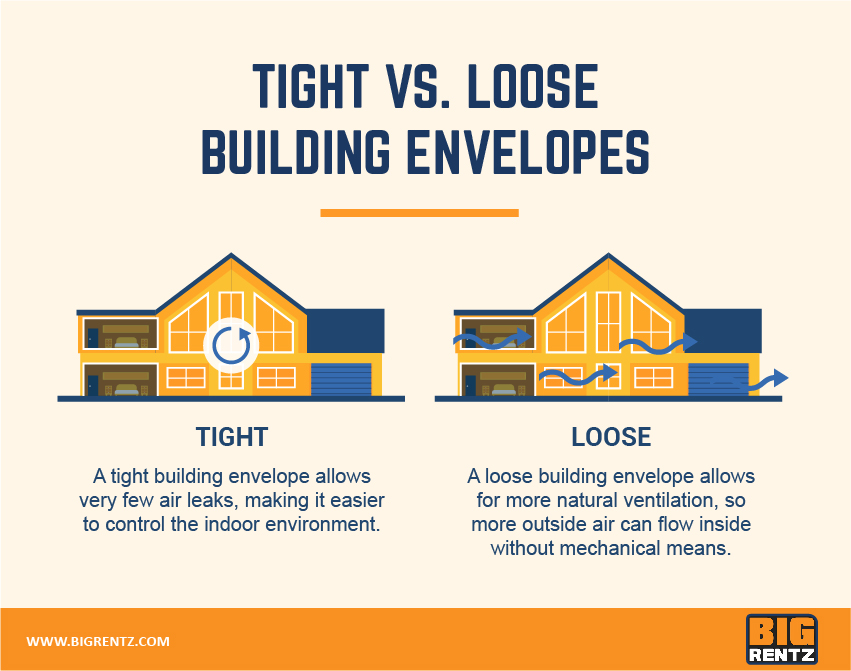
A building envelope, also known as the building skin or envelopment, is the structure that separates the interior and exterior of a building. It serves as a mediator between the two, separating and connecting at the same time. In essence, it is the outer layer of a building that interacts with its surroundings.
The building envelope plays a crucial role in determining the overall performance of a building. It not only protects the occupants from external environmental factors but also influences energy efficiency, indoor air quality, and the aesthetic appeal of the structure. Understanding the complexities of building envelopes is essential for architects, engineers, and builders to create sustainable, efficient, and functional buildings.
2. Building Envelope Definition
A building envelope is defined as the collection of all technological units and technical elements that appear as a limiting boundary in terms of “morphological” but also “functional” aspects. Typically, a building envelope refers to structures composed of materials that are held together by dry anchoring systems such as screws, nails, and welds.
The building envelope can be thought of as a system that interacts with the surrounding environment, influencing factors such as weather conditions, thermal loads, and energy consumption. It is this dynamic relationship between the building envelope and its surroundings that requires careful consideration in design and construction.
3. Building Envelope and Energy Efficiency
Over time, the concept of the building envelope has gained significant attention, particularly in relation to its interactions with the building’s structural system and impiantistico (engineering) system. Historically, the idea was to strive for balance with nature by promoting material recycling and repurposing old buildings for new uses while minimizing the use of new materials.
The building envelope plays a critical role in energy efficiency, as it influences the amount of heat that enters or leaves the building. A well-designed building envelope can minimize heat loss during winter and reduce the risk of overheating during summer. This balance is achieved through careful selection of materials, insulation, and cladding, which must be balanced with aesthetic considerations.
4. Evolution of Building Envelopes
In the 1970s, the human anxiety about thermal insulation led to the development of coibentation techniques for building envelopes. This marked a significant shift in conception, from simple protective barriers to complex systems that can optimize interactions between the exterior and interior environments.
The evolution of building envelopes has been driven by advances in materials science, engineering, and technology. New materials and designs have enabled architects to create buildings with improved energy efficiency, durability, and sustainability. However, this evolution has also introduced new challenges, such as increased complexity, higher costs, and greater regulatory requirements.
5. Active vs. Passive Building Envelopes
Building envelopes have evolved into both active and passive types. Passive building envelopes rely on natural resources to generate energy, such as solar radiation, while active ones employ devices and systems to control temperature and humidity levels within the building. The latter requires a high degree of technological intervention, limiting creative freedom for architects.
Active building envelopes are often more expensive to install and maintain than passive ones, but they offer greater flexibility in terms of energy consumption and thermal comfort. Passive building envelopes, on the other hand, rely on natural processes and can be less expensive to operate, but may require additional insulation and ventilation systems to achieve optimal performance.
6. Active Building Envelopes
Active building envelopes are equipped with systems that collect and transform solar energy into electrical power. They also include ventilation systems that mimic natural airflow patterns. While this technology offers greater efficiency in terms of energy consumption, it requires significant investment in infrastructure and may compromise architectural creativity.
Examples of active building envelope technologies include green roofs, solar windows, and thermal energy harvesting systems. These innovative solutions can enhance the performance of buildings while reducing their environmental impact.
7. Efficient Building Envelopes
To determine whether a building envelope is efficient, we need to evaluate its ability to respond flexibly to changing weather conditions. An effective building envelope must minimize heat loss during winter and reduce the risk of overheating during summer. By achieving this balance, both occupants and the environment benefit.
Efficiency in building envelopes can be measured through various metrics, including thermal performance, energy consumption, and indoor air quality. A well-designed building envelope should achieve a high level of efficiency while also meeting aesthetic and functional requirements.
8. The Complexity of Building Envelopes
Building envelopes are not uniform entities but rather composed of multiple elements and strata. The primary element is the structural support, followed by anchoring systems that secure finishes, and finally a layer of insulation and exterior cladding. Choosing between various materials and designs requires careful consideration of factors such as load-bearing capacity, material durability, and ventilation needs.
The complexity of building envelopes can lead to misunderstandings about their performance and functionality. Architects and engineers must work together to ensure that the building envelope is integrated with the overall design strategy, while also meeting regulatory requirements and environmental standards.
9. Types of Building Envelopes
There are three primary types of building envelopes: structural panels composed of horizontal beams and vertical supports; façade systems that combine metal, wood, or PVC components with structural elements; and structural panels made up of insulating materials such as cellulose or fiberglass batts.
Each type of building envelope has its own advantages and disadvantages. Structural panels, for example, offer high strength-to-weight ratios but may require additional support to prevent sagging. Façade systems can provide improved thermal performance but may be more expensive to install and maintain. Insulating panels, on the other hand, can reduce energy consumption but may compromise structural integrity if not properly designed.
10. Innovative Building Envelope Technologies
Researchers have been exploring innovative materials and designs to improve building envelope performance. For instance, some buildings incorporate photovoltaic panels into their facades, generating electricity while also providing insulation. Another approach involves using active shading systems to reduce heat gain in summer and minimize energy consumption.
Innovative building envelope technologies can offer significant benefits in terms of energy efficiency, sustainability, and aesthetic appeal. However, these solutions must be carefully evaluated in the context of regulatory requirements, cost-effectiveness, and environmental impact.
11. Balancing Innovation and Practicality
The question arises as to how far these innovative technologies should be pursued in terms of feasibility and cost-effectiveness. While advanced materials and designs can enhance building performance, they may come at the expense of architectural creativity or economic viability.
Architects, engineers, and builders must strike a balance between innovation and practicality when designing and constructing buildings with efficient envelopes. This requires careful consideration of factors such as budget constraints, regulatory requirements, and environmental impact.
12. Case Studies: Successful Building Envelopes
Several notable examples demonstrate the potential of building envelope technologies in reducing energy consumption and enhancing sustainability. For instance, the Solar Ark in Japan features a façade composed of photovoltaic panels that generate electricity while providing insulation. Another example is the LEED-certified headquarters of the United States General Services Administration (GSA) in Washington D.C., which incorporates advanced glazing systems and thermal energy harvesting technologies.
These case studies illustrate the potential for innovative building envelope technologies to enhance building performance while reducing environmental impact. However, they also highlight the need for careful evaluation and consideration of factors such as cost-effectiveness, regulatory requirements, and aesthetic appeal.
13. Challenges and Opportunities
Despite the progress made in building envelope design and construction, several challenges remain. These include:
- Increased complexity: Building envelopes are composed of multiple elements and strata, making it challenging to evaluate their performance and functionality.
- Higher costs: Innovative building envelope technologies can be more expensive to install and maintain than traditional solutions.
- Regulatory requirements: Building codes and standards can vary widely across regions, making it difficult to ensure compliance with regulatory requirements.
Despite these challenges, there are also opportunities for innovation and improvement in building envelope design and construction. These include:
- Advances in materials science: New materials and technologies can enhance the performance of building envelopes while reducing environmental impact.
- Increased focus on sustainability: Building envelopes play a critical role in reducing energy consumption and enhancing sustainability, making them an important area of focus for architects, engineers, and builders.
In conclusion, the building envelope is a complex system that interacts with its surroundings to determine the overall performance of a building. Understanding the complexities of building envelopes requires careful consideration of factors such as material selection, structural support, insulation, and cladding. By incorporating innovative materials and designs into building envelope design and construction, architects, engineers, and builders can create sustainable, efficient, and functional buildings that reduce environmental impact while enhancing aesthetic appeal.
As we move forward in the field of building envelopes, it is essential to strike a balance between innovation and practicality. This requires careful evaluation of factors such as cost-effectiveness, regulatory requirements, and environmental impact. By embracing innovative solutions and addressing the challenges associated with building envelope design and construction, we can create buildings that are not only sustainable but also beautiful, functional, and efficient.


