
Introduction
The Craspedia, also known as the Billy Button flower or woolly billy button, is a perennial herbaceous plant native to Australia and belonging to the Asteraceae family. In this article, we will delve into its main characteristics, discuss its care and properties.
Table of Contents
- Appearance of the Craspedia
- Properties of the Craspedia
- Cultivation of the Craspedia
- Reproduction of the Craspedia
4.1 Seed Propagation
4.2 Division of Cespous - Flowering of the Craspedia
- Diseases to which the Craspedia is Susceptible
- Craspedia in Herbalism
- Contraindications of the Craspedia
- Craspedia in Floral Language
1. Appearance of the Craspedia
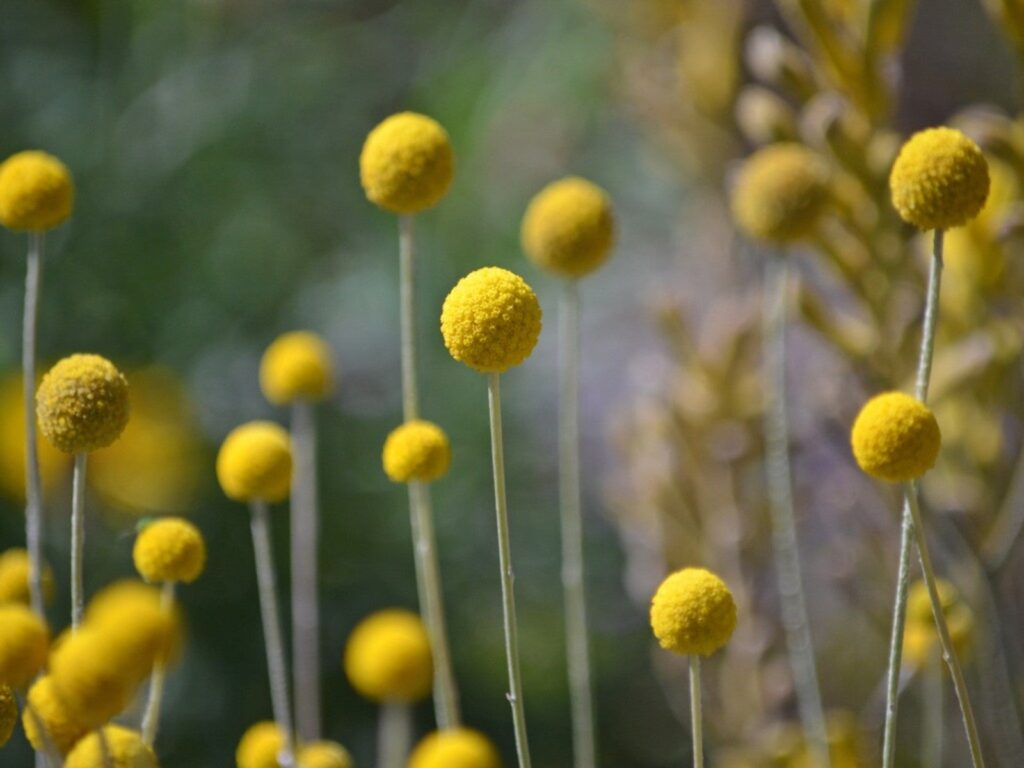
The Craspedia has a unique and distinctive appearance, thanks to its globular yellow flowers that resemble a small ball of wool or a button. These flowers are composed of numerous tubular petals, all clustered together on a slender stalk.
The leaves of the Craspedia are narrow and elongated, with a light green color. The plant is prized for its unusual shape and decorative form, making it a popular choice for floral arrangements and bouquets.
The Craspedia’s flowers attract bees and butterflies, making it a valuable addition to any garden in terms of biodiversity.
In fact, this flower has become an important part of various ecosystems in Australia due to its role as a source of nectar for pollinators. Its unique appearance also makes it a popular choice for floral designers who want to add some creativity and uniqueness to their arrangements.
2. Properties of the Craspedia
Some preliminary studies suggest that the Craspedia may contain compounds with potential antioxidant and antimicrobial properties. However, further research is needed to confirm these findings and determine their practical applications in medicine.
As an ornamental plant, it is essential to consume the Craspedia without medical supervision. The plant’s toxicity has not been extensively studied, but some researchers suggest that it may have toxic compounds that could cause gastrointestinal upset or allergic reactions if ingested in large quantities.
It’s worth noting that our related article on Tulipano Rosa, characteristics, and meaning might be of interest to you.
3. Cultivation of the Craspedia
The Craspedia prefers well-lit positions or partial shade. It’s crucial to ensure that the plant receives at least 6-8 hours of direct sunlight per day.
While the Craspedia can tolerate brief periods of drought, it requires regular watering to maintain a moderately moist soil environment. Be cautious not to overwater, as this could cause root rot.
To achieve proper cultivation, use a well-drained and lightweight potting mix. This will help prevent waterlogged soil around the roots.
If you wish to use the Craspedia’s flowers in floral arrangements, it’s possible to cut them when they are fully open.
4. Reproduction of the Craspedia
The Craspedia can be reproduced through seeds or division of stems (cespous).
Seed Propagation
The Craspedia produces small black seeds that can be collected from mature flowers. To successfully propagate using this method, follow these steps:
- Gather seeds from mature flowers
- Prepare a lightweight and well-drained potting mix suitable for annuals or perennials
- Sow the seeds on the surface of the soil, gently pressing them into place without covering them completely
- Gently water the soil to maintain moisture
- Place the containers in a bright and warm location ideal for seed germination
After one or two weeks, you should notice the first shoots. At this point, it’s possible to transplant them into vases or gardens.
Division of Cespous
The Craspedia can also be propagated by dividing existing stems (cespous). Here’s how:
- Carefully excavate the mother plant while preserving its root system
- Divide the stem into smaller sections, ensuring each section has some roots and a few leaves
Plant the new sections in suitable locations, such as vases or gardens, and keep the soil consistently moist.
5. Flowering of the Craspedia
The Craspedia blooms in spring and summer, depending on climate and region. In some areas, flowering may begin as early as late winter.
The flowers can last several weeks, maintaining their vibrant color and shape.
To encourage abundant flowering, provide your plants with optimal growing conditions.
6. Diseases to which the Craspedia is Susceptible
The Craspedia is generally considered a hardy plant that can thrive in various conditions. However, it’s not entirely immune to diseases or pests. Common afflictions include root rot (often caused by excessive watering or poorly drained soil) and fungal diseases.
To prevent disease, ensure proper drainage and adequate care for your plants. If you notice any signs of illness, take action promptly. Remove affected parts, provide sufficient water, and consider using fungicides or insecticides if necessary.
7. Craspedia in Herbalism
In herbalism, the Craspedia is not recognized by a specific name. As an ornamental plant valued for its aesthetic appeal, its use in traditional medicine or herbalism is limited.
However, some researchers have explored the potential medicinal properties of related plants within the same family (Asteraceae). For example, studies on other Asteraceae species have shown promising results for antioxidant and anti-inflammatory compounds.
8. Contraindications of the Craspedia
No specific side effects or contraindications have been reported for the consumption of the Craspedia. However, due to limited information on safety and potential interactions with medications or other plants, it’s recommended not to use the plant for therapeutic purposes without consulting a medical professional or herbalist.
Our related article on Fiori gialli, characteristics, and meanings may also interest you.
9. Craspedia in Floral Language
In floral language, the Craspedia is often associated with joy, positivity, and sunlight due to its bright yellow color and unique shape resembling the sun. It might also symbolize uniqueness and originality, thanks to its distinctive form. However, it’s essential to remember that the meaning of flowers can vary across cultures and contexts.
For example, in some cultures, the color yellow may signify jealousy or infidelity rather than happiness and friendship. Therefore, the significance of the Craspedia as any other flower should be taken into account of the specific cultural context and the occasion on which it is used.
In addition, the Craspedia’s association with sunlight and positivity may also reflect its role in supporting photosynthesis in plants, highlighting the intricate relationships between plants, sunlight, and human well-being.


