
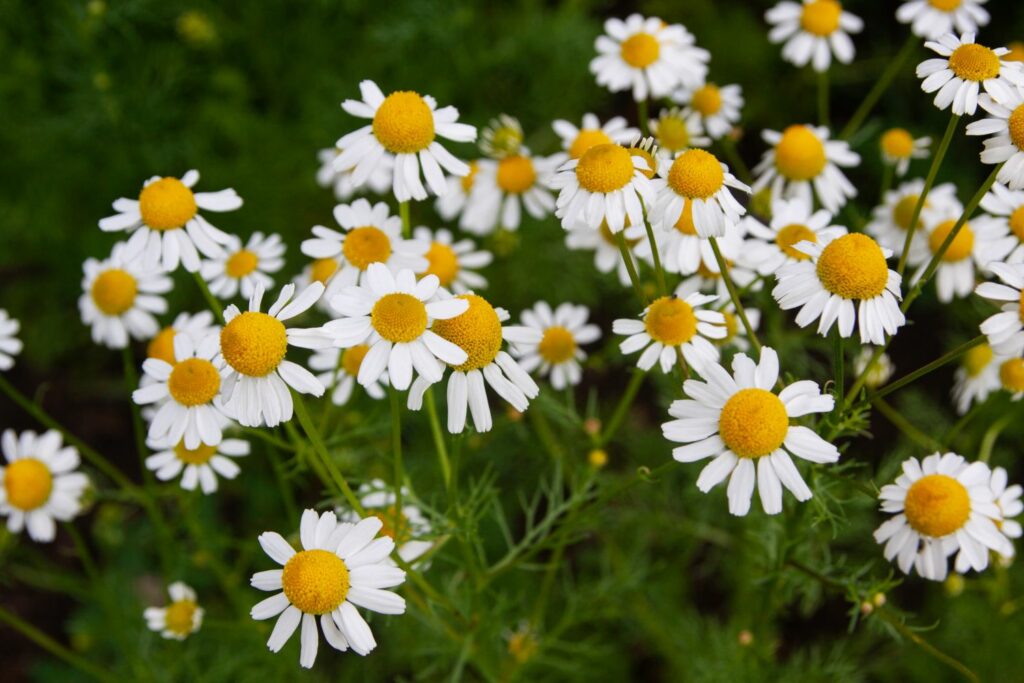
The Roman chamomile (Chamaemelum nobile) is a perennial herbaceous plant belonging to the Asteraceae family, recognizable by its branched stem, narrow and pointed leaves, and white flowers arranged in clusters of 2-3 cm in diameter, supported by long aromatic peduncles.
In the following paragraphs, we will explore the main characteristics of this plant, as well as some practical tips for cultivating it without problems even in our own homes. We will delve into its properties, cultivation, benefits, and curiosities about Roman chamomile, providing a comprehensive overview of this herbaceous plant.
Contents
- Characteristics of Roman Chamomile
- Season of flowering
- How to cultivate Roman Chamomile
- 3.1 Ideal exposure for the plant
- 3.2 Suitable soil for the plant
- 3.3 Watering the chamomile
- 3.4 Propagation of the plant
- Parasites and diseases that can affect Roman Chamomile
- How to consume Roman Chamomile
- Benefits for health
- Curiosities about Roman Chamomile
Characteristics of Roman Chamomile
The Roman chamomile plant can reach a maximum height of approximately 40 cm and is widely distributed throughout the European continent, particularly in temperate zones, especially in France, in the Anjou region, where it is cultivated for its numerous properties and to extract precious essential oils. In Italy, it is rarely found in its natural state.
There are several species of chamomile, all very similar to each other, although the most commonly used in herbal medicine are Roman chamomile (Chamaemelum nobile) and common chamomile (Matricaria chamomilla).
One notable difference between the two is that Roman chamomile has a slightly bitter taste and more therapeutic properties, guaranteeing a higher yield of essential oils. Among all medicinal herbs, it is undoubtedly the most used in Western countries.
The plant’s appearance is characterized by its delicate white flowers, which are clustered together on long peduncles, giving the appearance of a small pom-pom. The leaves are narrow and pointed, with a bright green color, and are arranged alternately along the stem.
Season of Flowering
The flowers of Roman chamomile are different from those of common chamomile. The capitate inflorescence of Roman chamomile consists of white ligulate flowers outside and yellow tubular flowers inside. The flowering period is scalare, from mid-May to mid-August, approximately.
This plant’s unique blooming cycle allows it to produce multiple harvests per year, making it a valuable crop for herbalists and essential oil producers.
How to Cultivate Roman Chamomile
Here are some simple yet practical tips for cultivating this plant without problems even in your own home.
Ideal Exposure for the Plant
Roman chamomile requires full sun or partial shade. Direct sunlight allows the plant to grow faster, and it can flower in any warm climate, but temperatures should not exceed 40°C. Since the plant is resistant to drought, it does not require special interventions for watering.
When properly exposed, the plant needs careful attention: Roman chamomile prefers sunny areas and cannot tolerate strong winds or cold air currents.
Suitable Soil for the Plant
The plant does not grow at high altitudes and prefers soils rich in silica, well-drained, and sandy. It develops well in sunny areas protected from strong winds. On the other hand, its flowers fear nighttime humidity.
As we mentioned earlier, the soil should be dry and always well-drained. Roman chamomile is a plant that does not like fertile soils with organic matter, compacted, or acidic reactions.
Watering the Chamomile
Roman chamomile needs frequent watering, usually during the first phase of flowering or, at most, after harvesting the flowers. During watering, it’s essential to avoid soaking the flowers; instead, use a gentle irrigation method or a watering can with a fine nozzle to prevent overwatering.
Propagation of the Plant
Roman chamomile can be easily propagated from seed, which should not be buried in the soil but placed on a well-drained surface and rolled out. Another method of reproduction is through division of the plant, as most cultivated varieties are sterile. This process takes place at the end of the vegetative growth period and after the flowers have fallen off, by removing young stems with roots.
Parasites and Diseases that Can Affect Roman Chamomile
Most insects cannot harm the Roman chamomile plant; in fact, it is used as a natural deterrent for aphids on celery. However, sometimes, they can become a problem; to remove them from the plant, use a common mild soap.
Parasites:
- Aphids
- Whiteflies
- Thrips
Diseases:
- Leaf spot (caused by various fungi)
- Powdery mildew (caused by various fungi)
- Root rot (caused by overwatering)
To prevent these parasites and diseases, ensure good air circulation around the plant, use natural deterrents like neem oil or pyrethrin sprays, and prune regularly to remove infected or damaged leaves.
How to Consume Roman Chamomile
Roman chamomile can be consumed in various forms:
- Tea or infusion
- Essential oil
- Powdered dried herb
- Tincture
- Capsules
- Pastilles
- Cream
To prepare a tea, dry 1-2 tablespoons of the plant’s leaves and flowers, then steep them in boiling water for 5-10 minutes. Strain and drink as needed.
Benefits for Health
Among the many benefits of Roman chamomile, its sedative properties promote relaxation and improve sleep quality. The plant also possesses numerous antioxidant characteristics believed to strengthen our immune system.
It is well known that Roman chamomile is an excellent remedy for colds and infections. A study conducted on some volunteers showed that those who drank five glasses of infusion per day experienced a significant decrease in blood pressure.
Curiosities about Roman Chamomile
Flowers are harvested manually from mid-May or with specialized pettins used to collect strawberries. It’s best to proceed early in the morning, just after the plants have dried out from overnight dew. For large-scale cultivation on vast surfaces, especially for essential oil production, flowers will be gathered when most of them are horizontal relative to the stem, as this is when their content of oils reaches its maximum.
In the language of flowers, Roman chamomile symbolizes resistance to adversity.
Roman chamomile is also a popular ingredient in traditional medicine, particularly in Europe and Asia. Its leaves and flowers have been used for centuries to treat various ailments, including anxiety, insomnia, and digestive issues.
The plant’s essential oil has a calming effect on the nervous system, making it an excellent natural remedy for stress relief and relaxation.
In addition, Roman chamomile is used as a natural dye for fabrics, giving them a soft yellow or beige color. The plant’s leaves are also used in cooking, particularly in salads and as a garnish for soups and other dishes.
Conclusion
Roman chamomile is a versatile herbaceous plant with numerous benefits for health and well-being. Its unique properties make it an excellent natural remedy for various ailments, including anxiety, insomnia, and digestive issues. With proper cultivation and care, Roman chamomile can thrive in any temperate climate, providing a valuable crop for herbalists and essential oil producers.
In this article, we have explored the main characteristics of Roman chamomile, its cultivation methods, benefits for health, and curiosities about the plant. We hope that this comprehensive overview has provided you with a better understanding of this fascinating herbaceous plant.


