
Introduction
In the lush tropical forests of Central America and Mexico, a fascinating plant has been growing for centuries. The Monstera deliciosa, also known as the “Monster Fruit,” is a lesser-known species that boasts striking foliage and a sweet, edible fruit. In this article, we will delve into the characteristics, care, and cultivation of this tropical gem.
Curiosities about the Monstera deliciosa
Before diving into its care and cultivation, it’s essential to understand the unique features of the Monstera deliciosa. Its leaves are unlike any other plant, with shapes that resemble a “speckled” or “split” leaf pattern. This distinctive appearance has led some to refer to the Monstera as a “Filodendron-like” plant. In fact, it can be grown indoors in pots, where it can grow quite large and become an impressive decorative piece.
However, the Monstera deliciosa is not just a beautiful plant; it’s also known for its unusual associations with bread and hurricanes. What could possibly link this plant to bread or severe weather? As we explore the world of the Monstera, we’ll uncover the secrets behind these curious connections.
Characteristics of the Monstera deliciosa
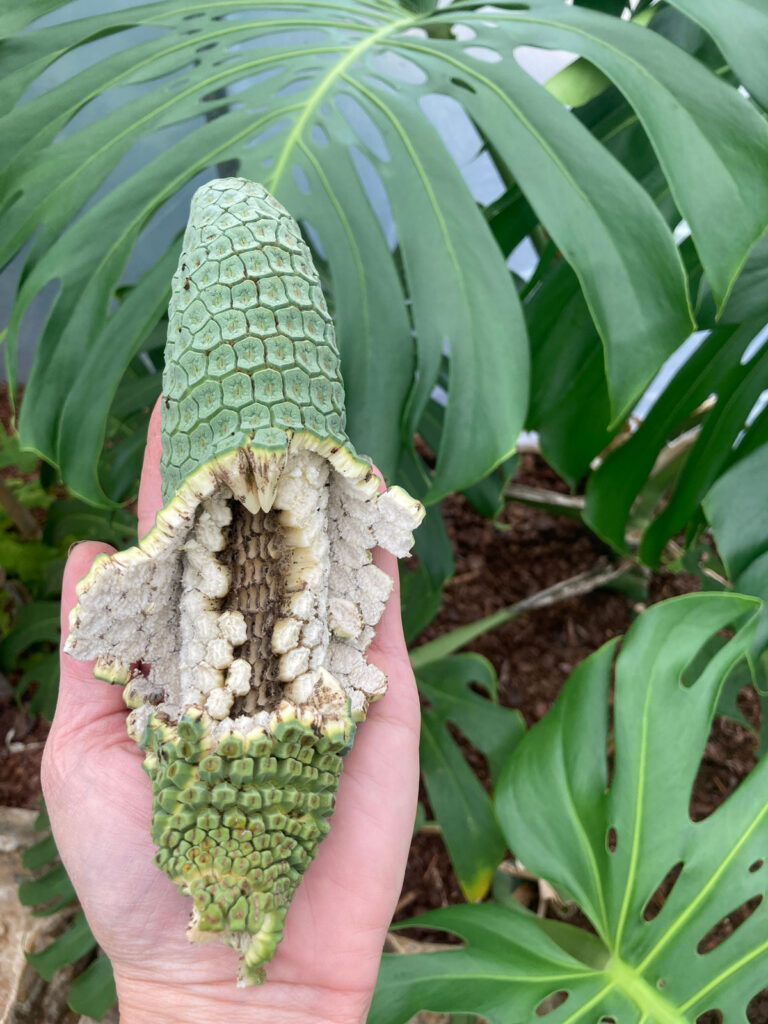
One of the most striking aspects of the Monstera deliciosa is its unique foliage. When grown outdoors in its native habitats, the plant produces flowers and fruits. The fruit, also known as the “Monster Fruit,” is a sweet and edible delicacy that’s similar to pineapple in taste. However, its appearance is quite different, resembling a cluster of spiky, hexagonal-shaped leaves.
There are several varieties of Monstera deliciosa, each with its own distinct characteristics. The most common variety features all-green leaves, while others have variegated or albino leaves with striking white and green patterns. Some rare varieties even display maculate (speckled) or “marbled” effects on their leaves.
Caution: Toxicity
Before bringing the Monstera deliciosa into your home, it’s essential to be aware of its toxicity. Like many plants in this family, the Monstera contains toxic compounds that can harm humans and pets if ingested. However, the fruit is safe to eat, making it a unique and fascinating aspect of this plant.
Cultivating the Monstera deliciosa
To keep your Monstera deliciosa thriving, you’ll need to recreate its natural environment. This means providing temperatures between 20°C to 30°C (68°F to 86°F) and high humidity levels. Avoid direct sunlight, which can cause leaf burn and damage.
When choosing a potting mix, opt for a well-draining, fertile soil that’s rich in organic matter. A large pot with drainage holes is also essential, as the plant’s roots can grow quite extensive. To encourage climbing behavior, provide support structures like bamboo stakes or trellises.
Caring for your Monstera deliciosa
Proper care and maintenance are crucial to keeping your Monstera deliciosa happy and healthy. Here are some tips:
- Water regularly, but avoid overwatering
- Nebulize the leaves with a fine spray of water once a week
- Fertilize monthly during the growing season (spring-fall)
- Prune old or damaged leaves to maintain shape and promote growth
The Monster Fruit: A Sweet Surprise
Finally, let’s talk about the elusive Monster Fruit. This edible fruit is a unique and fascinating aspect of the Monstera deliciosa. Reaching lengths of up to 25 cm (10 in) and widths of 4 cm (1.5 in), it’s a striking addition to any tropical garden.
The taste of the Monster Fruit is often compared to pineapple, but with a sweeter, more complex flavor profile. The fruit’s appearance is equally impressive, resembling a cluster of spiky, hexagonal-shaped leaves.
Propagation and Division
If you’re looking to share your Monstera deliciosa with friends or expand your own collection, propagation is an excellent option. There are several methods for propagating this plant, including:
- Stem cuttings: Take 6-8 inch (15-20 cm) cuttings with at least two nodes, remove lower leaves, and plant in a well-draining potting mix.
- Leaf cuttings: Cut off individual leaves from the mother plant and plant them in a moist environment. Keep the soil consistently moist until roots develop.
- Division: Carefully separate the roots of an overgrown Monstera deliciosa, making sure each section has at least one growing node.
Pest Control and Diseases
As with any indoor plant, it’s essential to monitor your Monstera deliciosa for pests and diseases. Common issues include:
- Spider mites: Use neem oil or insecticidal soap to control these tiny arachnids.
- Mealybugs: Spray the plant with a mixture of water and white vinegar to kill these pesky insects.
- Root rot: Ensure proper drainage and air circulation to prevent this common issue.
Pruning and Training
To maintain your Monstera deliciosa’s shape and encourage climbing behavior, regular pruning is necessary. Remove any dead or damaged leaves, and trim back long vines to promote healthy growth.
When training the plant to climb, provide support structures like bamboo stakes or trellises. You can also use a moss pole or twine to help guide the vine upwards.
Conclusion
In conclusion, the Monstera deliciosa and its fruit are true tropical gems that deserve attention and appreciation. With proper care and cultivation, this unique plant can thrive in your home or garden, providing a fascinating conversation piece and delicious fruit for years to come.
Frequently Asked Questions
- Q: Is the Monster Fruit toxic?
A: No, only the Monstera deliciosa’s leaves are toxic; the fruit is safe to eat. - Q: Can I grow Monstera deliciosa outdoors in my garden?
A: Yes, but ensure you provide suitable conditions, including high humidity and filtered sunlight. - Q: How do I propagate a Monstera deliciosa cutting?
A: Take 6-8 inch (15-20 cm) cuttings with at least two nodes, remove lower leaves, and plant in a well-draining potting mix. - Q: Can I eat the Monster Fruit raw or cooked?
A: Both; try it as a sweet snack or add it to salads for added flavor and texture. - Q: How often should I water my Monstera deliciosa?
A: Water regularly, but avoid overwatering, which can lead to root rot. - Q: Can I grow Monstera deliciosa in a container on my balcony or patio?
A: Yes; choose a large pot with good drainage and provide filtered sunlight. - Q: How long does it take for the Monster Fruit to ripen?
A: The fruit usually takes 3-6 months to mature after flowering. - Q: Can I grow Monstera deliciosa indoors without direct sunlight?
A: Yes; use grow lights or place the plant near a north-facing window with filtered sunlight.
Gardening Tips and Tricks
Here are some additional tips and tricks for growing your Monstera deliciosa:
- Keep an eye out for signs of pests, such as white powdery patches or sticky substance on leaves.
- Avoid overwatering, which can lead to root rot and other issues.
- Use a humidifier near the plant to maintain high humidity levels.
- Prune old or damaged leaves regularly to maintain shape and promote healthy growth.
By following these tips and caring for your Monstera deliciosa with love and attention, you’ll be enjoying its beautiful foliage and delicious fruit in no time. Happy gardening!


