
Introduction
Making homemade ricotta is a simple and rewarding process that allows you to enjoy this versatile Italian cheese in its purest form. With just a few ingredients and some basic kitchen equipment, you can create a delicious and creamy ricotta that’s perfect for snacking, cooking, or baking.
Ricotta is a type of Italian cheese that originated in the southern regions of Italy, particularly in the Campania region. It’s made from whey, which is a byproduct of cheese production, and is often used as an ingredient in pasta dishes, pizza toppings, and desserts like cannoli and cheesecake.
The Benefits of Homemade Ricotta
So why make your own ricotta? For one thing, it allows you to control the quality and consistency of the final product. Store-bought ricotta often contains additives and preservatives that can affect its taste and texture. Additionally, homemade ricotta is much fresher and has a more vibrant flavor than its commercial counterparts.
Making homemade ricotta also allows you to customize the recipe to your liking. You can experiment with different types of milk, flavorings, and textures to create unique variations that suit your taste preferences.
Basic Ingredients and Equipment
To make homemade ricotta, you’ll need just a few basic ingredients:
- 1 liter of milk (whole, low-fat or nonfat)
- 3 tablespoons of salt
- 3 tablespoons of white vinegar or lemon juice
- A large pot for heating the milk
- A colander or strainer for draining the curds
- Cheesecloth or a clean cotton cloth for filtering
- Optional: flavorings, such as herbs, spices, or fruit
You may also want to have some additional equipment on hand, such as:
- A cheese mold or shape to form the ricotta
- A blender or food processor (for mixing and blending)
- A thermometer (for monitoring the temperature)
Step-by-Step Instructions
Here’s a basic recipe for making homemade ricotta:
- In a large pot, heat the milk over medium heat until it reaches a temperature of around 180°F (82°C).
- Once the milk has reached this temperature, remove it from the heat and stir in the salt.
- Next, add the vinegar or lemon juice to the milk and stir gently for about 10-15 seconds.
- Allow the mixture to sit for a few minutes, until you see it start to curdle and separate into curds and whey.
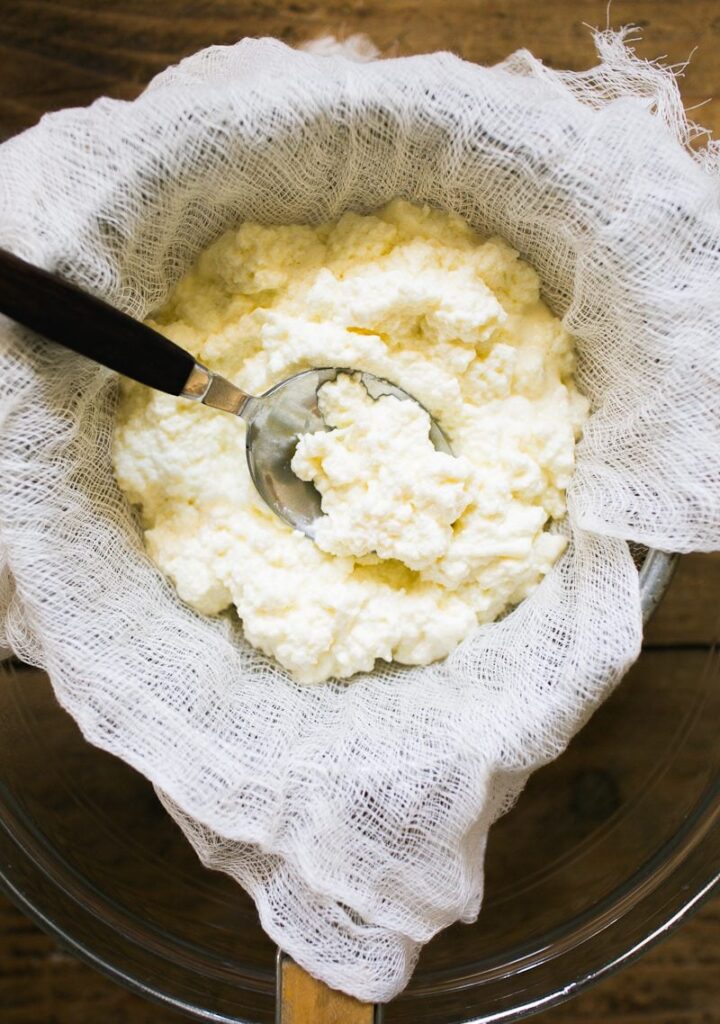
- Line a colander with cheesecloth or a clean cotton cloth and place it over a large bowl.
- Carefully pour the curds and whey into the lined colander and let them drain for about 10-15 minutes, until most of the liquid has been removed.
- Gather up the edges of the cloth and give the ricotta a gentle squeeze to remove any remaining liquid.
Tips and Variations
Here are some additional tips and variations you can try when making homemade ricotta:
- Use high-quality milk: The type of milk you use will greatly affect the flavor and texture of your ricotta. Look for whole, grass-fed cows’ milk or goat’s milk for the best results.
- Experiment with flavors: You can add a range of flavorings to your ricotta, from herbs and spices to fruit and nuts. Try using different types of vinegar or lemon juice to create unique flavor profiles.
- Use different containers: Instead of using a traditional cheese mold, you can also shape your ricotta into other forms, such as balls or logs.
Filtration Methods
One of the most important steps in making homemade ricotta is filtration. This involves removing excess liquid from the curds and allowing them to drain through a cheesecloth or clean cotton cloth.
Here are some additional tips for filtering your ricotta:
- Use a fine-mesh sieve: A fine-mesh sieve can help remove any remaining liquid from your ricotta.
- Use a cheesecloth with small holes: Cheesecloths with small holes will allow more liquid to pass through, creating a creamier texture.
Forming and Shaping the Ricotta
Once you’ve filtered your ricotta, you can shape it into various forms, such as balls or logs. Here are some additional tips for forming and shaping your ricotta:
- Use a gentle touch: When handling your ricotta, use a gentle touch to avoid breaking up the curds.
- Experiment with different shapes: You can try making different shapes with your ricotta, such as cubes or slices.
Common Issues and Solutions
Here are some common issues that may arise when making homemade ricotta, along with solutions:
- Ricotta too salty? Try adding more milk to dilute the flavor.
- Ricotta too watery? Try using a finer-mesh sieve or cheesecloth to remove excess liquid.
Storage and Shelf Life
Homemade ricotta has a relatively short shelf life due to its high water content. To extend its shelf life, it’s best to store it in an airtight container in the refrigerator for up to 3 days. You can also freeze it for longer-term storage.
Here are some additional tips for storing and preserving your homemade ricotta:
- Wrap it tightly: Use plastic wrap or aluminum foil to cover the container and prevent air from reaching the ricotta.
- Label and date it: Be sure to label and date the container so you can keep track of how long it’s been stored.
Conclusion
Making homemade ricotta is a simple and rewarding process that allows you to enjoy this versatile Italian cheese in its purest form. With just a few ingredients and some basic kitchen equipment, you can create a delicious and creamy ricotta that’s perfect for snacking, cooking, or baking.
Here are some additional FAQs related to making homemade ricotta:
- Q: Can I use almond milk or soy milk instead of cow’s milk?
A: Yes, but the flavor and texture may be slightly different. - Q: How long does it take to make homemade ricotta?
A: It typically takes around 30-45 minutes to make a batch of homemade ricotta. - Q: Can I use a food processor or blender to make ricotta?
A: No, these appliances are not suitable for making ricotta.


