
Are you tired of feeling embarrassed by those sudden, uncontrollable contractions of your diaphragm? Do you wish there was a way to stop hiccups without relying on medication or medical intervention? Look no further! In this article, we’ll delve into the causes and cures for hiccups, as well as some effective natural remedies to help you overcome this common ailment.
The Science Behind Hiccups
Before we dive into the solutions, let’s take a closer look at what happens when your body decides to hiccup. The diaphragm, a dome-shaped muscle that separates your chest and abdominal cavities, plays a crucial role in breathing. When it contracts, it helps draw air into your lungs. However, sometimes this muscle can become irritated or inflamed, leading to an abnormal contraction of the diaphragm.
Hiccups are caused by the sudden closure of the glottis (the opening between the vocal cords), which prevents air from entering the lungs. This closure is triggered by the irritation of the nerves that control the diaphragm, often due to eating too quickly or drinking too much liquid.
History of Hiccup Remedies
The ancient Greek physician Hippocrates is credited with finding a remedy for hiccups that still stands today: holding your breath for 15 seconds while remaining in apnea. This technique allows your diaphragm to relax, which can help stop the hiccup spasms. While this method may seem simple, it’s surprisingly effective.
Throughout history, various cultures have developed their own remedies for hiccups. In ancient Rome, people believed that hiccups were caused by an imbalance of “hot” and “cold” energies in the body, while in medieval Europe, doctors used a range of treatments, including bleeding, purging, and applying poultices to the stomach.
Preventing Hiccups
While some people experience hiccups after consuming large amounts of food, others believe that the body is trying to tell us something – in this case, to slow down on the eating. To prevent hiccups from occurring in the first place:
- Eat slowly and mindfully
- Avoid drinking too much alcohol or spicy foods
- Take breaks between bites
Additionally, maintaining a healthy lifestyle can help reduce the likelihood of hiccups. This includes:
- Drinking plenty of water to stay hydrated
- Exercising regularly to improve digestion and overall health
- Managing stress levels through relaxation techniques like meditation or yoga
Natural Remedies for Hiccups
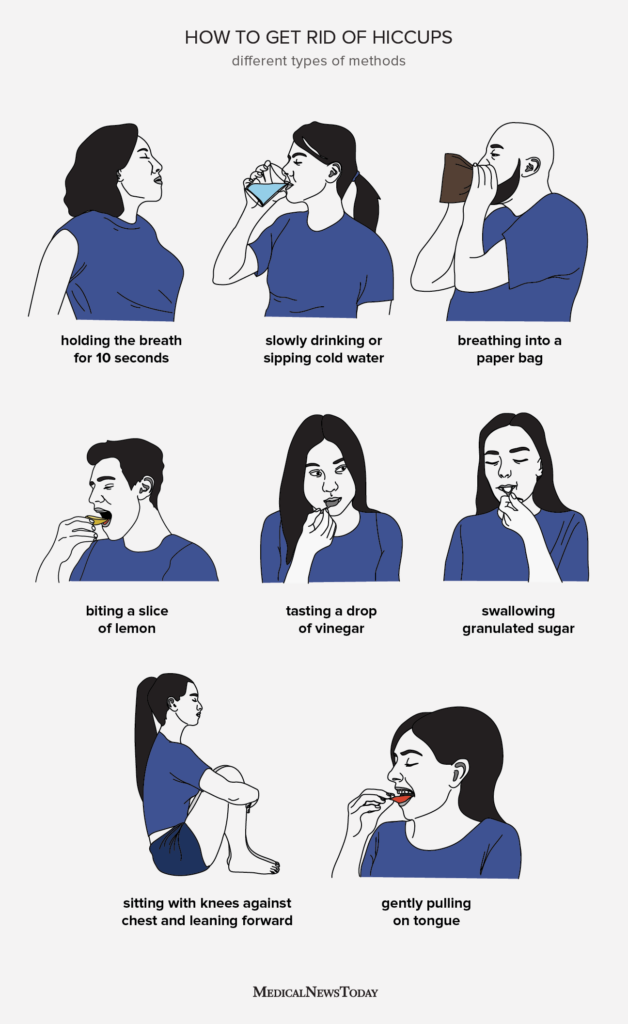
Now that we’ve covered prevention, let’s explore some effective natural remedies to help you overcome hiccups:
1. Breathe Deeply and Hold Your Breath
As mentioned earlier, holding your breath for 15 seconds while remaining in apnea can help relax the diaphragm and stop hiccup spasms.
2. Drink Water and Count Backwards
Drinking a glass of water while counting backwards mentally can distract your brain from the hiccups. This simple technique may seem silly, but it’s surprisingly effective!
3. Sugar Rush
Inhaling sugar quickly can stimulate the diaphragm and block its contractions. Simply take a spoonful of sugar and inhale it rapidly through your nose.
4. Stress Relief
Sometimes, hiccups can be caused by stress or excitement. Try to calm down and relax – this might help soothe the hiccup spasms.
5. Gargling with Water
Swallowing a glass of water while gargling can help stimulate the vagus nerve, which regulates breathing.
6. Acetic Acid Trick
Drinking a teaspoon of acetic acid (such as vinegar) may cause a mild contraction in the esophagus, which can block hiccup spasms.
7. Ear Pressure
Closing your ears with your fingers and compressing them for a few minutes can stimulate the vagus nerve, helping to relax the diaphragm.
8. Breathing with Your Ears Tapped
Inhaling slowly while keeping your ears closed can help calm down the hiccup spasms.
Additional Remedies to Try
If the above remedies don’t work for you, try these additional techniques:
- Inhale mint or anise oil
- Use a humidifier to soothe your throat and diaphragm
- Practice relaxation techniques like meditation or deep breathing exercises
- Apply heat or cold packs to your stomach or diaphragm
Conclusion: Finding Relief from Hiccups
While hiccups might be a common occurrence, they can be uncomfortable and embarrassing. By understanding the causes and trying these natural remedies, you can find relief from this annoying condition. Remember to breathe deeply, drink water, and relax – these simple techniques may just help you overcome those pesky hiccups.
Frequently Asked Questions
- Q: What is the most effective remedy for hiccups?
A: While there’s no single answer, holding your breath for 15 seconds while remaining in apnea is often cited as one of the most effective techniques. - Q: Can I drink alcohol if I have hiccups?
A: No, drinking alcohol can irritate the stomach and esophagus, making hiccup spasms worse. - Q: How do I prevent hiccups from happening in the first place?
A: Eating slowly, avoiding spicy foods, and taking breaks between bites can help reduce the likelihood of hiccups. -
Q: Can I try any other remedies besides those listed here?
A: Yes! There are many other natural remedies for hiccups that you can try, such as inhaling essential oils or using a steam inhaler to soothe your throat and diaphragm. -
Q: Will these remedies work for everyone with hiccups?
A: While the techniques listed above have been effective for many people, everyone’s body is different – you may need to experiment to find what works best for you. -
Q: Can I use these remedies if I’m pregnant or breastfeeding?
A: Consult your healthcare provider before trying any new remedies while pregnant or breastfeeding. -
Q: Are there any medical conditions that can cause hiccups?
A: Yes, certain medical conditions like acid reflux, asthma, and migraines can cause hiccups. If you experience persistent or severe hiccups, consult with your healthcare provider to rule out any underlying issues. -
Q: Can I try these remedies if I’m elderly or have a weakened immune system?
A: While these remedies are generally safe for most people, it’s always best to consult with your healthcare provider before trying new techniques – especially if you have underlying health conditions.
By exploring the natural causes of hiccups and experimenting with these effective remedies, you can find relief from this annoying condition and take control of your breathing.


