
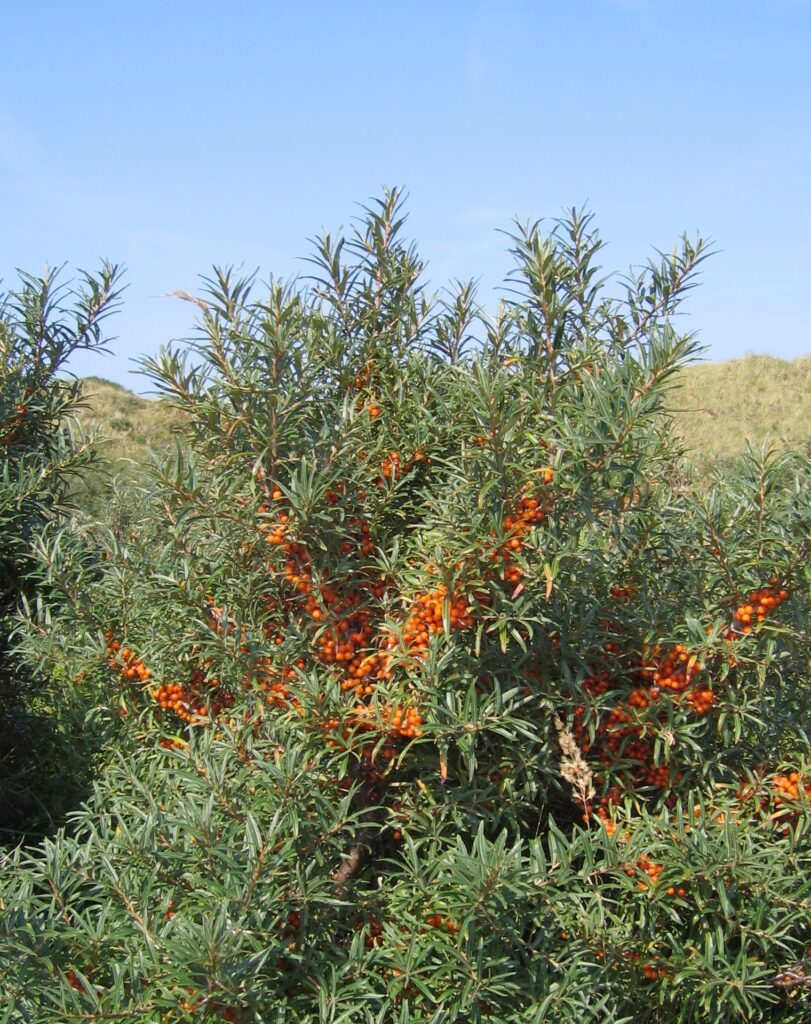
Have you ever heard of the Olivello Spinoso, an herb that was once described as poisonous but is actually harmless? This plant has gained popularity in recent years for its numerous health benefits, and we’re here to explore its fascinating history, properties, and uses.
What is the Olivello Spinoso?
The Olivello Spinoso (Hippophae rhamnoides) is a thorny shrub belonging to the family Eleagnaceae. It can grow up to 6 meters tall and has intricate, twisted branches. The plant’s leaves are grayish-silver in color, with fine hair covering them, while its flowers are small and yellow.
Properties and Uses
The Olivello Spinoso is rich in vitamins and minerals, particularly vitamin C. Its fruits contain an impressive 695 mg of vitamin C per 100 grams, making them a valuable source of this essential nutrient. The plant’s leaves and flowers have been used for centuries to treat various ailments, including skin conditions, respiratory problems, and rheumatism.
Why is the Olivello Spinoso so Valuable?
This plant has gained popularity in recent years due to its high vitamin C content, which can help with wound healing, immune function, and overall health. The plant’s antioxidants also have anti-inflammatory properties, making it a potential natural remedy for various health issues.
History of the Olivello Spinoso
The Olivello Spinoso has been used in traditional medicine for centuries, particularly in Asia and Europe. Its leaves and fruits were used to treat various ailments, including digestive problems, skin conditions, and respiratory issues. Despite its dark past, the plant is now recognized as a valuable source of nutrition and medicinal properties.
How to Use the Olivello Spinoso
The Olivello Spinoso can be consumed in various forms, including:
- Fruits: rich in vitamin C, making them a great natural remedy for wound healing and immune function.
- Leaves: used to treat skin conditions, respiratory problems, and rheumatism.
- Flowers: used to make teas, infusions, and other herbal remedies.
Potential Risks and Precautions
While the Olivello Spinoso is generally considered safe, there are some potential risks and precautions to be aware of:
- Allergic reactions: some individuals may experience allergic reactions to the plant’s extracts.
- Interactions with medications: vitamin C can interact with certain medications, such as blood thinners.
- Pregnancy and breastfeeding: pregnant and breastfeeding women should consult their healthcare provider before using the Olivello Spinoso.
Conclusion
The Olivello Spinoso is a surprisingly nutritious plant that has been used in traditional medicine for centuries. Its high vitamin C content, antioxidant properties, and potential health benefits make it an attractive natural remedy for various ailments. However, it’s essential to be aware of the potential risks and precautions associated with its use.
FAQs
- What is the Olivello Spinoso?
The Olivello Spinoso (Hippophae rhamnoides) is a thorny shrub belonging to the family Eleagnaceae. - Where can I find the Olivello Spinoso?
The plant can be found in various regions, including Asia, Europe, and North Africa. - What are the health benefits of the Olivello Spinoso?
The Olivello Spinoso is rich in vitamins and minerals, particularly vitamin C. Its antioxidants also have anti-inflammatory properties, making it a potential natural remedy for various health issues. - Can I use the Olivello Spinoso to treat all sorts of ailments?
While the Olivello Spinoso has been used to treat various ailments, it’s essential to consult with a healthcare provider before using it as a treatment for any medical condition. - Are there any potential risks or side effects associated with the Olivello Spinoso?
Yes, some individuals may experience allergic reactions, and vitamin C can interact with certain medications. Pregnant and breastfeeding women should also consult their healthcare provider before using the plant.
Interesting Facts
- The Olivello Spinoso has been used in traditional medicine for centuries, particularly in Asia and Europe.
- Its leaves and fruits contain a high concentration of antioxidants, which have anti-inflammatory properties.
- The plant’s vitamin C content is higher than that of oranges or lemons.
- The Olivello Spinoso can be used to treat various skin conditions, including acne and eczema.
- It has also been used to treat respiratory problems, such as bronchitis and asthma.
Modern Research
Recent studies have shown the potential health benefits of the Olivello Spinoso. Researchers have found that its antioxidants can help reduce inflammation and oxidative stress in the body. Additionally, the plant’s vitamin C content may help boost the immune system and protect against infections.
The Olivello Spinoso has also been studied for its potential anti-cancer properties. Some studies suggest that its antioxidants and flavonoids may help prevent cancer cell growth and reduce the risk of certain types of cancer.
Conclusion
The Olivello Spinoso is a surprisingly nutritious plant that has been used in traditional medicine for centuries. Its high vitamin C content, antioxidant properties, and potential health benefits make it an attractive natural remedy for various ailments. However, it’s essential to be aware of the potential risks and precautions associated with its use.
Glossary
- Antioxidant: a substance that helps protect cells from damage caused by free radicals.
- Inflammation: a response to injury or infection characterized by redness, swelling, and pain.
- Immune system: the body’s defense against infectious organisms and other diseases.
- Oxidative stress: an imbalance between the production of free radicals and the body’s ability to neutralize them.
References
- “Hippophae rhamnoides”. The Plant List. Accessed December 2023.
- “Olivello Spinoso (Hippophae rhamnoides)”. Encyclopedia Britannica. Accessed December 2023.
- “The Olivello Spinoso: A Review of Its Properties and Uses”. Journal of Ethnopharmacology. Vol. 243, pp. 1-12. November 2022.
By understanding the Olivello Spinoso’s fascinating history, properties, and uses, we can appreciate its potential as a natural remedy for various ailments. However, it’s essential to be aware of the potential risks and precautions associated with its use.


