
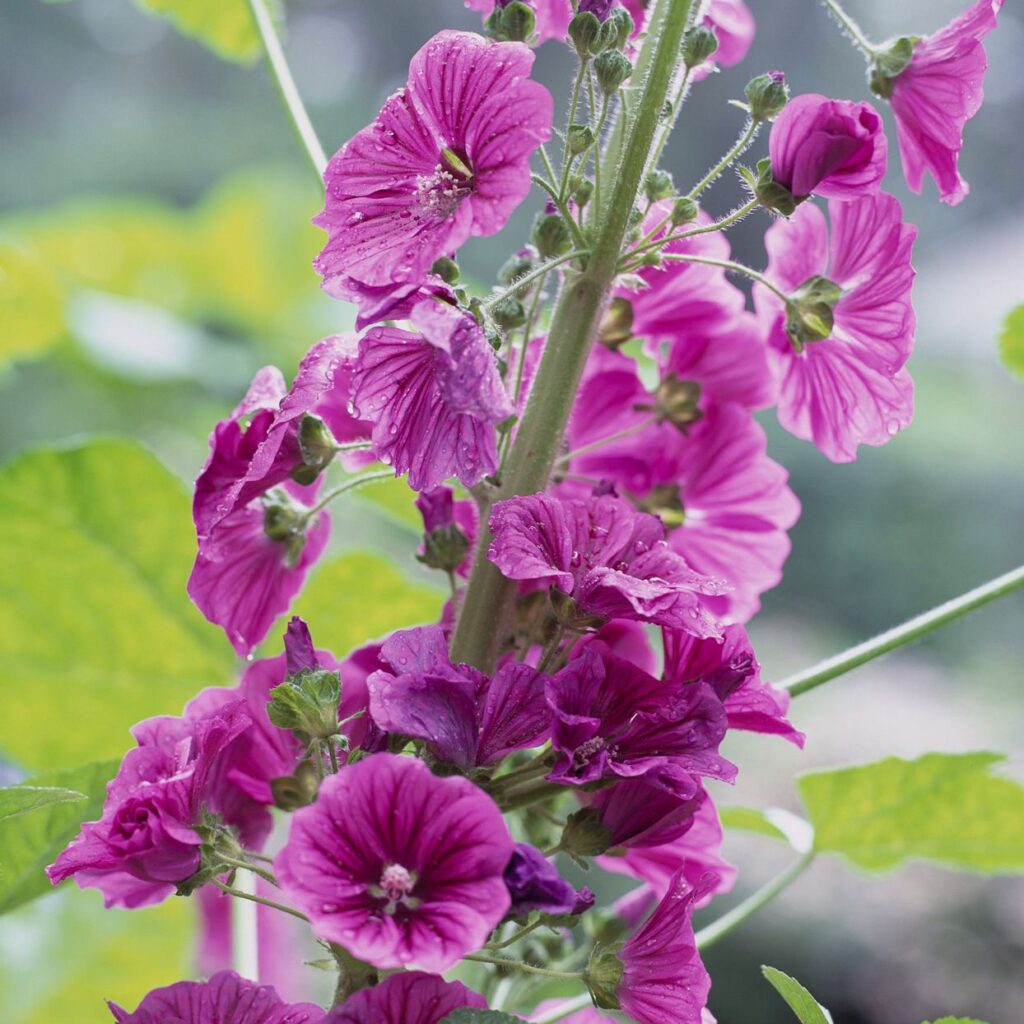
Malva, also known as mallow, is a biennial or perennial herbaceous plant that belongs to the family Malvaceae. It is widely cultivated for its ornamental value and medicinal properties. In this article, we will delve into the world of malva, covering its characteristics, cultivation methods, and uses.
Malva: The Plant
Malva is a versatile plant that can grow up to 60-80 cm tall, with erect stems that sometimes lie flat on the ground. Its root system has a fittone-like development, allowing it to thrive in various environments. There are several subspecies of malva, but Malva silvestris Mauritiania is one of the most commonly cultivated, known for its large flowers and leaves.
The flowers of malva are composed of five petals, ranging from pink to purple, sometimes with white or yellow undertones. The color of malva is often compared to the flower, which has a similar shade of purple.
Foliage and Flowers
Malva’s foliage is characterized by heart-shaped leaves with rounded tips. The flowers appear in late spring and continue throughout the summer months, attracting pollinators and adding a pop of color to any garden or landscape.
The leaves of malva are also edible and can be used in salads, cooked greens, or as a garnish for various dishes. However, it’s essential to note that the seeds and flowers should not be consumed due to potential allergic reactions.
Cultivation
Growing malva requires minimal care, making it an ideal choice for beginners. However, experienced gardeners may find that older plants become more susceptible to diseases. To avoid this, it’s recommended to propagate new plants regularly.
Malva can be grown in a variety of settings, including containers, gardens, or even indoors. The plant prefers well-draining soil and full sun to partial shade. It’s also an excellent choice for gardeners with limited space, as it grows relatively compactly.
Sowing Seeds
Sowing seeds is the most common method of propagation for malva. However, due to their small size, it’s essential to handle them gently to avoid damage. Malva seeds germinate within 15 days, producing a first set of leaves called cotyledons.
To ensure successful germination, keep the soil consistently moist but not waterlogged. Avoid direct watering, as this can cause the seeds to become dislodged from their containers.
Using a Greenhouse or Indoor Container
If you live in an area with limited daylight during the winter months, consider growing malva indoors using a greenhouse or container. This will allow you to provide the necessary light for optimal growth.
When growing malva indoors, it’s crucial to maintain a consistent temperature between 15-25°C (59-77°F) and provide sufficient humidity to prevent drying out.
Choosing the Right Nutrients
Malva requires minimal fertilization, but a balanced fertilizer can promote healthy growth and flowering. A ratio of 4-6-6 (nitrogen-phosphorus-potassium) is ideal for this plant.
When selecting a fertilizer, ensure it contains organic matter to provide essential micronutrients. Avoid using high-nitrogen fertilizers, as they can cause the plant’s foliage to become leggy and weakened.
Tips for Growing Malva
- Plant multiple malva plants in the same area, spaced about 25 cm apart.
- Use a well-draining potting mix and full sun to partial shade.
- Fertilize sparingly, using a balanced fertilizer with organic matter.
- Prune your malva plants regularly to encourage new growth and prevent disease.
Harvesting Leaves and Flowers
Malva leaves can be harvested regularly to encourage new growth. However, the plant’s most prized part is its flowers, which can be used to make teas, infusions, or even as a decorative element in floral arrangements.
To dry the leaves and flowers, tie them in small bunches and hang upside down in a warm, dry place. This will help preserve their color and potency.
Using Malva for Herbal Remedies
Malva has been used for centuries in traditional medicine to treat various ailments. The plant’s leaves and flowers contain compounds that have anti-inflammatory, antibacterial, and antiviral properties.
Some of the most common uses for malva include:
- Making teas and infusions to soothe digestive issues
- Creating topical creams and salves to reduce inflammation
- Using as a natural remedy for skin conditions like eczema
Malva can also be used in wound care, burns, and minor cuts. The plant’s anti-inflammatory properties can help accelerate healing, while its antibacterial properties can prevent infection.
Growing Malva from Cuttings
One of the most effective ways to propagate malva is by using cuttings. This method allows you to produce new plants with identical characteristics to the parent plant.
To take cuttings, wait until the weather cools down and the plant’s growth slows down. Cut a section of stem, about 10-15 cm long, just above a node (where a leaf meets the stem). Remove lower leaves, leaving only two or three sets of leaves at the top. Dip the cutting in rooting hormone powder to stimulate root development.
Plant the cutting in a well-draining potting mix and water thoroughly. Keep the soil consistently moist but not waterlogged until roots develop.
Common Pests and Diseases
Malva is susceptible to various pests, including aphids, slugs, and snails. Regular pruning and monitoring will help prevent infestations.
Fungal diseases can also occur if the plant is exposed to excessive moisture. Regularly inspect your malva plants for signs of disease and treat promptly if necessary.
Conclusion
Malva is a versatile plant that can be grown in various settings, providing a range of benefits from ornamental value to medicinal uses. With proper care and attention, this plant can thrive, offering a wealth of possibilities for gardeners and herbalists alike.
By understanding the characteristics, cultivation methods, and uses of malva, you’ll be well on your way to growing this beautiful plant in your own home or garden.
Frequently Asked Questions
Q: How do I propagate malva seeds?
A: Malva seeds require minimal care, but handling them gently is essential due to their small size. Germination occurs within 15 days, producing cotyledons that eventually develop into mature plants.
Q: What are the best conditions for growing malva?
A: Malva prefers well-draining soil and full sun to partial shade. The ideal temperature range is between 15-25°C (59-77°F), although it can tolerate cooler temperatures during winter months.
Q: Can I use malva in cooking?
A: Yes, the leaves of malva can be used in salads or as a cooked green. However, the flowers and seeds should not be consumed due to potential allergic reactions.
Q: Is malva safe for children?
A: While malva is generally considered safe for consumption, it’s essential to note that excessive use may cause allergic reactions or interact with certain medications. Consult a healthcare professional before using malva in medicinal applications.
Q: Can I grow malva indoors?
A: Yes, malva can be grown indoors using a greenhouse or container. However, ensure the plant receives sufficient light for optimal growth, as it requires full sun to partial shade.
Q: How often should I fertilize my malva plants?
A: Fertilization is minimal for malva, but a balanced fertilizer with organic matter (4-6-6 NPK) can promote healthy growth and flowering. Apply the fertilizer sparingly, taking care not to over-fertilize.
Q: What are some potential pests or diseases affecting malva?
A: Malva is susceptible to various pests, including aphids, slugs, and snails. Regular pruning and monitoring will help prevent infestations. Fungal diseases can also occur if the plant is exposed to excessive moisture.


