
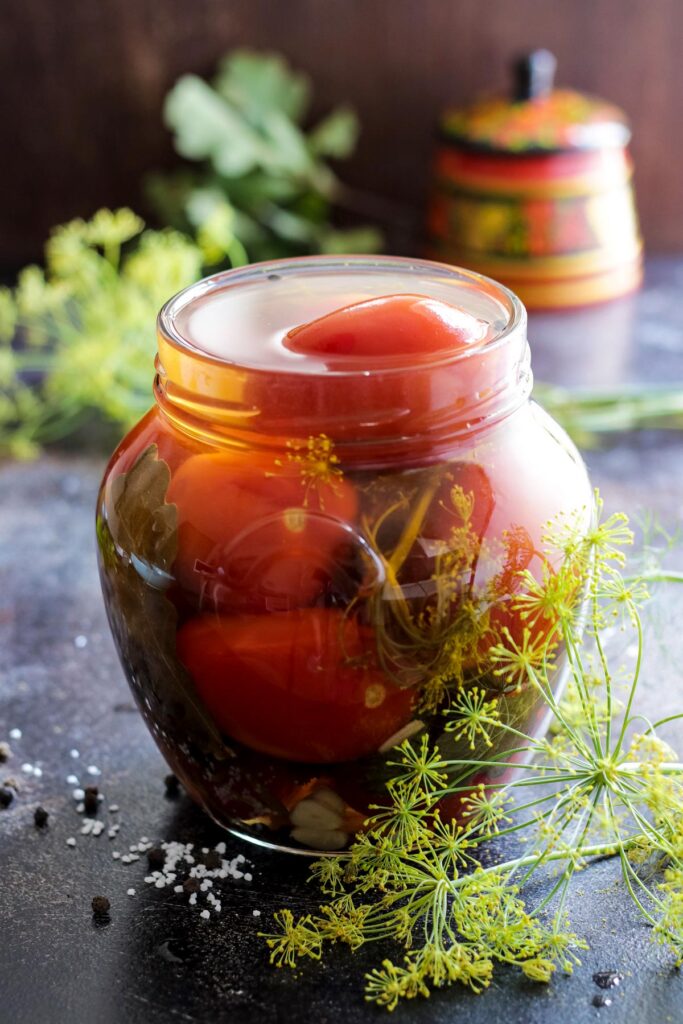
As the most consumed food in the world, tomatoes are an incredibly versatile ingredient. From adding flavor to sandwiches and pizzas to serving as a base for numerous vegetable, meat, and fish dishes, their uses are endless. However, due to seasonal availability, we often rely on preserving methods like pickling to enjoy them throughout the year.
In this article, we’ll show you how to make pickled tomatoes using our simple recipe. This process involves immersing food in a saltwater solution, which is essentially a technique for food preservation that helps draw out moisture from the food and replaces it with salty water that’s infused with spices.
What You Need to Know About Pickling
Before we dive into the recipe, let’s explore what pickling entails. The process involves using a brine (a solution of saltwater) to preserve food by drawing out its natural moisture content and replacing it with saltwater infused with herbs and spices. This method not only helps in preserving the food for a longer period but also enhances its flavor and texture.
Gather Your Ingredients and Equipment
To make pickled tomatoes, you’ll need:
- 1 kilogram of cherry tomatoes (both red and yellow)
- 50 grams of salt
- 1 liter of water
- 10 sprigs of fresh thyme
- 10 leaves of basil
- 5 cloves of garlic
- Sterilized glass jars with tight-fitting lids
- A clean, sterilized needle
Preparing the Brine
To make the brine, combine salt, water, thyme, basil, and garlic in a saucepan. Bring the mixture to a boil for about 10-15 minutes to allow the flavors to meld together.
The brine is an essential component of pickling as it provides the necessary environment for food preservation and flavor development. The acid content from the vinegar or lemon juice helps to create an acidic environment that inhibits the growth of bacteria, which can cause spoilage.
Assembling the Tomatoes
Next, wash your tomatoes thoroughly, removing any damaged or overripe ones. Use the sterilized needle to prick each tomato, creating several small holes on its surface. This step allows the brine to penetrate more easily into the tomatoes during the pickling process.
Pricking the tomatoes is essential for allowing the brine to penetrate deeper and ensuring that the food is evenly preserved. The holes also help to release any air bubbles trapped inside the tomatoes.
Filling and Sealing the Jars
Place the prepared tomatoes in the sterilized jars, leaving enough space at the top for the brine to expand when it’s added later. Pour the prepared brine over the tomatoes, making sure they’re completely covered. Secure the lids tightly on the jars.
When filling the jars, ensure that the tomatoes are submerged beneath the brine. This helps to prevent any air pockets from forming and promotes even preservation throughout the jar.
Canning the Tomatoes
To start the canning process, place the sealed jars in a large pot or saucepan filled with enough water to cover them entirely. Bring the water to a boil and then reduce the heat to a simmer for 20 minutes. This step helps create a vacuum seal inside the jar.
The canning process is crucial as it creates an environment that’s inhospitable to bacteria, thereby preserving the food for a longer period.
Allowing the Tomatoes to Mature
After the canning process, remove the jars from the pot and let them cool on a wire rack or tray. Once cooled, store the pickled tomatoes in a cool, dry place away from direct sunlight and heat sources. They’re ready to enjoy within 1 year of storage.
Allowing the tomatoes to mature allows any remaining air bubbles to escape, ensuring that the jar is sealed properly and preventing spoilage.
How Long Do Pickled Tomatoes Keep?
Pickled tomatoes are shelf-stable for up to 12 months when stored properly. However, if you open the jar, be sure to consume them within 5 days or store them in the refrigerator.
The shelf life of pickled tomatoes depends on several factors such as storage conditions and personal tolerance for spoilage. If you notice any signs of spoilage, such as mold growth or an off smell, discard the pickled tomatoes immediately.
Tips and Variations
- Experiment with different herbs: Try using various combinations of fresh herbs like parsley, rosemary, or oregano to give your pickled tomatoes a unique flavor.
- Adjust the acidity level: If you prefer a milder or more acidic brine, adjust the amount of vinegar or lemon juice accordingly.
Common Mistakes
- Not sterilizing equipment: Failing to properly sterilize jars and utensils can lead to contamination and spoilage.
- Insufficient brining time: Not allowing the tomatoes to sit in the brine for long enough can result in uneven preservation and a lack of flavor.
Conclusion
Making pickled tomatoes is an easy and rewarding process that requires minimal equipment and ingredients. By following our simple recipe and understanding the basics of pickling, you can enjoy your own homemade pickled tomatoes throughout the year. Whether you’re looking for a flavorful condiment or a way to preserve seasonal produce, pickling is an excellent choice.
Frequently Asked Questions
- What are the benefits of pickling?: Pickling not only helps in preserving food but also enhances its flavor and texture.
- How long does it take to make pickled tomatoes?: The entire process from preparation to canning typically takes around 30-40 minutes.
- Can I use other types of tomatoes for pickling?: While cherry tomatoes are ideal, other small tomato varieties like grape or Roma tomatoes can also be used for pickling.
- How do I store pickled tomatoes?: Store the jars in a cool, dry place away from direct sunlight and heat sources.


