
A green roof is a vegetated covering that roots its plants in the traditions of many European countries. For us Italians, the green roof is an innovation linked to biodegradable construction, while in Scandinavian architecture, it is a genuine tradition.
Green roofs have gained popularity worldwide due to their numerous benefits and sustainability features. In this article, we will explore the concept of green roofs, their benefits, types, and costs, as well as the process of setting them up.
What are the Benefits of a Green Roof?
The combination of earth and vegetation planted on roofs allows for well-insulated, protected surfaces that resist air and water, wind and fire. The realization of a green roof should be entrusted to a qualified technician, especially if it’s an intensive green roof. Maintenance depends on the type of vegetation chosen, with an intensive green roof requiring constant maintenance and care, while an extensive green roof needs only an annual intervention.
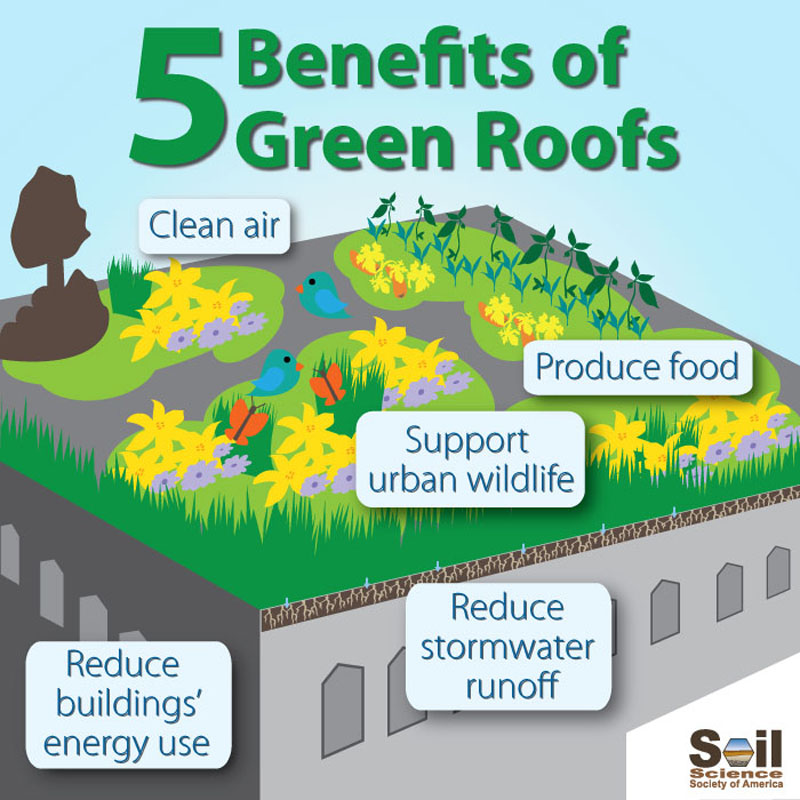
There are many benefits associated with setting up a green roof. Vegetated surfaces play a significant role in insulation, and economic advantages abound: a simple 1°C drop in surface temperature reduces the energy consumption of residential buildings by 5%. This reduction is linked to the reduced demand for electricity for heating and cooling of the premises.
In addition to these economic benefits, there are environmental benefits. Green roofs absorb heat, reduce the use of electrical appliances, and allow for a decrease in harmful emissions. In practice, the air surrounding the house will be cleaner.
For the collective well-being, green roofs reduce the thermal effect typical of urban centers, alleviate sewer systems by absorbing water, and lower temperatures during the summer. How do they achieve this? The matted vegetation absorbs sunlight while classic roofs reflect solar energy in the form of heat. In other words, the air surrounding the house will be fresher.
Inclined Green Roofs and Extensive Green Roofs
The inclined green roof is the most accessible type: it requires thinner layers, lower load capacities, and rarely requires preliminary structural interventions.
The extensive green roof is particularly suitable for large buildings and inclined roofs. It’s characterized by a lower thickness and weight of the substrate that varies between 10 to 15 cm approximately.
Green Roofs and Weight
An extensive green roof has a substrate thickness that ranges from 10 to 15 cm, while its weight can vary between 30 to 100 kg/m² at maximum capacity in water. An extensive green roof requires less maintenance and is only watered in case of prolonged drought.
Typically, for setting up an extensive green roof, you’ll plant mosses, grasses, or succulents, so let’s talk about vegetation that is very resistant and has a slow growth rate: the height of the plants on an extensive green roof never exceeds 25 cm and the association of multiple varieties of vegetation gives these roofs a multicolored appearance that varies with the seasons. The only drawback of an extensive green roof is that it cannot be walked on or cultivated.
Green Roofs with Foot Traffic: Intensive Green Roofs
It’s better not to speak about “green roof walkable”, instead we should say “practical”. An intensive green roof allows you to set up a true garden on the roof, complete with plants, an orchard, and flowerbeds!
In contrast to the extensive green roof, the intensive one has a greater thickness, weighing between 20-40 cm for a load capacity of 120 to 350 kg/m² at maximum capacity in water. The intensive green roof can be cultivated but its realization will require consulting with experts to determine if the building’s structures can support the weight.
The Cost of a Green Roof
In our article “Green Roof: Cost and How to Do It”, we provided information on the price of the green roof key-in-hand, including installation costs and purchasing of arboreal species. The cost varies between intensive and extensive roofs, and it increases significantly if the building’s structure is not already suitable for supporting a certain load, therefore requiring preliminary works to establish a garden on the roof!
The cost of an extensive green roof can range from $10 to $30 per square foot, while the cost of an intensive green roof can range from $20 to $50 per square foot. However, these prices are only estimates and can vary depending on various factors such as location, material quality, and labor costs.
Permits for Building a Green Roof
The bureaucratic process to follow is simple but varies from municipality to municipality: you’ll need to inform yourself that there are no architectural, historical, or landscape restrictions in your area. To present the necessary building permit at the town hall, you must have a signed practice by a qualified technician who will set up the green roof.
Green Roof Structure
The green roof is made of various layers of material and for this reason we talk about stratigraphy. Common online stratigraphy is only general, as every green roof has its own specific needs. We provide here a generic stratigraphy for a typical example of intensive green roofs with natural soil. Stratigraphy sees five different bands that reproduce the natural ground structure:
-
Planting Vegetation: This terminal layer is visible and includes plants of various species based on the type of green roof (intensive or extensive).
-
Cultivation Substrate: It’s called the cultivation stratum and consists of light compost. It can have varying thickness in accordance with the type of plants to be cultivated. For example, for ornamental plants, a layer of 15 cm is required, while for small trees and shrubs, we reach up to 100 cm. A simple lawn requires only 7 cm.
-
Membrane of Filtration: It serves to retain soil and filter water under the underlying draining layer.
-
Drainage and Water Accumulation: This stratum consists of gravel or polietilene, acting to absorb rainwater while retaining a small part to gradually return moisture to the above-soil layer.
-
Impermeable Membrane: This is the most crucial isolant layer. It’s made of synthetic materials and replaces the traditional impermeabilizer already present on roofs.
Conclusion
Green roofs are an innovative solution for reducing energy consumption, improving air quality, and creating sustainable living spaces. By understanding the benefits, types, and costs associated with green roofs, building owners can make informed decisions about incorporating these eco-friendly features into their properties.
In conclusion, setting up a green roof requires careful planning, consultation with experts, and attention to detail. However, the long-term benefits of reduced energy consumption, improved air quality, and increased property value make it an attractive option for homeowners and businesses alike.


