
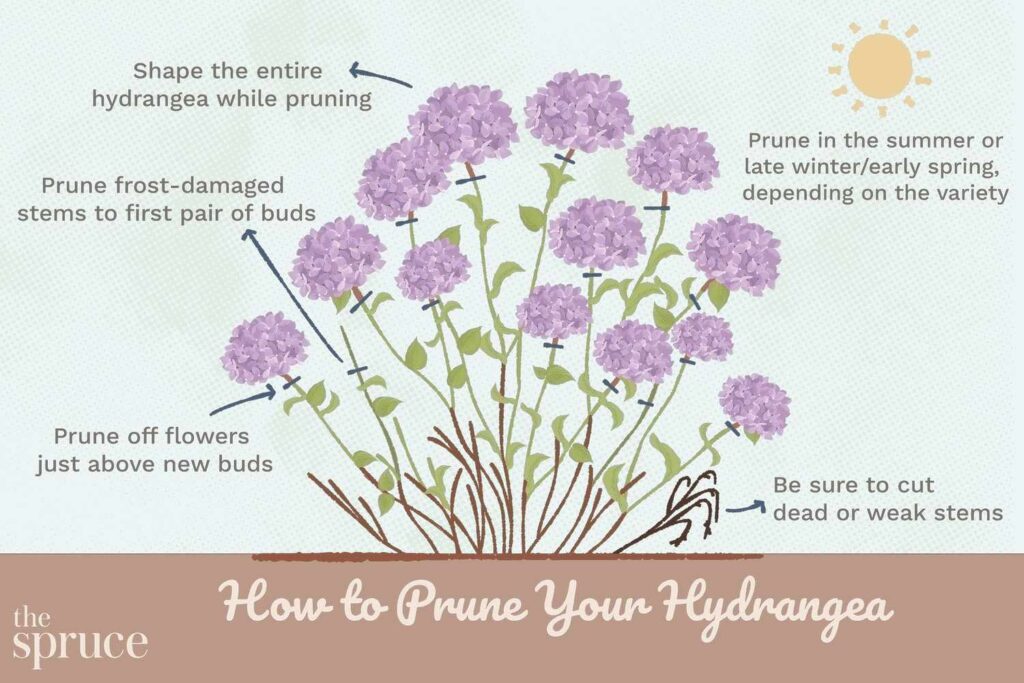
As a seasoned gardener, you’re likely familiar with the importance of pruning your hydrangeas to promote healthy growth and stunning blooms. However, with so many conflicting guidelines and techniques out there, it can be overwhelming to know where to start. In this article, we’ll delve into the world of hydrangea pruning, exploring the best practices, timing, and techniques to help you achieve a bountiful harvest of these beautiful flowers.
Understanding Hydrangea Pruning: The Delicate Art
Pruning hydrangeas can be a delicate art, as it’s essential to strike a balance between maintaining the plant’s overall health and encouraging blooming. In fact, pruning the wrong time or technique can compromise next year’s blooms, making it crucial to approach this process with care.
When to Prune Hydrangeas: Timing is Everything
Hydrangea pruning typically occurs between late winter and early spring, depending on your location and climate. In general, wait until the threat of frost has passed in your area, usually around February or March in warmer climates like the Southern United States. In colder climates, it’s best to delay pruning until April.
The Importance of Proper Pruning Techniques
Proper pruning techniques are vital for promoting healthy growth and encouraging blooming. Here are some key takeaways:
- Remove dead, diseased, and damaged wood: Prune any branches that are dead, diseased, or damaged to prevent the spread of disease and encourage new growth.
- Cut back overgrown stems: Cut back stems that have become too leggy or overgrown to maintain a balanced shape and promote healthy growth.
- Thin out crowded areas: Thin out crowded areas to allow more sunlight to reach the plant, promoting healthier growth and blooming.
Pruning Techniques for Different Hydrangea Varieties
While general pruning guidelines apply to most hydrangea varieties, some specific techniques are necessary for different types of plants. Here’s what you need to know:
- Bigleaf Hydrangeas (Hydrangea macrophylla): These are the most common type of hydrangea and require regular pruning to maintain their shape and promote blooming.
- Panicle Hydrangeas (Hydrangea paniculata): These varieties produce long, cone-shaped flowers and require less frequent pruning to avoid reducing flower production.
Additional Tips for Optimizing Your Pruning Experience
Here are some additional tips to help you optimize your pruning experience:
- Use clean and sharp tools: Use clean and sharp pruning tools to prevent the spread of disease and promote healthy growth.
- Make clean cuts: Make clean, angled cuts just above a node (where a leaf meets the stem) to encourage new growth and promote blooming.
Common Questions and Answers
Here are some common questions and answers related to hydrangea pruning:
- Q: How often should I prune my hydrangeas?
A: Prune your hydrangeas annually, removing any dead, diseased, or damaged wood. - Q: When is the best time to prune hydrangeas?
A: Prune hydrangeas between late winter and early spring, depending on your location and climate. - Q: How do I promote blooming in my hydrangeas?
A: Promote blooming by providing adequate sunlight, watering regularly, and pruning annually.
Additional Hydrangea Pruning Considerations
Here are some additional considerations to keep in mind when pruning your hydrangeas:
- Hydrangea pruning for color variation: If you want to change the color of your hydrangeas from pink to blue or vice versa, prune them back immediately after they finish blooming. This will help control flower production and encourage new growth with a different color.
- Pruning after blooming: Prune your hydrangeas after they have finished blooming for the season to avoid cutting off next year’s flowers.
- Debunking common myths: Don’t believe the myth that pruning hydrangeas in the fall will promote more blooms. This method is not recommended, as it can actually reduce flower production.
Hydrangea Pruning Tools and Supplies
Here are some tools and supplies you’ll need to prune your hydrangeas effectively:
- Pruning shears: Use clean, sharp pruning shears for cutting stems.
- Loppers: Use loppers for thicker branches that are difficult to cut with pruning shears.
- Gloves: Wear gloves to protect your hands from thorns and sap.
- Safety glasses: Wear safety glasses to prevent eye injury from debris.
Tips for Pruning Large Hydrangea Plants
Pruning large hydrangea plants can be intimidating, but here are some tips to help you get the job done:
- Use a step stool or ladder: Use a step stool or ladder to reach high branches safely.
- Cut in sections: Cut branches in sections, working from the bottom up to avoid losing your balance.
- Remove large branches first: Remove large branches first to make it easier to access smaller stems.
Pruning Hydrangeas for Different Gardening Styles
Hydrangea pruning can be tailored to fit different gardening styles and preferences. Here are some ideas:
- Formal garden design: Use regular pruning to maintain a formal, symmetrical shape in your hydrangea plants.
- Informal garden design: Prune hydrangeas less frequently to encourage natural growth and create an informal, relaxed look.
- Wildflower meadow: Cut back hydrangeas significantly to allow them to blend in with wildflowers and create a naturalized look.
By following these guidelines and techniques, you’ll be well on your way to becoming a hydrangea pruning expert. Happy pruning!


