
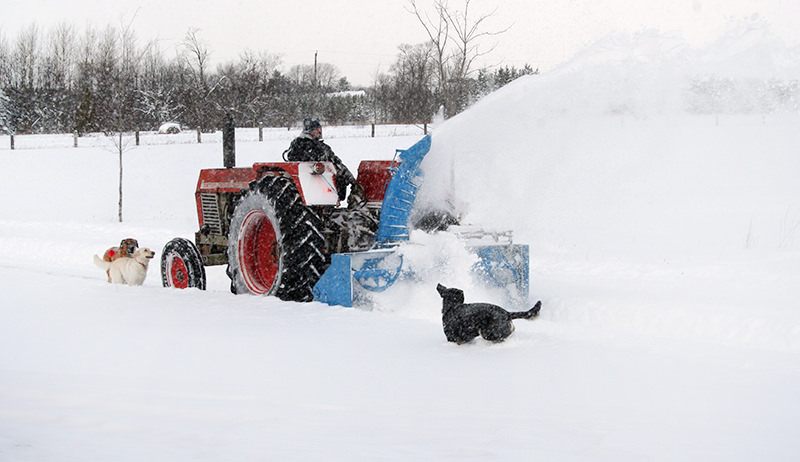
When it comes to emergency situations, people often think of soldiers and law enforcement. But in reality, the true heroes are the ones who work behind the scenes, often without recognition. In this article, we’ll explore how Italian farmers played a crucial role in responding to the snow emergency that hit Italy in 2012.
The Snow Emergency: A Perfect Storm
On February 12, 2012, a severe snowstorm hit Italy, causing widespread disruptions and making it difficult for people to travel. The situation was so dire that many cities were plunged into darkness, and roads became impassable. The storm was part of a larger weather pattern known as the “Polar Vortex,” which brought extremely cold temperatures from the Arctic to the Mediterranean region.
The snow emergency was a perfect storm of factors that came together to create one of Italy’s most severe winter storms in recent history. Heavy snowfall, strong winds, and low temperatures all contributed to the disaster, making it difficult for people to access basic necessities like food, water, and medical care.
Who Were the Real Heroes?
As the public watched on TV, a group of soldiers attempted to clear the roads using their vehicles. However, as one commentator pointed out, this effort was little more than a publicity stunt. In reality, it was the Italian farmers who stepped up to help their fellow citizens in need.
Farmers have always played an important role in rural communities, providing food and other essential products for local residents. But during the snow emergency, they proved themselves to be much more than just producers of agricultural goods. They became heroes by working tirelessly behind the scenes to clear roads, distribute salt and sand, and provide support to isolated rural areas.
The Farmers’ Mobilization
A team of farmers from the Coldiretti association, a national organization that represents farmers and agricultural interests, mobilized to help clear the roads. With over 10,000 tractors at their disposal, they were able to tackle the massive task of clearing snow from streets, roads, and even rural areas.
The farmers’ efforts were coordinated with local authorities, who provided them with maps of affected areas and information on the location of emergency services. The partnership between farmers and local authorities allowed for a highly effective response effort, as the two groups worked together to target areas that needed assistance most.
A Partnership with Local Authorities
One of the key factors in the success of the farmers’ mobilization was their ability to work closely with local authorities. By providing vital support to isolated rural areas, the farmers helped ensure that emergency services could reach those who needed them most.
The partnership between farmers and local authorities also allowed for a highly coordinated response effort. The two groups worked together to identify areas that required assistance, and then mobilized their resources accordingly. This close collaboration enabled the farmers to make the most efficient use of their equipment and personnel, maximizing the impact of their efforts.
Why Farmers Are Essential in Emergency Situations
As Sergio Marini, president of Coldiretti, noted, “The farmers’ role is not just to provide food for the country, but also to help protect public health and safety.” By working together with local authorities, farmers were able to ensure that vital services such as healthcare and emergency services could reach those in need.
Farmers are often overlooked during emergency situations, but they play a crucial role in keeping our communities running smoothly. They provide food, support the transportation of goods, and offer assistance to vulnerable populations. In times of crisis, farmers can help bridge the gap between emergency responders and the public, providing critical support to those who need it most.
Tractors: The Unsung Heroes of Snow Removal
Tractors played a crucial role in clearing snow from roads and rural areas. Equipped with specialized equipment, these tractors were able to distribute salt and sand to prevent ice buildup on roads, making it possible for people to travel safely once again.
The tractors used by the farmers were specially designed for snow removal, featuring large tires, powerful engines, and robust suspension systems. These features allowed them to navigate treacherous terrain and handle heavy loads of snow and debris.
A Nationwide Effort
The farmers’ mobilization was not limited to just one region or city. Tractors were deployed across the country, covering thousands of miles of rural areas and even urban centers. This coordinated effort helped to ensure that all areas of Italy received support, minimizing the impact of the snow emergency.
The nationwide effort was a testament to the farmers’ dedication to their community and their willingness to put themselves at risk to help others. By working together with local authorities, they were able to provide critical support to those in need, helping to keep our communities running smoothly during one of Italy’s most severe winter storms on record.
Breaking Down Barriers: Farmers in Urban Areas
Contrary to what many might think, farmers are not just confined to rural areas. Many farms are located near cities, making them well-positioned to provide assistance during emergencies. By working with local authorities, these urban farmers were able to contribute to the response efforts and help keep their communities safe.
The inclusion of urban farmers in the response effort highlights the importance of coordination between different groups during emergency situations. By recognizing the value of farmers from all backgrounds and providing them with opportunities to contribute, we can build stronger, more resilient communities that are better equipped to handle crisis situations.
The Importance of Community and Coordination
As the snow emergency highlighted, coordination between different groups is essential in responding to disasters like this one. Farmers, local authorities, and emergency services must work together to ensure that everyone’s needs are met.
Community-based initiatives and partnerships between organizations can help build resilience during times of crisis. By working together, we can create strong networks of support that enable us to respond effectively to emergencies.
Conclusion: Recognizing the Value of Farmers
In times of crisis, it’s easy to overlook the role that farmers play in keeping our communities running smoothly. However, as we’ve seen, Italian farmers were instrumental in responding to the snow emergency. By recognizing their value and contributions, we can work towards building stronger, more resilient communities.
Farmers are often taken for granted during times of peace and prosperity, but they prove themselves to be heroes when disaster strikes. By working together with local authorities and providing critical support to those in need, farmers helped ensure that our communities were safe and healthy during one of Italy’s most severe winter storms on record.
Frequently Asked Questions (FAQs)
Q: What was the significance of the farmers’ mobilization during the snow emergency?
A: The farmers’ efforts helped to clear roads, distribute salt and sand, and provide support to isolated rural areas, ensuring that vital services could reach those in need.
Q: How did local authorities collaborate with farmers during the response efforts?
A: Local authorities worked closely with farmers to coordinate their efforts, targeting areas that needed assistance most and providing vital support to families living in isolated rural areas.
Q: What role did tractors play in clearing snow from roads and rural areas?
A: Tractors equipped with specialized equipment were used to distribute salt and sand, making it possible for people to travel safely once again.
Q: Were farmers limited to just rural areas during the response efforts?
A: No, many urban farms were located near cities and contributed to the response efforts by working with local authorities.
Q: What can we learn from the snow emergency about community and coordination in responding to disasters?
A: Coordination between different groups is essential in responding to disasters. By working together, we can ensure that everyone’s needs are met and build stronger, more resilient communities.
Q: How did farmers contribute to ensuring public health and safety during the snow emergency?
A: Farmers helped distribute vital services such as healthcare and emergency services to those in need by working closely with local authorities and providing support to isolated rural areas.


