
Introduction
Chess has been a timeless game that has captured the minds of many, from royalty to common folk. While it may seem like a complex game reserved for intelligent adults, in reality, it can be introduced to children at a young age with remarkable positive results.
In this article, we will explore how, when, and why we should teach children to play chess.
Contents
-
- What are Chess
-
- At what Age to Introduce Children to Chess
-
- How to Start Teaching Children Chess
-
- The Benefits of Playing Chess
What are Chess
Chess is a game of strategy between two players, played on a square board divided into 64 squares, arranged in 8 rows and 8 columns, alternating between light and dark colors.
The primary goal of the game is to put the opponent’s king under attack in such a way that it cannot move without being captured, a situation known as “checkmate.”
Some key points about chess:
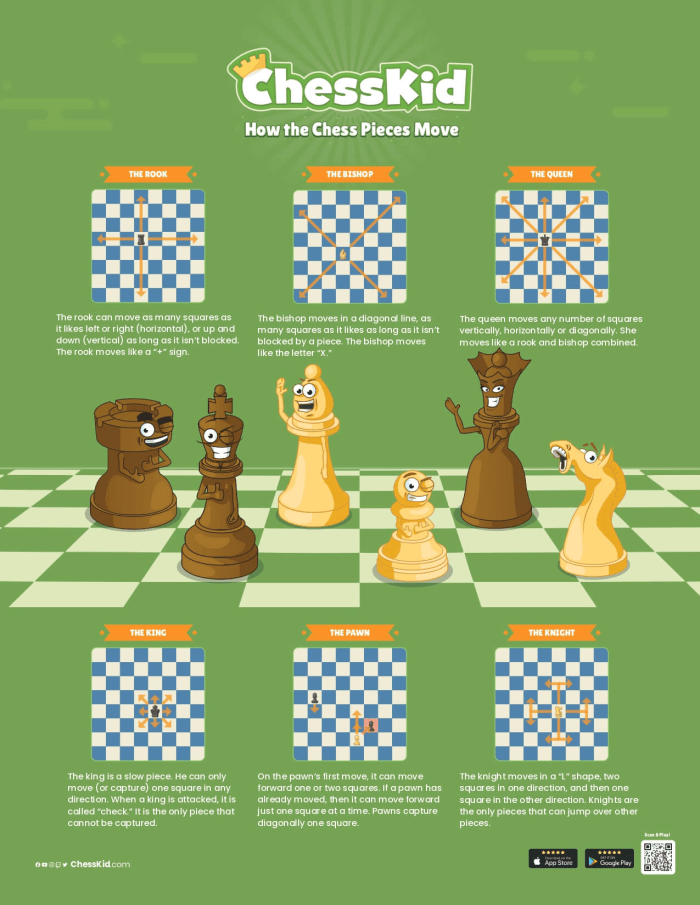
- Chess has six different types of pieces: the king, queen, rook, bishop, knight, and pawn. Each player starts with 16 pieces: one king, one queen, two rooks, two bishops, two knights, and eight pawns.
- Each piece moves in a specific way:
- King: Moves one square in any direction.
- Queen: Can move any number of squares in a straight line (horizontally, vertically, or diagonally).
- Rook: Moves horizontally or vertically in a straight line.
- Bishop: Moves diagonally in a straight line.
- Knight: Moves two squares in one direction and then one square in a perpendicular direction, resembling the shape of an “L.”
- Pawn: Moves forward one square but captures diagonally. It also has a special move called “en passant,” allowing it to capture an opponent’s piece by moving two squares when the opponent’s pawn moves two squares forward from its starting position.
At what Age to Introduce Children to Chess
While there is no specific age for introducing children to chess, many pedagogists and chess masters recommend introducing them between 6 years and 8 years old. At this age, children typically have developed enough patience and attention span to understand the basic rules and start playing simple games.
How to Start Teaching Children Chess
If you already know how to play chess, you can teach children the basics of the game without needing to be a certified instructor or coach, as long as you follow some simple steps:
- Introduce the Board and Pieces
- Show them the chessboard and pieces. Create a story where each piece has a specific role, turning it into a fairy tale.
- Teach Basic Moves
- Start by explaining how each piece moves, beginning with the pawn, then the knight, rook, bishop, queen, and finally the king. Repeat the explanations as needed until they understand.
- Play Simple Games
- Begin with a few pieces on the board and gradually add more. Let them practice playing against you or other children.
- Encourage Practice
- The more they play, the better they’ll become. Encourage them to play regularly.
The Benefits of Playing Chess
Gaming has numerous cognitive benefits for kids:
- **Improves problem-solving skills**: Chess requires strategic thinking and anticipating moves from your opponent.
- Boosts memory: Players need to recall moves made by their opponents, helping improve short-term memory.
- Enhances patience and concentration: Each move needs careful consideration.
- Develops critical thinking: Evaluating options and weighing pros and cons is a crucial skill.
- Fosters discipline: Players must control impulses and think ahead.
In contrast to learning from online resources, having a chess instructor in person offers many benefits:
- Personalized feedback: A teacher can observe your child’s playing style, identifying strengths and weaknesses and providing tailored advice for improvement.
- **Enhanced interaction**: Face-to-face coaching fosters human connection, which can make learning more engaging and motivating.
- Adapts to the learner’s pace: Teachers can adjust their teaching approach to suit your child’s learning speed and style.
- Offers practical experience: Playing against an experienced coach or opponent provides real-world practice that online simulations cannot match.
- Includes deeper psychological insights: Coaches can teach players how to manage stress, recognize opponents’ tendencies, and cultivate a winning mindset.
How Chess Can Improve Cognitive Skills in Children
Research has shown that playing chess can significantly improve cognitive skills in children. These benefits include:
- Enhanced spatial awareness: Players need to visualize the board and pieces, developing their spatial reasoning.
- Improved critical thinking: Evaluating positions and making moves requires logical reasoning and analytical thinking.
- Boosted creativity: Chess players must think creatively to outmaneuver their opponents.
- Better decision-making: Players learn to weigh options and make informed decisions under pressure.
In addition to cognitive benefits, playing chess can also have a positive impact on social skills:
- **Develops communication skills**: Players need to communicate effectively with their opponents and teammates.
- Enhances teamwork: In team games, players work together to achieve a common goal.
- Fosters sportsmanship: Chess encourages players to handle victories and defeats graciously.
Tips for Parents and Educators
If you’re considering teaching chess to children, here are some additional tips:
- Be patient: Learning chess takes time and practice. Be prepared to answer questions and provide guidance as needed.
- Use visual aids: Displaying the board and pieces can help your child understand how they work.
- Make it fun: Incorporate games and puzzles to keep learning engaging and enjoyable.
- Encourage self-study: Allow your child to practice on their own, either with you or independently.
In conclusion, teaching children chess is a rewarding experience that offers numerous cognitive and social benefits. By introducing them to the game at the right age, following simple steps, and emphasizing its value, we can unlock their full potential and foster a lifelong love of learning.


