
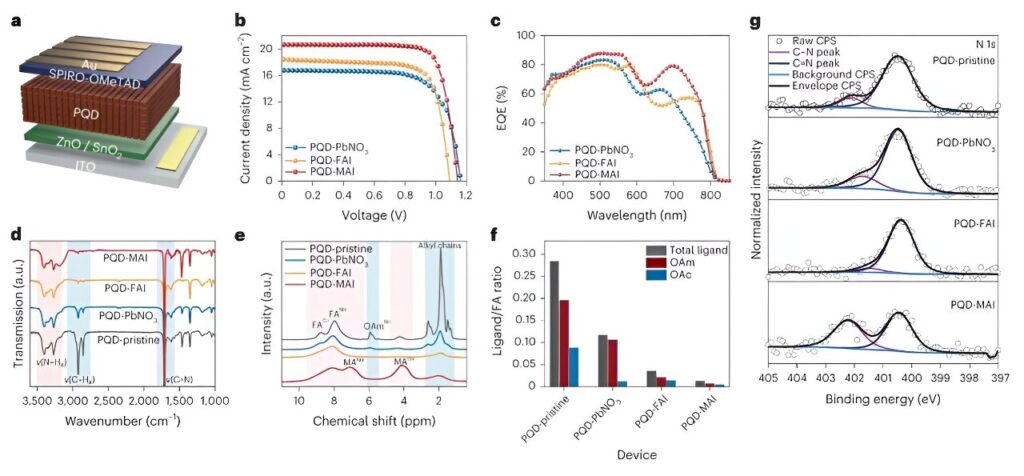
As the world continues to shift towards renewable energy sources, researchers are exploring innovative ways to improve the efficiency and sustainability of solar power. One promising area of research is quantum photovoltaics (QPV), which seeks to harness the unique properties of quantum dots to create more efficient solar cells.
What is Quantum Photovoltaics?
Quantum photovoltaics involves using semiconductor materials at the nanoscale, known as quantum dots, to convert sunlight into electricity. These tiny particles are designed to absorb light energy and release it as electrical current, with the potential to outperform traditional silicon-based solar cells.
In QPV, the conversion of light into electricity occurs through semiconducting materials at the nanoscale. Researchers focus on the concept of “band gap,” where quantum dots are engineered to be tunable in a wide range of energy levels. This allows for the creation of new, multi-junction solar cells that can harness a broader spectrum of sunlight.
The Principle of Quantum Photovoltaics
One of the key principles behind QPV is the use of semiconductor materials at the nanoscale. These tiny particles have unique properties that allow them to absorb light energy more efficiently than traditional solar cells. By using quantum dots, researchers aim to create solar cells that can convert sunlight into electricity with higher efficiency rates.
The principle of QPV also involves the concept of “quantum confinement.” When a quantum dot is placed in a specific environment, its size and shape can be controlled to optimize its energy absorption and conversion properties. This allows for the creation of solar cells with tailored characteristics that can adapt to different light sources and environmental conditions.
History and Development
The first QPV models were produced using expensive epitaxial processes. However, recent advancements have led to more cost-effective fabrication methods using “wet chemistry.” These experiments aim to synthesize quantum dots through wet chemical reactions, enabling the mass production of these tiny particles in a liquid solution.
While significant progress has been made in QPV research, there are still many challenges that need to be addressed. One major issue is the excessive heat generated by quantum dots, which can reduce their efficiency and lifespan. Additionally, the natural isolation of these tiny particles poses a problem, as it reduces the amount of light they can absorb.
Colloidal Quantum Dots (CQDs)
One promising application of QPV is the development of colloidal quantum dots (CQDs), which have set a record for photovoltaic efficiency. These CQDs are highly efficient but still face challenges, including low efficiency rates compared to traditional silicon-based solar cells.
Colloidal quantum dots are synthesized using wet chemistry and consist of tiny particles with unique optical and electrical properties. They have been shown to be highly efficient in converting sunlight into electricity and have potential applications in a range of fields, from consumer electronics to renewable energy systems.
Challenges and Future Directions
Despite its potential, QPV still faces significant challenges. One major issue is the excessive heat generated by quantum dots, which can reduce their efficiency and lifespan. Additionally, the natural isolation of these tiny particles poses a problem, as it reduces the amount of light they can absorb.
To overcome these hurdles, researchers are working to develop new materials and manufacturing techniques that can improve the efficiency and stability of QPV systems. These efforts include the development of new synthesis methods for quantum dots, improved coatings and passivation techniques, and more efficient energy harvesting mechanisms.
Advantages of Quantum Photovoltaics
Quantum photovoltaics offers several advantages over traditional solar cells, including:
- Higher efficiency rates: Quantum dot-based solar cells have shown higher efficiency rates than traditional silicon-based solar cells.
- Increased spectral range: QPV systems can harness a broader spectrum of sunlight, including wavelengths that are not accessible to traditional solar cells.
- Improved durability: Quantum dots are more resistant to degradation and damage than traditional semiconductor materials.
Comparison with Other Emerging Solar Energy Technologies
Quantum photovoltaics is one of several emerging solar energy technologies that aim to improve the efficiency and sustainability of solar power. Some of these technologies include:
- Bifacial solar cells
- Perovskite solar cells
- Thermophotonic solar cells
While each of these technologies has its own strengths and challenges, QPV offers unique advantages in terms of spectral range and durability.
Potential Applications of Quantum Photovoltaics
Quantum photovoltaics has a wide range of potential applications across various fields. Some of the most promising areas include:
- Renewable energy systems: QPV systems can be used to generate electricity for residential, commercial, and industrial applications.
- Consumer electronics: Colloidal quantum dots can be integrated into consumer electronics such as smartphones, laptops, and TVs.
- Medical devices: Quantum dot-based sensors and diagnostic tools have potential applications in medical imaging and diagnostics.
Conclusion
Quantum photovoltaics represents an exciting area of research with vast potential for improving solar energy efficiency and sustainability. As scientists continue to address the challenges associated with QPV, we may see significant breakthroughs in the coming years.
While progress has been made in QPV research, there are still many challenges that need to be addressed. However, with continued investment and innovation, it is likely that quantum photovoltaics will play a significant role in advancing solar energy efficiency and sustainability in the future.
Frequently Asked Questions
Q: What is quantum photovoltaics?
A: Quantum photovoltaics involves using nanoscale semiconductor materials (quantum dots) to convert sunlight into electricity.
Q: How does quantum photovoltaics differ from traditional solar cells?
A: QPV uses tunable energy levels and multi-junction designs to harness a broader spectrum of sunlight, outperforming traditional silicon-based solar cells.
Q: What are the current challenges facing quantum photovoltaic research?
A: Researchers are working to overcome issues such as excessive heat generation, material limitations, and isolation effects on quantum dots.
Q: Can we expect significant improvements in QPV efficiency in the near future?
A: While progress is being made, more research and development are needed to address the challenges associated with QPV.
Q: How does quantum photovoltaics compare to other emerging solar energy technologies?
A: Quantum photovoltaics has shown promising results but faces stiff competition from other areas of solar research.
Q: Can we rely on quantum photovoltaics as a viable replacement for traditional solar cells in the near future?
A: While QPV holds great promise, it is still in its early stages of development and will likely take years to mature.
Q: What role do you see quantum photovoltaics playing in the transition to renewable energy sources?
A: Quantum photovoltaics could potentially play a significant role in advancing solar energy efficiency and sustainability, but more research is needed to realize its full potential.
Q: Are there any existing commercial applications of quantum photovoltaic technology?
A: Currently, there are no commercial products that utilize QPV technology, but ongoing research aims to address these challenges.


