
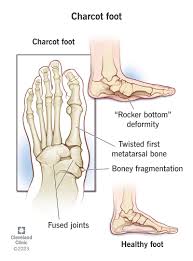
Charcot foot is a progressive condition that affects the bones, joints, and soft tissues of the foot and ankle. It is often a complication of diabetes and occurs due to peripheral neuropathy (nerve damage), which makes the foot or ankle insensitive to pain. In this article, we will delve into the causes, symptoms, diagnosis, treatment, prevention, and management of Charcot foot.
Causes of Charcot Foot
Charcot foot can develop when a person sustains a fracture or break in the foot or ankle and fails to properly treat it due to the lack of sensation caused by peripheral neuropathy. This repeated trauma leads to further degeneration of the bone structure, resulting in the characteristic changes associated with Charcot foot.
Imagine your bones as a strong foundation that supports your body. When this foundation is compromised, the entire structure can collapse. In the case of Charcot foot, the repeated trauma causes the bone to weaken, leading to instability and potentially resulting in deformity.
Symptoms of Charcot Foot
The symptoms of Charcot foot may include:
- A warm or hot sensation on the affected side of the foot when compared to the opposite side
- Redness
- Swelling
- Pain or discomfort
Some joints, such as the ankle, can heal with fibrous tissue, leading to instability that makes it difficult for the person to walk without causing ulcers. In some cases, the deformity can be so severe that surgical intervention may be necessary.
Diagnosis of Charcot Foot
Early diagnosis of Charcot foot is crucial in preventing further deterioration of the affected foot structure. To achieve this, a thorough medical history is conducted, followed by an examination of the foot and ankle to identify signs characteristic of the condition. Additional tests such as X-rays and imaging studies may be required to confirm the diagnosis.
Treatment of Charcot Foot
The initial treatment approach for Charcot foot involves non-surgical methods, primarily immobilization. Since the affected areas are extremely fragile during the initial stages of the disease, it is essential to protect them from further trauma. Immobilization helps the bones repair themselves without additional injury.
During this period, patients may be required to use a cast, splint, or walking aid such as crutches or a wheelchair. The healing process can take several months, with some cases requiring more time than others. To prevent future complications and support the recovery process, custom-made shoes with specialized inserts are often recommended.
In severe cases where deformity is significant, surgical intervention may be necessary to correct the condition. Various procedures exist, including osteotomy (realigning the bone) or fusion (correcting the deformity).
Prevention of Charcot Foot
By taking proactive steps, individuals can play a vital role in preventing Charcot foot and its complications. Key measures include:
- Maintaining blood sugar levels within a healthy range to reduce nerve damage
- Regular visits to the doctor
- Avoiding injuries such as bruising or overexertion
Conclusion
Charcot foot is a serious condition that requires prompt attention and proper management. By understanding its causes, recognizing its symptoms, and adopting preventive measures, individuals can significantly improve their chances of successfully managing this condition.
Frequently Asked Questions about Charcot Foot
-
What is the primary cause of Charcot foot?
Peripheral neuropathy (nerve damage) due to diabetes is the main cause.
2. How does Charcot foot develop?It develops as a result of repeated trauma caused by peripheral neuropathy, leading to bone degeneration and instability.
3. What are the symptoms of Charcot foot?Symptoms include pain, swelling, redness, warmth on one side compared to the other, and potential deformity.
4. How is Charcot foot diagnosed?Diagnosis involves a thorough medical history, physical examination, X-rays, and imaging studies.
5. What are the treatment options for Charcot foot?Treatment options include non-surgical methods like immobilization, custom-made shoes with specialized inserts, and surgical intervention in severe cases.
6. How can I prevent Charcot foot?Preventive measures include maintaining healthy blood sugar levels, regular medical check-ups, avoiding injuries, and adopting a healthy lifestyle.
7. What are the potential complications of Charcot foot?Complications may include ulcers, deformity, pain, swelling, and potentially even amputation if left untreated.
8. Is Charcot foot a rare condition?While it’s not extremely common, Charcot foot can be underestimated due to misdiagnosis or delayed diagnosis.
By understanding the causes, symptoms, diagnosis, treatment, prevention, and management of Charcot foot, individuals can take the necessary steps to protect themselves from this potentially debilitating condition.


