
Clams and mussels are a popular seafood delicacy, widely farmed throughout the Mediterranean. In some areas of Italy, wild clams are also caught, known as “wild clams” or “rock clams”. But what makes these shellfish so unique? What are the risks associated with consuming them, and how can you clean and cook them safely?
What are Clams?
Clams and mussels are bivalve mollusks that belong to the family Veneridae. They have a hard outer shell, often with two valves that are hinged together by a powerful hinge. The soft flesh inside the shell is edible and considered a delicacy in many cuisines.
Clams can develop on any marine floor, which is why Mediterranean clams are considered invasive species in many countries, including Japan and California. But are they safe to eat? Let’s dive into the world of clams and explore the risks associated with consuming them.
The Risks of Eating Raw Clams
Many people claim that eating raw clams causes stomach problems or is unsafe. But what’s really going on?
Clams are filter feeders that collect a large amount of particles and microorganisms (including pollutants and pathogens) in their gills. If collected in areas near urban sewage or where marine currents bring pollutants from polluted waters, the clams can easily become a breeding ground for harmful bacteria and/or viruses to humans.
The Dangers of Eating Raw Clams
For example, since clams developed in polluted areas can become carriers of diseases such as typhus, cholera, paratyphoid fever, hepatitis virus, and norovirus, it’s not safe to eat raw clams, even with lemon juice. These bacteria can be present on the surface of the clam shell or inside the flesh.
Cooking Clams: A Safer Option
So why do raw clams cause problems? Since cooked clams are safer, many risks are eliminated, although some toxic algal compounds (DSP and PSP) can cause gastrointestinal and neurological symptoms and do not get deactivated by cooking. Therefore, I recommend buying clams from a trusted supplier or fisherman.
How to Open Clams for Cooking
At the time of cooking, clams must necessarily open to allow the edible tissue to reach temperatures that will deactivate any pathogens. This is where things can get tricky. Some species of clams, such as the quahog clam (Mercenaria mercenaria), are known to be more difficult to open than others.
The Anatomy of a Clam
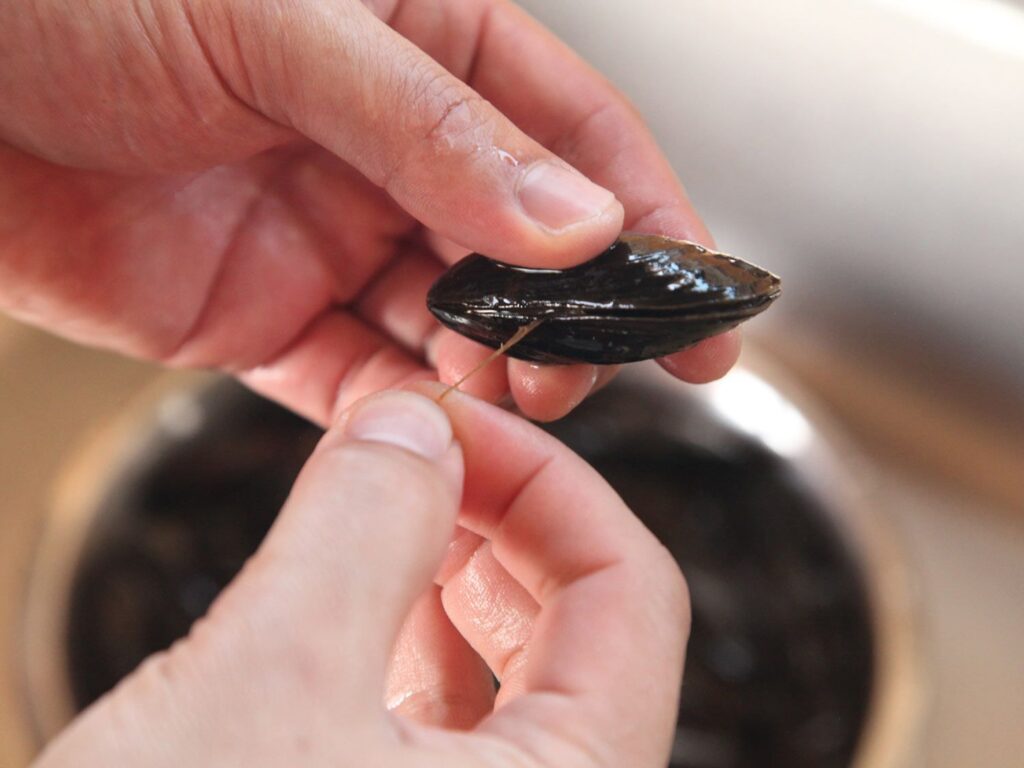
Before we dive into how to clean and cook clams, let’s take a look at their anatomy. The two valves are held together by a hinge with three or four little teeth. To clean the clams, you will need to remove the fibrous filament, also known as “the strepione of the clam” in Naples, or “bisso” in other areas of Italy.
How to Clean Clams
So, how do you actually clean clams? Here’s a step-by-step guide:
- Wash the clams under running water and scrub them against each other to remove all the cirripedi (also known as “dog’s teeth”) and shell deposits.
- If you want a perfect result, you can use a knife to pull out any calcareous deposits.
- There are also those who clean rock clams using metal mesh or hard-bristled brushes!
- Clams should be cleaned one by one: remove the filament that comes out of the flat side of the clam and to completely eliminate it, pull it towards the curved or pointed side of the clam until it is completely torn off.
How to Clean Clams Quickly
Once you’ve removed the bisso at each clam, there’s a shortcut to clean the outer shell quickly. The strategy consists of closing the clams being cleaned in a plastic bag (like household trash bags) and adding a handful of coarse salt and scrubbing it thoroughly for 10 minutes.
Tips and Tricks
Here are some additional tips and tricks to keep in mind when cleaning clams:
- Use gloves when handling clam shells to prevent irritation from the sharp edges.
- If you’re planning to cook clams, make sure they are fresh and have not been sitting out for too long.
- To remove any remaining bits of filament or shell, use a soft-bristled brush or a scrubber sponge.
- For rock clams, be careful when cleaning them with metal mesh or hard-bristled brushes, as the shells can be brittle and prone to breaking.
How to Cook Clams
Cooking clams is relatively easy. Here are some common methods:
- Steaming: Place the clams in a steamer basket over boiling water for 3-5 minutes.
- Boiling: Fill a large pot with enough saltwater to cover the clams, and bring it to a boil. Cook for 3-5 minutes.
- Grilling: Grill the clams over medium heat for 2-3 minutes per side.
Frequently Asked Questions
- Are clams safe to eat?
Clams are generally safe to eat, but it’s essential to clean and cook them properly to avoid any health risks. - Why shouldn’t I eat raw clams?
Raw clams can contain harmful bacteria and/or viruses that can cause illnesses like typhus, cholera, paratyphoid fever, hepatitis virus, and norovirus. - Can I cook clams in the microwave?
No, it’s not recommended to cook clams in the microwave, as this can lead to uneven cooking and a risk of food poisoning. - How do I open clamshells?
To open clamshells, you’ll need to use a sharp object like a knife or a clam cracker to pry them apart. - What’s the difference between “bisso” and “strepione”?
“Bisso” is the Italian term for the fibrous filament that needs to be removed from clams, while “strepione” is another name for this same filament in Naples. - Can I eat red or dark orange clams?
Yes, you can eat red or dark orange clams, but they should be cooked first to ensure food safety. - How do I clean rock clams?
You can clean rock clams using metal mesh or hard-bristled brushes, as well as a sharp object like a knife to remove any calcareous deposits. - Why is it essential to cook clams thoroughly?
Cooking clams thoroughly ensures that any pathogens or toxins are deactivated, making the seafood safe to eat.
Conclusion
Cleaning and cooking clams can seem like a daunting task, but with the right techniques and knowledge, it’s easy to do. By understanding the risks associated with eating raw clams and taking steps to cook them safely, you can enjoy this delicious seafood delicacy without worrying about your health.


