
Moringa oleifera, a plant belonging to the family Moringaceae, grows wild in parts of the equatorial and tropical regions of the world. Its numerous properties have led to its cultivation for various purposes, including culinary, nutritional, environmental, and water purification uses.
The Multifaceted Moringa Oleifera
Moringa oleifera is a versatile plant that has been used for centuries in traditional medicine and as a food source. It is also known as the “miracle tree” due to its numerous health benefits and nutritional properties. The plant’s leaves, seeds, roots, and pods are all edible and can be consumed in various forms.
Culinary Uses of Moringa Oleifera
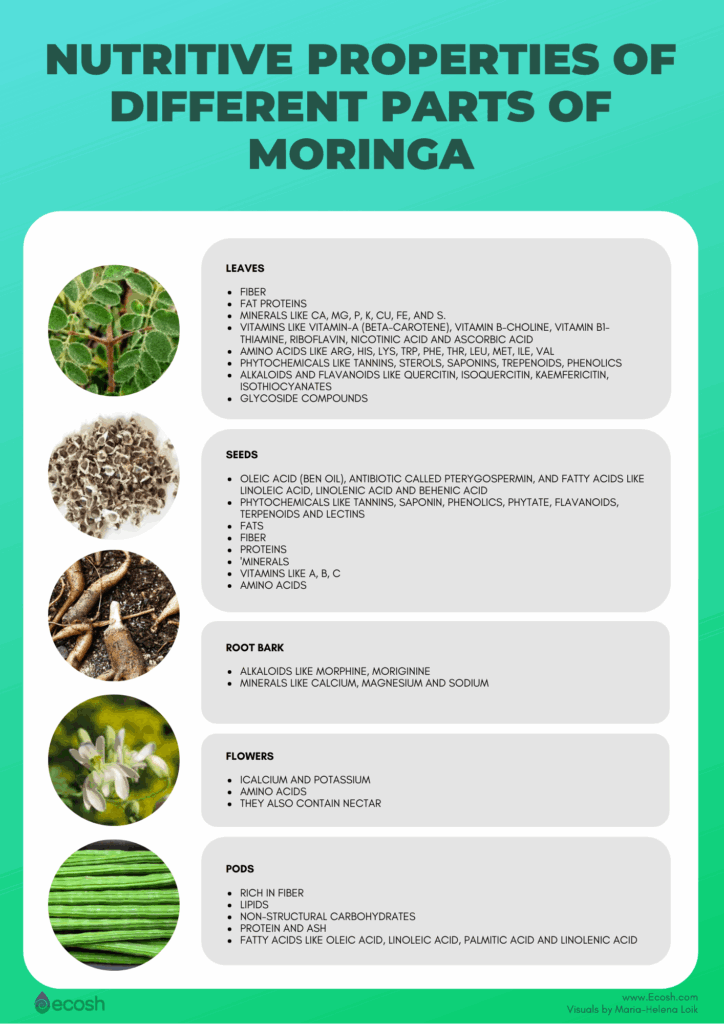
Many parts of the Moringa oleifera plant are edible and possess remarkable health benefits and nutrients. The leaves are rich in protein, vitamins, and minerals, have a slightly spicy taste, and can be consumed raw or cooked like spinach. The fruit and seeds are also commonly consumed, with the immature pods prepared by boiling to give a flavor similar to asparagus.
The leaves of Moringa oleifera are considered a delicacy in many parts of the world and are often used in salads, smoothies, and sautés. They can be cooked in various ways, including steaming, roasting, or grilling, to bring out their natural flavors. The seeds can be boiled or toasted, having a flavor similar to chickpeas. Additionally, the roots can be used in cooking, possessing a more pronounced spicy taste than the leaves and containing some potential hazards for humans.
Individuals seeking information on the contra-indications of Moringa oleifera must be aware that the roots contain a potentially hazardous compound called spirochinine, which can interfere with nerve transmission if consumed in excessive amounts.
Moringa Oleifera Oil
The seeds of Moringa oleifera are able to extract high-quality oil from the plant. The seeds contain between 30% and 50% of oil, an elevated amount considering that olive oil contains only 8-20%. The Moringa oleifera oil contains 65-76% of oleic acid, the same unsaturated fat that makes olive oil famous.
This oil is sweet and savory and does not go rancid. It can be used for human consumption and the preparation of animal feed high in protein. The remaining pasta from oil production contains 60% of high-quality proteins. Residuals of Moringa oleifera oil production can also be used for human consumption or as an ingredient in animal feeds.
Health Benefits and Nutritional Properties
The fruit of Moringa oleifera, according to the Siddha medicine tradition, is considered a potent natural aphrodisiac for both sexes. From a nutritional perspective, the leaves of Moringa oleifera contain 25% of their weight of protein, an amount higher than that found in eggs and indeed twice that found in cow’s milk.
Looking at micronutrients, it can be observed that the leaves of Moringa oleifera contain four times more Vitamin A than carrots and eight times more Vitamin C than oranges. The leaves also contain triple the potassium content found in bananas.
Here is a summary of the nutritional value per 100g of fresh Moringa oleifera leaves:
- Calories: 64 kcal
- Carbohydrates: 8.28 g
- Fats: 1.4 g
- Proteins: 9.4 g
Vitamins:
– Vitamin A: 378 mcg
– Thiamine (Vitamin B1): 0.257 mg
– Riboflavin (Vitamin B2): 0.660 mg
– Niacin (Vitamin B3): 2,220 mg
– Pantothenic acid (Vitamin B5): 0.125 mg
– Vitamin B6: 1,200 mg
– Folic Acid (Vitamin B9): 40 mcg
– Vitamin C: 51.7 mg
Minerals:
– Calcium: 185 mg
– Iron: 4 mg
– Magnesium: 147 mg
– Manganese: 0.36 mg
– Phosphorus: 112 mg
– Potassium: 337 mg
– Sodium: 9 mg
– Zinc: 0.6 mg
78.66g of Water
The immature pods also contain good amounts of vitamins, especially Vitamin C.
Where to Buy Moringa Oleifera
Individuals with a garden and can set up a greenhouse can cultivate Moringa oleifera directly in their yard and harvest the freshest leaves. Those who do not have such conditions can purchase extracts of Moringa oleifera while being cautious not to buy formulations that contain traces of other ingredients.
Interesting options include pure dried powder of leaves without additives or artificial colors and aromas, as well as bottles of 60 capsules of pure Moringa oleifera with Vitamin B6 at a price of €30.99 (currently on offer, pay €1 for every two!).
Growing Moringa Oleifera
Moringa oleifera is a relatively easy plant to grow and can thrive in a variety of conditions. It prefers well-drained soil and full sun to partial shade. The plant is drought-tolerant and requires minimal watering, making it an ideal choice for areas with limited water resources.
Pruning and Maintenance
To encourage healthy growth and prevent the plant from becoming too leggy, regular pruning is necessary. Pinch off the top sets of leaves to promote branching and encourage new growth. Remove any dead or damaged leaves to prevent the spread of disease.
Pest and Disease Management
Moringa oleifera is generally a low-maintenance plant that requires minimal pest and disease management. However, it can be susceptible to pests such as aphids and whiteflies, which can be controlled using organic methods.
In terms of diseases, Moringa oleifera is relatively resistant to common fungal and bacterial infections. However, it can be affected by powdery mildew and leaf spot, which can be treated using fungicides or good agricultural practices.
Conclusion
In conclusion, the Miraculous Moringa Oleifera is an incredible plant that offers numerous health benefits and nutritional properties. Its versatility, ease of growth, and minimal maintenance requirements make it an ideal choice for individuals looking to incorporate this plant into their diet and lifestyle.
Frequently Asked Questions
Q: Is it safe to consume the roots of Moringa oleifera?
A: Yes, but only in moderation due to potential dangers from spirochinine.
Q: Can I grow Moringa oleifera directly in my yard?
A: Yes, if you have a garden and greenhouse facilities available.
Q: What are some common uses for the oil extracted from Moringa oleifera seeds?
A: Oil can be used for human consumption or as an ingredient in animal feed high in protein.
Q: Are there any potential side effects of consuming Moringa oleifera leaves?
A: No, they are generally considered safe for human consumption.
Q: Can I use the immature pods and roots interchangeably in cooking?
A: No, due to differences in flavor, texture, and nutritional content.
Q: What is the best way to purchase Moringa oleifera products?
A: Look for pure extracts without additives or artificial ingredients.
Q: Is Moringa oleifera oil suitable for all skin types?
A: Yes, it has moisturizing and anti-inflammatory properties.
Q: Can I consume Moringa oleifera leaves as a regular supplement to maintain good health?
A: It is recommended that you consult with a healthcare professional before doing so.


