
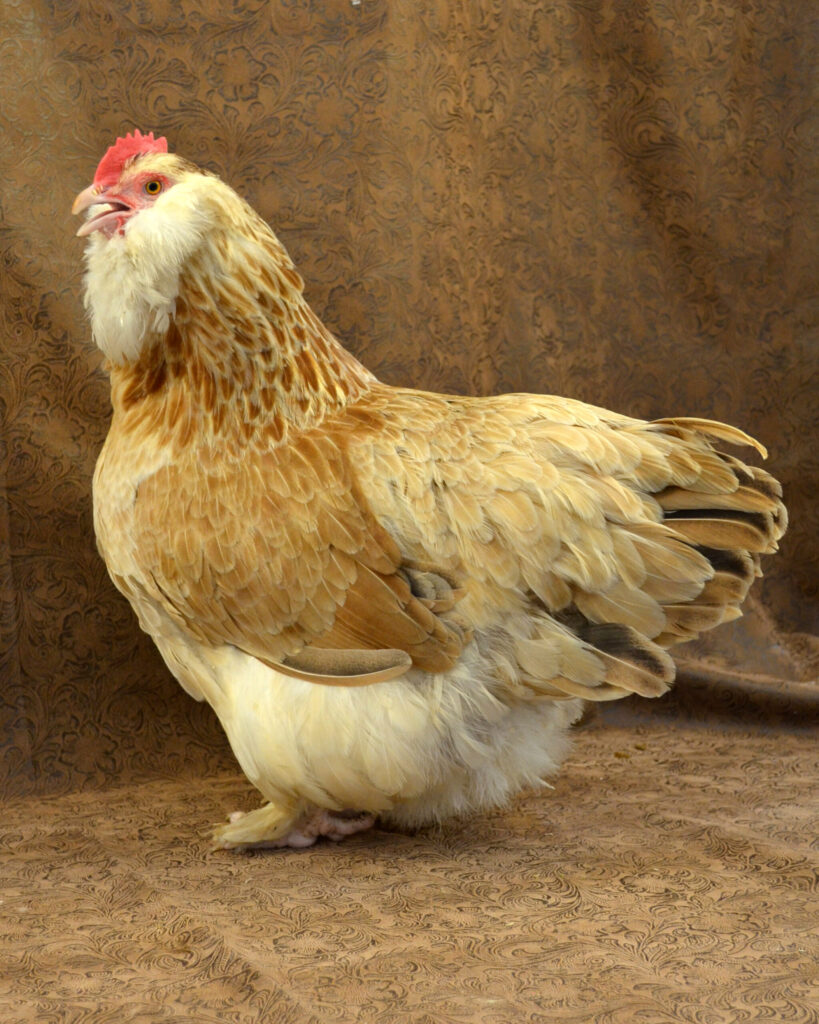
Introduction to the Faverolles Breed
If you’re looking for a chicken breed that’s not only beautiful but also charming, then you need to meet the Faverolles. This French breed has been around since the 19th century and is renowned for its stunning appearance and gentle nature.
The Faverolles is one of the oldest breeds in France, with a rich history that dates back to the early 1800s. It was created by crossing various breeds such as Brahma, Cocincina, Langshan, Dorking, and Houdan. After many years of selective breeding, the breed’s characteristics were finally established, earning it the name “Faverolles” in honor of the village where it originated.
History of the Faverolles Breed
The story behind the Faverolles’ creation is a fascinating one. The breed was initially developed to create a bird that combined the best qualities of its parent breeds. The goal was to produce a chicken with a unique appearance, while also maintaining their desirable traits such as egg-laying ability and friendly nature.
Over time, the Faverolles became a popular choice among French poultry farmers due to its stunning looks and gentle demeanor. Today, it’s considered one of the most beautiful breeds in France, known for its impressive plumage, striking headgear, and elegant movements.
Physical Characteristics of the Faverolles
The Faverolles is a majestic bird with an impressive size. The rooster weighs at least 3.5 kg, while the hen weighs around 2.8 kg. Its plumage is abundant and elegant, despite its substantial build. One of the most distinctive features of the Faverolles is its striking headgear, which includes a beard and mustaches.
The bird’s head is adorned with an impressive amount of feathers, including ciuffi (feathers on the sides) that cover the lower part of the face. The beak is also quite long and prominent. The crest is simple, consisting of 4 or 5 evenly spaced feathers.
Head Features of the Faverolles
The Faverolles’ head is one of its most striking features. The bird’s head is adorned with an impressive amount of feathers, including ciuffi (feathers on the sides) that cover the lower part of the face. The beak is also quite long and prominent, giving the bird a unique appearance.
The crest on the Faverolles’ head is simple, consisting of 4 or 5 evenly spaced feathers. This adds to the bird’s elegant look, making it one of the most recognizable breeds in the world.
Legs and Feet of the Faverolles
One notable feature of the Faverolles is its five-toed feet, a rarity in chicken breeds. The legs are well-proportioned and sturdy, with a natural feather covering that helps to protect them from injury.
The mantellina (feather covering the neck) is also an attractive feature on the Faverolles. This adds to the bird’s overall elegance, making it a popular choice among poultry enthusiasts.
Colors of the Faverolles
The Faverolles comes in two recognized colors: argentata frumento and sparviero. The former has a white base with golden-brown plumage, while the latter is characterized by its striking black and gold feathers.
Sparviero Faverolles are particularly rare, making them highly sought after by collectors and enthusiasts. However, both colors are stunning in their own right, showcasing the breed’s unique beauty.
Keeping Faverolles Chickens
Faverolles are highly valued for their decorative appeal, making them a popular choice among hobbyists and small-scale farmers alike. They’re known to make excellent companions due to their calm nature, which makes them an ideal addition to even the smallest backyard flocks.
However, it’s essential to provide sufficient space as they can easily gain weight if not managed properly. Faverolles require regular exercise and mental stimulation to stay healthy and happy.
Space Requirements for Faverolles
When deciding to keep chickens (or any animal), ensuring enough space is crucial. This is especially true for ornamental breeds like the Faverolles, which tend to overeat if not managed properly.
A good rule of thumb is to provide at least 2-3 square meters of space per bird inside the coop and an additional 10-15 square meters of outdoor space. This will ensure that your birds have enough room to roam freely and stay healthy.
Dietary Considerations for Faverolles
Maintaining a balanced diet is vital when caring for your birds. For Faverolles, it’s recommended to avoid high-calorie feeds that can lead to obesity.
A good quality commercial feed should be the main staple of your bird’s diet. However, you may also want to supplement with fresh fruits and vegetables to provide essential vitamins and minerals.
Egg Production of the Faverolles
The Faverolles begins laying eggs at a relatively young age and produces them with consistent frequency (though not as frequently as some other breeds). The quality of their eggs is also good, although they don’t have much natural inclination towards broodiness or egg-laying.
Reproduction Challenges for the Faverolles
Unfortunately, the Faverolles is not known for its breeding abilities. Without an incubator and/or artificial reproductive methods, producing chicks can be a significant challenge.
This makes it rare to see a Faverolles raising her own offspring, as they tend to rely on outside help to reproduce.
Recommended Reading: Exploring Other Chicken Breeds
If you’re interested in learning more about other chicken breeds, check out our related article that covers the most popular varieties.
Frequently Asked Questions (FAQs)
Q: What is the ideal space for keeping Faverolles chickens?
A: To ensure your birds stay healthy and happy, provide enough room for them to roam freely. This includes a large enclosure with adequate ventilation.
Q: How often should I feed my Faverolles?
A: A balanced diet that limits high-calorie foods is necessary. Avoid overfeeding, which can lead to obesity in these beautiful chickens.
Q: Do Faverolles make good pets?
A: Absolutely! They’re known for their calm and friendly nature, making them perfect companions for anyone looking for a lovable feathered friend.
Q: How often do Faverolles start laying eggs?
A: At around 18-24 weeks of age, the Faverolles begins to produce eggs with consistent frequency.
Q: Can I breed Faverolles chickens naturally?
A: Unfortunately, breeding Faverolles chickens without modern technology can be challenging. They’re not as inclined towards broodiness or egg-laying as other breeds.
Q: Are there different colors of the Faverolles breed?
A: Yes, two main recognized colors are argentata frumento and sparviero. While both are stunning, the latter is particularly rare.
Q: Can I keep multiple roosters with a single hen?
A: No, due to their natural behavior, it’s not advisable to mix multiple roosters with one hen in the same flock.
Conclusion
The Faverolles is an exceptional breed that combines stunning looks with a friendly and docile nature. Whether you’re looking for a decorative addition to your backyard or a loyal companion, this French breed has something special to offer.
Remember, caring for these beautiful birds requires attention to their dietary needs and space requirements. With the right care and attention, Faverolles can thrive in any environment.
Special Considerations for Keeping Faverolles Chickens
Before bringing home your new Faverolles chickens, make sure you’re aware of some special considerations:
- Regular cleaning: The coop and run should be cleaned regularly to prevent disease and parasites.
- Vaccinations: Consult with a veterinarian about vaccinations that can help protect your birds from common diseases.
- Socialization: Spend time with your Faverolles chickens to ensure they become comfortable with human interaction.
Tips for Raising Healthy Faverolles Chickens
To ensure the best possible health and well-being of your Faverolles chickens, follow these tips:
- Provide fresh water: Change the water frequently to prevent bacterial growth.
- Monitor feed intake: Avoid overfeeding by monitoring the amount of food consumed daily.
- Keep the coop clean: Regular cleaning is essential for preventing disease.
Common Health Issues in Faverolles Chickens
While Faverolles chickens are generally healthy, they can be susceptible to certain health issues. Be aware of these potential problems:
- Respiratory infections
- Parasites (such as mites and lice)
- Intestinal parasites
If you suspect your Faverolles chickens may have a specific condition, consult with a veterinarian for proper diagnosis and treatment.
Conclusion
The Faverolles chicken is an exceptional breed that can bring joy and beauty to any backyard or farm. By understanding their unique characteristics, dietary needs, and space requirements, you can provide the best possible care for these beautiful birds.


