
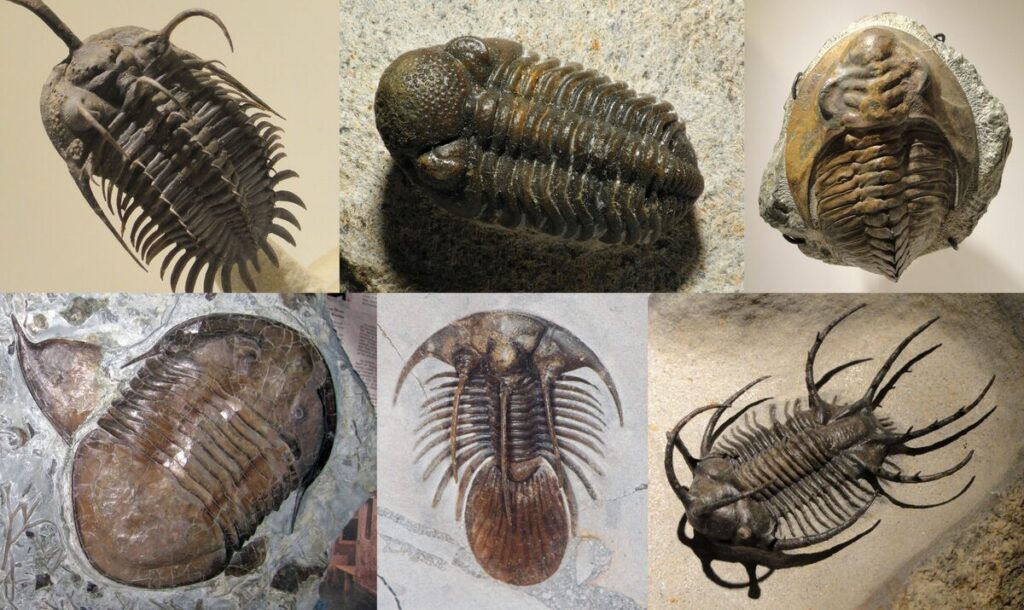
Trilobites, often considered the first complex form of life to appear on Earth, hold a special place in the Paleozoic era. These creatures continue to fascinate scientists and enthusiasts alike when studying sedimentary rocks.
Trilobites are one of the most fascinating groups of ancient animals that have ever existed. Their hard exoskeletons, three-lobed structure, and complex social behavior make them an intriguing subject for study. In this article, we will explore the significance of trilobites, their unique characteristics, and what they can tell us about the early history of life on Earth.
What is a Trilobite?
The name “trilobite” is derived from the fact that these animals have three lobes. Initially, it’s not immediately apparent, but upon observing them in cross-section, you’ll notice a head, central region, and tail. While this structure might seem unusual compared to other arthropods, it makes trilobites unique.
The word “trilobite” is derived from the Greek words “tri,” meaning three, and “lobos,” meaning lobe or wing. This name was first used by French scientist Jean-Baptiste Lamarck in 1809. Since then, the term has been widely accepted as a scientific classification for these ancient creatures.
Visualizing Trilobites
Trilobites are characterized by their hard exoskeletons, which were made of calcium carbonate and other minerals. These skeletons provided protection from predators and helped to support the trilobite’s body. They also had a unique feature called “cephalization,” where the head was larger than the rest of the body.
The eyes of trilobites are another fascinating feature. They consisted of calcite crystals with cell receptors found within, which suggests that they may have functioned as a bridge between their eyes and brain. This is similar to how some modern-day animals, such as sea turtles, use their shells to protect their internal organs.
Social Behavior
Trilobites were surprisingly social creatures. They migrated in groups, undertaking long journeys to find food sources. During courtship, females played a crucial role, developing horns and curved spines to attract males. Mating took place on land, with the trilobite emerging from its carapace to find its mate.
This social behavior is unusual among ancient animals, as many of them were solitary or only came together for mating. The discovery of trilobite fossils in large groups suggests that they had a complex social structure, which is still not fully understood by scientists today.
Marocco: A Hub for Trilobites
The Marocco region is home to an abundance of trilobite fossils, particularly in the Atlas Mountains. Researchers have discovered up to five new species there. Trilobite fossils can be found almost anywhere due to their adaptability to diverse climates and environments.
In fact, Morocco has one of the richest collections of trilobites in the world, with over 200 different species found in the country. The fossil record from Marocco provides valuable insights into the evolution and diversity of trilobites during the Paleozoic era.
Fossils for Kids
For young minds, exploring the world from which trilobites emerged can be fascinating. Books like “Fossili e dinosauri” by Dino Ticli (illustrated by F. Magnascutti) offer an engaging and fresh look at paleontology and prehistoric creatures, including trilobites.
These books are designed to make learning about fossils fun and accessible for children. They feature colorful illustrations and simple language that explains complex scientific concepts in a way that’s easy to understand.
Trilobite Evolution
Trilobites are now extinct, disappearing before the rise of dinosaurs on land. However, their fossils reveal characteristics similar to those of modern-day crustaceans. Although they did not survive the Permian era, they left behind lasting impressions in sedimentary rocks.
The evolution of trilobites is a fascinating story that spans over 270 million years. They first appeared during the Cambrian period, when life on Earth was still in its early stages. Over time, they diversified into many different species, each with unique characteristics and adaptations.
Conclusion
This article provides an engaging look at the world of trilobites. Whether you’re a scientist or simply curious about these ancient creatures, this journey through their history and behavior is sure to captivate.
Trilobites continue to fascinate scientists today, providing valuable insights into the evolution of life on Earth. Their unique characteristics, social behavior, and adaptability make them one of the most fascinating groups of ancient animals that have ever existed.
For further insights into the world of paleontology, follow us on Twitter, Facebook, Google+, Instagram, or visit our website for more articles and resources on trilobites and other ancient creatures.
Frequently Asked Questions
- What does the name “trilobite” mean?
The name comes from the three lobes found in these creatures. - How were trilobites adapted to survive diverse environments?
They could thrive in various climates and conditions due to their adaptability. - Were trilobites social creatures?
Yes, they lived in groups and even had a complex courtship ritual involving females and males. - Where can I find fossils of trilobites?
Trilobite fossils can be found almost anywhere, but the Marocco region is particularly rich in them. - Were trilobites directly related to modern-day crustaceans?
Their descendants are now known as crustacean ancestors, although they did not survive the Permian era. - What was the significance of trilobites during the Paleozoic era?
They represented one of the first forms of complex life on Earth and continue to fascinate scientists today. - Were trilobites active creatures?
Yes, they had hard exoskeletons that would have allowed them to move around in their environments. - Can I find living trilobites?
No, all trilobites are now extinct.
Additional Resources
For more information on trilobites and other ancient creatures, visit the following websites:
- National Geographic: Paleontology
- American Museum of Natural History: Trilobite Fossils
- BBC Earth: Trilobites
These resources offer a wealth of information on trilobites, including fossil records, scientific research, and educational materials for kids.
Trilobite Facts
Here are some interesting facts about trilobites:
- Trilobites lived during the Paleozoic era, which lasted from 541 to 252 million years ago.
- The first trilobites appeared during the Cambrian period, when life on Earth was still in its early stages.
- Trilobites were one of the first groups of animals to evolve eyes with cell receptors.
- They had a unique feature called “cephalization,” where the head was larger than the rest of the body.
- The Marocco region is home to over 200 different species of trilobites.
I hope you enjoyed this article about trilobites! Whether you’re a scientist or simply curious about these ancient creatures, we hope you learned something new and interesting today.


