
As we delve into the world of nocturnal birds, one species often flies under the radar – the barn owl. Despite its fascinating characteristics, habitat, and behavior, this bird of prey has gained little attention in recent years. In this article, we will explore the unique features of the barn owl, its habits, and why it’s an integral part of maintaining the balance of our agricultural ecosystem.
Appearance and Characteristics of the Barn Owl
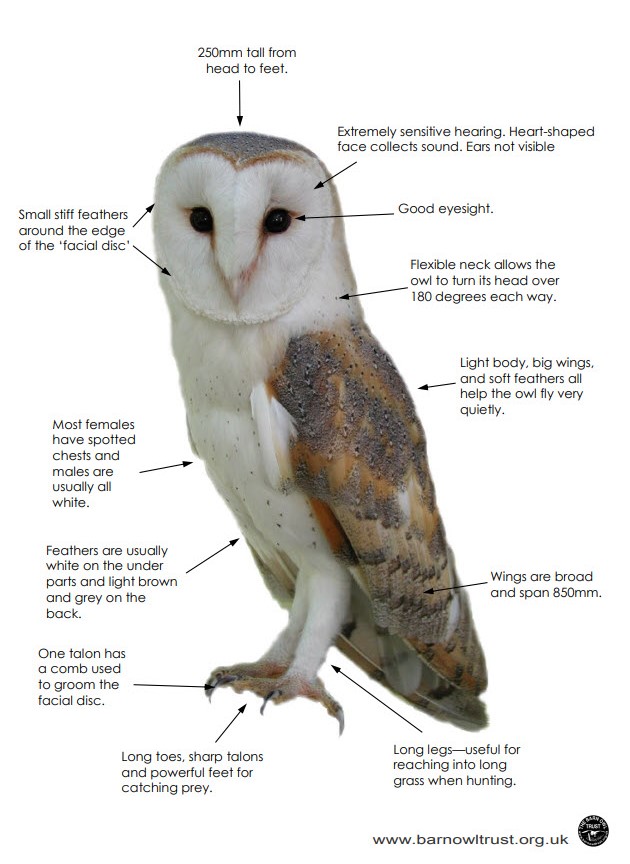
The barn owl’s appearance is as striking as it is intriguing. With a luminous white plumage and grey stripes, this bird exudes an ethereal quality that makes it a delight to photograph and paint. The beak, nose, and legs are proportionally long, giving the owl an endearing and comical appearance.
Height and Wingspan: A Small but Mighty Package
The barn owl’s height varies between 33 and 39 cm, while its wing span oscillates between 80 and 95 cm. Despite its relatively small body, this bird’s wings are proportionally large, allowing it to fly silently and effortlessly through the night sky.
A Silent Hunter: The Barn Owl’s Unique Flight
One of the barn owl’s most impressive characteristics is its silent flight. This advantage is ensured by the fact that its body is proportionally very small compared to its wings. As a result, the owl can surprise its prey without being noticed, making it an effective hunter.
Variations in Size and Plumage: A Global Phenomenon
Interestingly, the barn owl’s plumage varies across different regions. In Central Europe, the species Tyto alba guttata has orange-colored central body parts, while in North America, there is a variety with the largest weight, which can exceed 500 grams.
A Carnivorous Bird of Prey: The Barn Owl’s Diet
As a carnivorous bird of prey, the barn owl primarily feeds on voles and mice. These rodents are “enemies” to many farmers, as they can cause significant damage to crops. By controlling their population, the barn owl plays an essential role in maintaining the balance of our agricultural ecosystem.
Where Does the Barn Owl Live?
The barn owl is found all over the world, with one exception – Antarctica. In Italy, this bird has adapted to both rural and urban environments, often nesting in open spaces, non-high altitude locations, and even urban green spaces.
Behavior of the Barn Owl: A Unique Call and Mating Habits
One of the most distinctive features of the barn owl is its call – a series of hisses or breaths that becomes a raspy, metallic laughter. This sound can be quite frightening, especially at night, when it seems to emanate from the darkness itself.
Nesting and Coupling: A Monogamous Relationship
Unlike many other birds, the barn owl chooses a single partner for its entire life, forming a monogamous relationship that lasts for 40 months. During this time, the male catches prey and offers it to the female as proof of his strength and offer of protection to future offspring.
White Barn Owl: A Unique Plumage Pattern
The plumage of the barn owl is predominantly white or grey, with a heart-shaped facial disc on its large rounded head. This characteristic feature makes it one of the most recognizable nocturnal birds of prey.
Reproduction and Parenting: A Complex Process
The reproductive period of the barn owl consists of April and May, as well as October and November. The number of eggs varies between 3 and 8, which are laid in a protected and sheltered place rather than a nest. The brood lasts about 40 months, during which time the newborns are fed by their parents for 12 weeks before becoming autonomous.
The Barn Owl: A Protected Species
Despite its importance in maintaining the balance of our agricultural ecosystem, the barn owl is still considered a protected species. Unfortunately, it suffers from its reputation as a harbinger of bad luck, leading to hunting without scruples in small rural towns.
Conservation Efforts and Habitat Preservation
To combat the decline of the barn owl population, conservation efforts are necessary. Habitat preservation is crucial, as the bird’s adaptability to urban environments has led to an increase in human-bird conflict. In some regions, specialized nesting boxes have been designed to provide a safe haven for barn owls.
Frequently Asked Questions
- Q: What does the Barn Owl eat?
A: The barn owl primarily feeds on voles and mice, controlling their population and maintaining the balance of our agricultural ecosystem. - Q: Where can I find Barn Owls?
A: The barn owl is found all over the world, except for Antarctica, and has adapted to both rural and urban environments in Italy. - Q: How do Barn Owls hunt?
A: Using its silent flight, the barn owl can surprise its prey without being noticed, making it an effective hunter. - Q: What is unique about the barn owl’s plumage?
A: The barn owl’s plumage varies across different regions, with some species having orange-colored central body parts or heart-shaped facial discs. - Q: Is the Barn Owl a protected species?
A: Yes, despite its importance in maintaining the balance of our agricultural ecosystem, the barn owl is still considered a protected species due to hunting without scruples in small rural towns. - Q: How long does it take for a brood of Barn Owls to hatch and become independent?
A: The brood lasts about 40 months, during which time the newborns are fed by their parents for 12 weeks before becoming autonomous. - Q: What is special about the barn owl’s call?
A: The barn owl’s call is a series of hisses or breaths that becomes a raspy, metallic laughter, making it one of the most distinctive features of this bird. - Q: Why should we care about the Barn Owl?
A: The barn owl plays an essential role in maintaining the balance of our agricultural ecosystem by controlling rodent populations and is also a unique and fascinating species to learn about.
Interesting Facts About the Barn Owl
- The Barn Owl’s wings are covered with special feathers that help to reduce noise when it flies.
- The barn owl can live up to 12 years in captivity, which is significantly longer than its average lifespan of 5-7 years in the wild.
- In some parts of Europe, the barn owl has been known to migrate up to 1,000 kilometers each year to reach suitable breeding grounds.
- The barn owl’s diet consists mainly of small mammals, but it will also eat birds, reptiles, and insects if they come across them.
- Barn owls are capable of reaching speeds of up to 45 km/h when flying, making them one of the fastest birds in the world.
In Conclusion
The barn owl is a fascinating species that plays a vital role in maintaining the balance of our agricultural ecosystem. Its unique characteristics, such as its silent flight and distinctive call, make it an intriguing bird to learn about. However, due to hunting without scruples in small rural towns, the barn owl is still considered a protected species. Conservation efforts, such as habitat preservation and specialized nesting boxes, are necessary to ensure the survival of this incredible bird.
Recommended Reading
- “The Barn Owl: A Guide to its Behavior, Habitat, and Diet” by the International Union for Conservation of Nature (IUCN)
- “Barn Owls: The Silent Hunters” by BirdLife International
- “The Barn Owl: A Symbol of Good Luck or Bad?” by the National Geographic Society
Recommended Resources
- Birding Apps: Many birding apps, such as iBird Pro and Merlin Bird ID, have information on barn owl sightings and behavior.
- Wildlife Camera Traps: Wildlife camera traps can be set up in agricultural areas to monitor barn owl activity and population trends.
- Conservation Organizations: Organizations such as the International Crane Foundation and the World Wildlife Fund offer resources and support for barn owl conservation efforts.
By learning more about the mysterious barn owl, we can work together to protect this incredible species and preserve its place in our natural world.


