
The West Nile virus, also known as the Fever of the Nile, has arrived in Italy and originates from Africa. This viral disease has been circulating for decades but has only recently appeared in Italy.
What is West Nile Virus?
West Nile virus is a mosquito-borne illness that affects both humans and animals. While it may seem like a new disease to us Italians, its origins date back to 1937 when the first isolations of the virus were made in Uganda’s West Nile district.
The History of West Nile Virus
The discovery of the virus was a major breakthrough in the field of virology, but it took years for researchers to understand the full implications of this new disease. The initial outbreak in Africa led to a massive response effort from health authorities, who implemented measures such as mosquito control programs and public education campaigns.
West Nile Virus: Symptoms and Cures
The symptoms of West Nile virus are similar for both humans and animals. In most cases, there are no noticeable symptoms. However, some individuals may experience more severe symptoms, such as:
- Fever
- Headache
- Skin rash
- Nausea
- Vomiting
- Muscle pain
- Swollen lymph nodes
In rare cases (less than 1%), the virus can cause severe symptoms, including:
- High fever
- Severe headache
- Muscle weakness
- Disorientation
- Tremors
- Vision disturbances
- Torpor
- Convulsions
- Paralysis
- Coma
The Serious Side Effects of West Nile Virus
In rare cases (less than 1%), the virus can cause severe symptoms, including:
- High fever
- Severe headache
- Muscle weakness
- Disorientation
- Tremors
- Vision disturbances
- Torpor
- Convulsions
- Paralysis
- Coma
The Risk of Mortality
According to the World Health Organization, the risk of mortality from West Nile virus is relatively low. However, in rare cases (less than 1%), the virus can cause severe symptoms that can lead to death.
Who is at Risk?
The most vulnerable individuals include:
- Older adults
- People with weakened immune systems (e.g., those undergoing immunosuppressive treatments)
- Individuals with HIV/AIDS
- Those with other underlying health conditions
Treatment and Cures
If you experience symptoms or suspect you’ve been infected, seek medical attention immediately. The Ministry of Health has established a surveillance plan to monitor and respond to the virus.
Prevention is Key
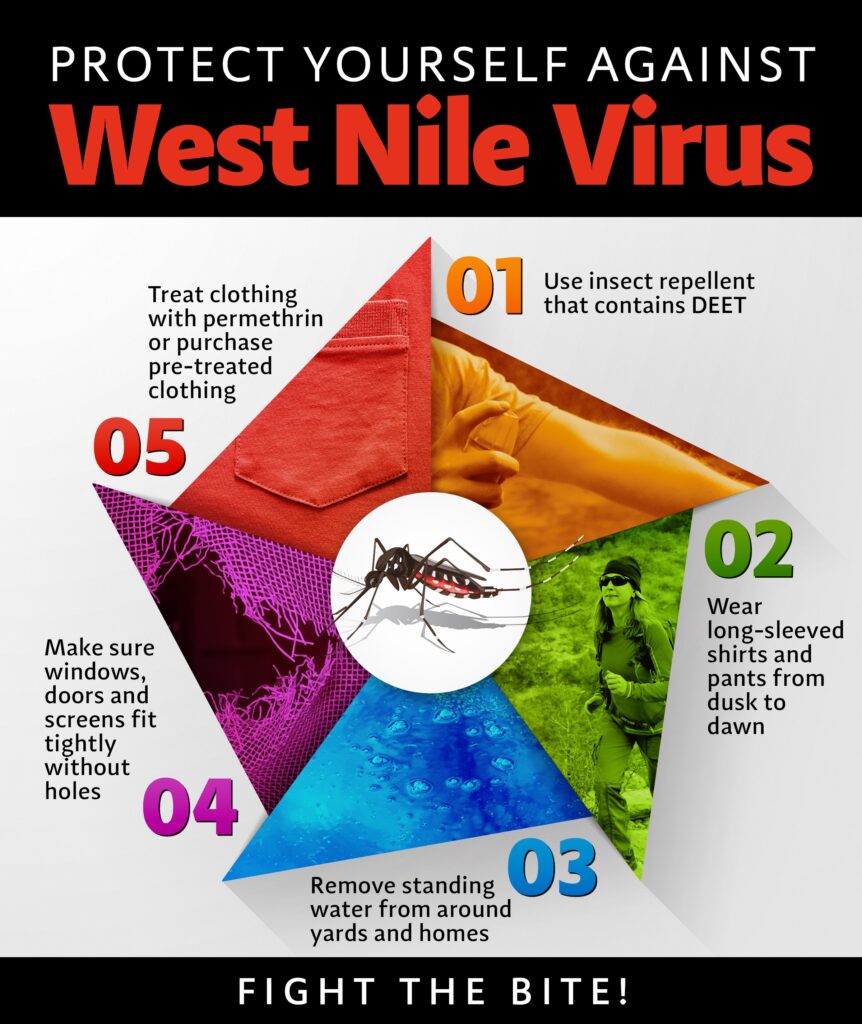
To protect yourself from West Nile virus:
- Eliminate mosquito breeding sites
- Use insecticides as a last resort
- Apply permethrin to clothing and gear
- Avoid peak mosquito hours (dawn and dusk)
- Wear protective clothing and apply insect repellent
Mosquito Control Measures
To prevent the spread of West Nile virus, it’s essential to control mosquitoes effectively. Here are some measures you can take:
- Install window screens on windows and doors
- Use air conditioning or screened-in porches to reduce mosquito entry into homes
- Eliminate standing water around your home by emptying flowerpots, bird baths, and other containers
- Use outdoor fans to circulate air and prevent mosquitoes from landing
Preventing Mosquito Breeding Sites
Mosquitoes need a place to lay their eggs. Without breeding sites, the population can quickly decline. Here are some measures you can take:
- Remove standing water around your home by emptying flowerpots, bird baths, and other containers
- Fix any leaks or cracks in your pipes that could lead to water accumulation
- Check your yard regularly for standing water
Creating a Mosquito-Free Zone
To create a mosquito-free zone, you can take the following measures:
- Remove weeds and debris from your yard
- Install a mosquito trap or use an electric mosquito repellent device
- Use outdoor fans to circulate air and prevent mosquitoes from landing
Protecting Vulnerable Individuals
The most vulnerable individuals include older adults, people with weakened immune systems, and those with underlying health conditions. Here are some measures you can take to protect them:
- Provide protective clothing and insect repellent for outdoor activities
- Use mosquito nets around beds or in areas where mosquitoes are present
- Avoid peak mosquito hours (dawn and dusk)
Conclusion
West Nile virus is a serious disease that requires prompt attention. By understanding the risks, symptoms, and prevention measures, you can protect yourself and your loved ones from this viral disease.
Prevention is Key
To prevent West Nile virus, it’s essential to take proactive measures:
- Eliminate mosquito breeding sites
- Use insecticides as a last resort
- Apply permethrin to clothing and gear
- Avoid peak mosquito hours (dawn and dusk)
- Wear protective clothing and apply insect repellent
Stay Informed
To stay informed about West Nile virus in Italy, you can:
- Visit the Ministry of Health website for updates on surveillance and response efforts
- Check local news outlets for information on outbreaks and prevention measures
- Contact your healthcare provider for advice on protecting yourself from the virus


