
Introduction
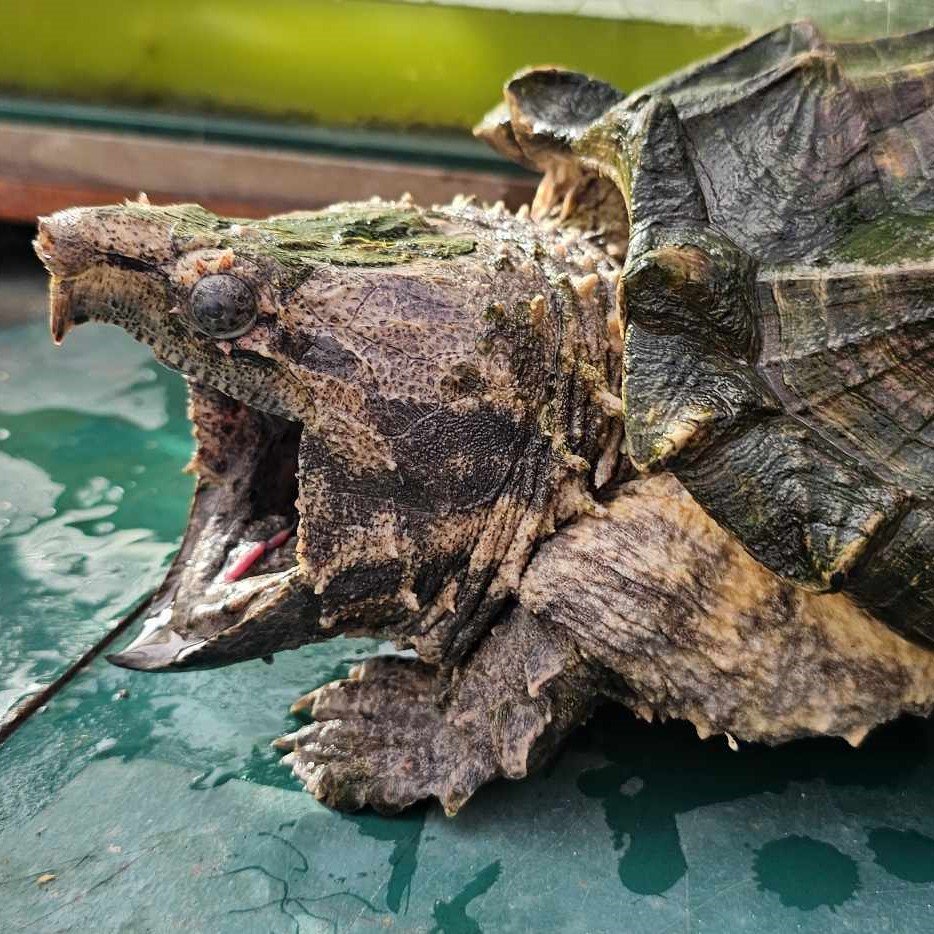
The alligator snapping turtle, also known as the Chelydra serpentina, is a formidable aquatic reptile native to North America. With its powerful jaws and aggressive behavior, it’s no wonder this species has earned its fearsome reputation.
Taxonomy
The alligator snapping turtle belongs to the family Chelydridae and is classified as a carnivorous species, ranking among the top predators in its ecosystem. Its name reflects its deadly bite, which is infamous for causing severe injuries.
Habitat and Distribution
This aquatic creature can be found in various regions of North America, including Canada’s southeastern provinces, the United States’ south-central states, and parts of Mexico. It inhabits freshwater environments such as swamps, marshes, and slow-moving streams.
Characteristics and Behavior
The alligator snapping turtle has distinctive features that make it well-suited for its environment:
- Large size: Adults can reach up to 50 cm in length, weighing between 5-16 kg.
- Powerful jaws: Equipped with sharp teeth, these turtles are capable of inflicting severe injuries.
- Aggressive behavior: When out of water, they tend to become more aggressive, making them a formidable opponent.
Handling alligator snapping turtles is challenging due to their:
- Mobility: Their neck can stretch up to their feet, allowing them to deliver a deadly bite when threatened.
- Weight: These turtles are heavy enough to cause serious injury if handled improperly.
When attempting to capture an alligator snapping turtle, it’s essential to follow best practices:
- Target the rear of the shell: This area provides a safer and more stable point for grasping.
- Use caution: Avoid direct eye contact or sudden movements that may provoke an attack.
Handling alligator snapping turtles can lead to severe consequences, including:
- Finger amputation: The powerful jaws can easily sever fingers if proper precautions aren’t taken.
- Other injuries: These turtles are capable of inflicting deep lacerations and crushing injuries.
The Alligator Snapping Turtle’s Diet
These carnivores feed on a wide variety of prey, including:
- Small fish
- Crustaceans
- Insects
- Semi-aquatic animals
- Occasionally, other turtles
They have been known to devour larger animals like birds, snakes, and small mammals.
Predation and Ecosystem Role
As apex predators, alligator snapping turtles play a crucial role in maintaining the balance of their ecosystems:
- Top-down predation: They regulate populations of smaller animals, preventing any one species from dominating the environment.
- Trophic cascades: Their presence can have ripple effects throughout entire food chains.
Conservation Status and Threats
The alligator snapping turtle’s reputation for causing harm has led to strict regulations in some regions:
- Prohibited trade: The sale of these turtles is heavily restricted, with severe penalties for illegal trafficking.
- Habitat protection: Conservation efforts focus on preserving their natural habitats and reducing human-alligator snapping turtle interactions.
Regulation and Conservation Efforts
To mitigate potential harm, conservation efforts focus on:
- Monitoring populations: Tracing turtle movements helps identify areas of concern.
- Educating the public: Raising awareness about these turtles’ unique characteristics and needs can deter accidental releases.
- Regulating trade: Strict controls on the sale and transportation of alligator snapping turtles ensure that imports are carried out responsibly.
Frequently Asked Questions
- What is the average lifespan of an alligator snapping turtle?
- In captivity, they can live up to 40 years or more.
- How do I handle a wild alligator snapping turtle safely?
- Never attempt to touch or capture a wild turtle without proper training and equipment. If you find yourself in such a situation, stay calm, slowly back away from the animal, and seek professional help.
Interesting Facts
- Alligator snapping turtles have been known to live up to 50 years in the wild.
- They are herbivores as hatchlings but switch to carnivory later in life.
- The largest alligator snapping turtle ever recorded was approximately 72 cm long.


