
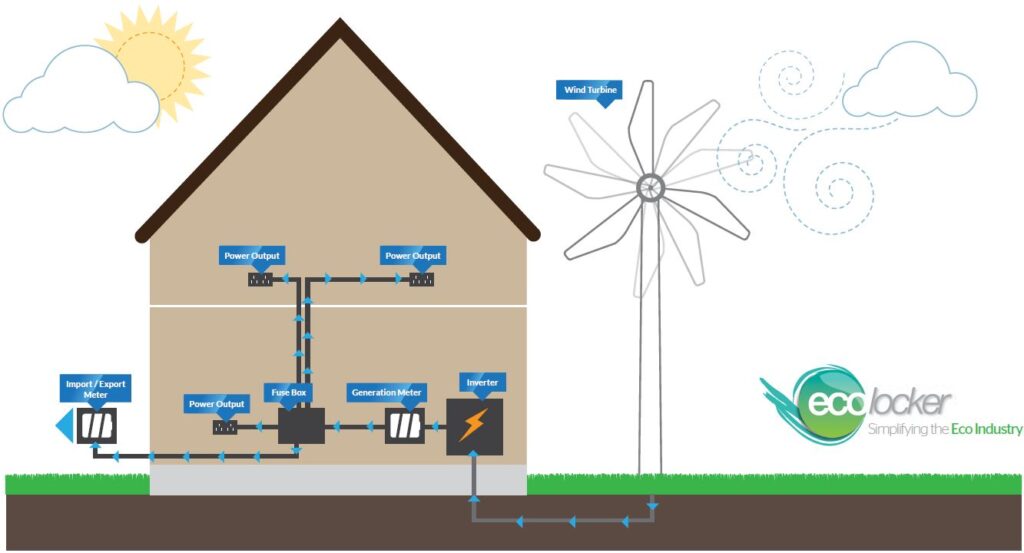
If you live in areas with particularly windy conditions, you should consider installing a domestic wind turbine. A wind turbine is an “electric generator” that converts the energy kinetic of the wind into mechanical energy (through the rotation of the blades) and then into electrical energy using a connected generator.
Before You Buy: Assessing Your Site
Before purchasing any type of wind turbine, conduct a rational analysis of the site where you plan to install it. This is exactly what we discuss in our article “Domestic Wind Turbine: Is It Suitable?”
We often talk about off-grid solar systems that produce electricity independently of the grid, which can power a home completely or partially. A simple domestic wind turbine off-grid system consists of:
- Generator
- Regulator for charging eolico
- Battery bank for accumulation
- Inverter
Additional elements include:
* Cables and wiring for connection
* Base for anchoring the mast
* Mast (support) with a minimum height of 5 m but no more than 10 m
* Tensioning cable
1. How Does Wind Turbine Produce Electricity?
Thanks to the action of wind, the domestic turbine produces electrical energy.
2. The Transformation from Trifase to Continua
The energy produced in trifase by the eolico domestica undergoes a transformation and becomes tensione continua through the “regulator di carica”. To avoid wasting precious energy, you must choose an efficient battery model and pay attention to the dimensioning of the electrical cabling.
3. Power Storage and Conversion
The energy produced is stored in the battery bank, which can be charged using a wind turbine with a suitable starting point. The inverters convert the energy back into a usable format for your home, providing 230V AC electricity.
4. Choosing Between Vertical or Horizontal Axis Wind Turbines
When it comes to selecting an eolico domestico, consider a horizontal axis model. For more information on evaluating the suitability of wind turbines for balcony installations, visit our previous article “Wind Energy on Balconies”.
Pubblicato da Anna De Simone il 13 Ottobre 2014
Domestic Wind Turbine: Key Considerations
Before investing in a domestic wind turbine, it’s essential to consider several factors.
- Windy locations: If you live in an area with strong winds, a wind turbine can be a great option for generating electricity.
- Turbine design: There are two main types of turbines: vertical-axis and horizontal-axis. While both have their advantages, horizontal-axis turbines are generally more efficient.
Domestic Wind Turbine Installation: What to Expect
Installing a domestic wind turbine requires careful planning and consideration. Here are some key factors to keep in mind:
- Site assessment: Before installing a wind turbine, you’ll need to assess the suitability of your site.
- Turbine selection: Choose a turbine that suits your needs and budget.
- Connection to the grid: If you’re connected to the grid, you may need to hire an electrician to connect the turbine to your home.
Maintenance and Upkeep
Regular maintenance is essential to ensure your domestic wind turbine continues to generate electricity efficiently. Here are some tips:
- Cleaning the blades: Regularly clean the turbine blades to maintain their efficiency.
- Checking for damage: Inspect the turbine regularly for any signs of damage or wear.
FAQs
Here are some frequently asked questions about domestic wind turbines:
- Q: How do I choose a suitable location for my wind turbine?
A: When choosing a location, consider factors such as wind speed, direction, and obstacles. - Q: What is the average lifespan of a domestic wind turbine?
A: The average lifespan of a domestic wind turbine is around 20 years, depending on usage and maintenance. - Q: Can I install a wind turbine in my backyard?
A: Yes, but you’ll need to check local regulations and ensure that your property is suitable for the installation. - Q: How much electricity can a domestic wind turbine produce?
A: The amount of electricity produced depends on factors such as wind speed, turbine efficiency, and usage. - Q: Can I sell excess energy back to the grid?
A: Check with your local utility company to see if they offer net metering or other incentives for selling excess energy back to the grid.
By following these tips and considering the key considerations mentioned above, you can enjoy the benefits of a domestic wind turbine while minimizing potential drawbacks.
Benefits of Domestic Wind Turbine
Installing a domestic wind turbine offers numerous benefits, including:
- Renewable Energy Source: A wind turbine is an environmentally friendly way to generate electricity, reducing your reliance on fossil fuels and lowering greenhouse gas emissions.
- Lower Energy Bills: By generating your own electricity, you can significantly reduce your energy bills and save money on your utility bills.
- Increased Independence: With a domestic wind turbine, you’ll have a reliable source of power, even during periods of high demand or grid outages.
- Long-Term Cost Savings: While the initial investment may seem significant, a domestic wind turbine can provide long-term cost savings and increased energy independence.
Common Challenges with Domestic Wind Turbine
While installing a domestic wind turbine can be a rewarding experience, there are some common challenges to be aware of:
- Noise Pollution: Wind turbines can generate noise pollution, which may be a concern for neighbors or nearby residents.
- Aesthetics: The appearance of a wind turbine can be a source of debate, with some considering it an eyesore and others seeing it as a beautiful addition to the landscape.
- Maintenance Requirements: Domestic wind turbines require regular maintenance to ensure optimal performance, which can be time-consuming and costly.
Conclusion
In conclusion, domestic wind turbines offer numerous benefits, including renewable energy production, lower energy bills, increased independence, and long-term cost savings. However, there are also common challenges associated with installing a domestic wind turbine, such as noise pollution, aesthetics concerns, and maintenance requirements.
By carefully considering these factors and doing your research, you can make an informed decision about whether a domestic wind turbine is right for you. With the right installation and regular maintenance, a domestic wind turbine can provide years of reliable energy production and enjoy the many benefits that come with it.


