
Introduction
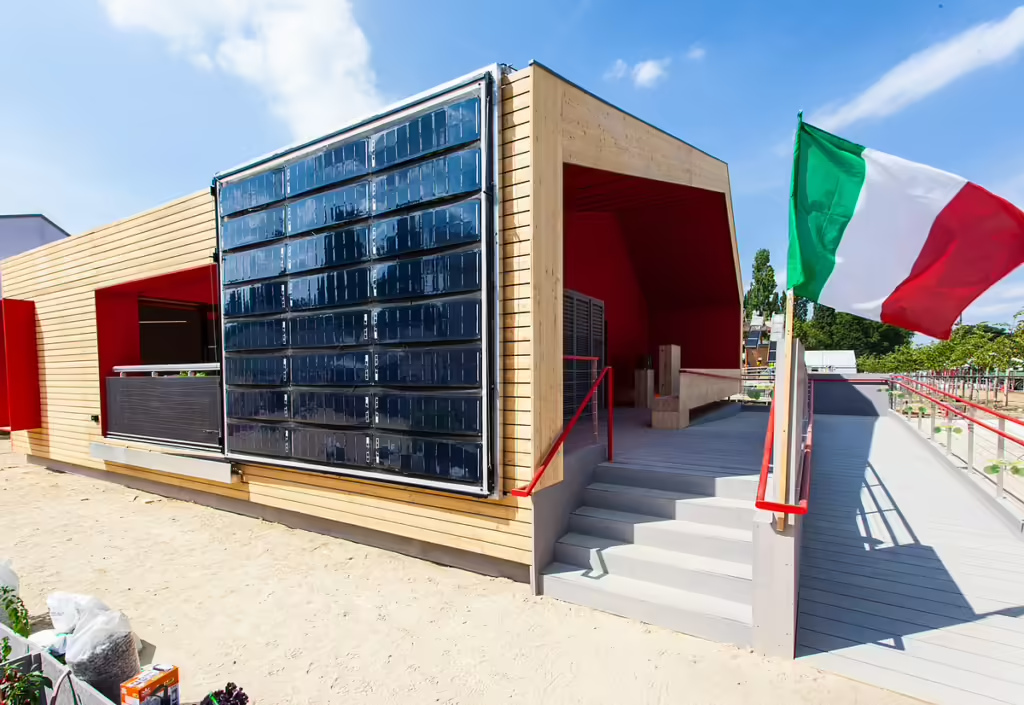
The Solar Decathlon 2014 has reached its final phase, and the Italian project RhOME for denCity is making waves with a remarkable performance. This article will delve into the innovative features of RhOME, a sustainable home designed by the University of RomeTre team, in collaboration with Daikin and other partners.
The Challenge
The Solar Decathlon 2014 is an international competition aimed at promoting eco-friendly housing that utilizes solar energy to meet most of its energy needs. The event brings together architecture students from around the world to showcase their sustainable design ideas.
RhOME for denCity: A Sustainable Haven
Located in the “Cité du Soleil” at Versailles, RhOME is a remarkable example of sustainable living. Designed by the University of RomeTre team, led by architect Chiara Tonelli, this home aims to promote ecological and social renewal in the periphery of Rome.
Eco-Friendly Features
RhOME is powered entirely by solar energy, reducing its carbon footprint. The building’s design prioritizes quality materials, cutting-edge technology, and economic efficiency. Some notable features include:
- Energy Harvesting: RhOME is equipped with a Daikin-powered heating system that utilizes a refrigerant with a lower global warming potential.
- Smart Monitoring System: Almaviva’s ICT group has developed a monitoring system to track energy consumption and comfort levels.
- Reutilizable Kitchen: The kitchen, engineered by Valcucine, can be reassembled up to 80% of its original components.
- Eco-Friendly Finishes: The building features natural materials, such as wood and resins, and a self-repellent cat. P3 paint with low formaldehyde emissions.
Water Conservation
IdealStandard’s bathroom showcases eco-friendly mixing systems that reduce water consumption by up to 80%.
The water management system is integrated into the “3D CORE” element, which also houses an air purification system and a server for data collection.
Ventilation natural lighting is optimized by positioning loggias at north and south orientations.
Lighting Efficiency
LED/OLED modules are used for artificial lighting, with a focus on visual comfort.
The building’s windows from Velux minimize heat loss and gain, improving energy efficiency.
Waste Management
RhOME features a centralized system for water recycling, reuse, and recycling of greywater.
Performance Metrics
RhOME boasts impressive performance metrics:
* Energy consumption: less than the production
* High-performance structural integrity
Sustainability Strategies
The RhOME project demonstrates a commitment to sustainability through several strategies:
- Renewable Energy: Solar energy powers the home, reducing reliance on fossil fuels.
- Energy Efficiency: The building’s design and materials minimize energy waste and optimize natural light and ventilation.
- Water Conservation: A closed-loop system for water management reduces consumption by up to 80%.
- Waste Reduction: Greywater recycling and reuse minimize waste and promote efficient resource use.
Social Impact
RhOME’s sustainable features also have a positive social impact:
- Community Engagement: The project encourages community involvement in environmental initiatives.
- Economic Benefits: Sustainable living reduces energy costs and increases property value.
- Health Benefits: Reduced exposure to pollutants improves indoor air quality.
Future Developments
The RhOME project serves as a model for sustainable living, inspiring future developments:
- Replicability: The project’s designs can be adapted to various climates and environments.
- Scaling Up: Sustainable practices can be implemented on larger scales, promoting widespread adoption.
- Innovation: Continued innovation in renewable energy and sustainable materials will drive progress toward a more eco-friendly future.
Conclusion
The RhOME project is an outstanding example of sustainable living. As we move towards a more eco-friendly future, it’s essential to recognize the innovative efforts made by individuals and organizations like this Italian team.
Frequently Asked Questions (FAQs)
- What inspired the design of RhOME for denCity?
- The project was conceived to promote ecological and social renewal in Rome’s periphery.
- How does RhOME generate electricity?
- RhOME is powered entirely by solar energy.
- What materials were used in the construction of RhOME?
- Natural materials, such as wood and resins, were prioritized for their eco-friendly properties.
- Can the kitchen components be reused or recycled?
- Yes, up to 80% of the kitchen components can be reassembled.
- How does RhOME manage water consumption?
- The building features an integrated water management system that reduces water waste by up to 80%.
- What is the significance of the “3D CORE” element in RhOME?
- This element houses an air purification system, a server for data collection, and the bathroom’s mixing systems.
- Can RhOME be replicated in other locations?
- While the project was specifically designed for Rome, its sustainable features can be applied to various climates and environments.
- What is the current status of the Solar Decathlon 2014 competition?
- The final phase of the competition has concluded, with teams presenting their projects to a panel of judges.
By exploring the innovative features of RhOME for denCity, we can better understand the potential for sustainable living and the importance of eco-friendly design in our built environment.


