
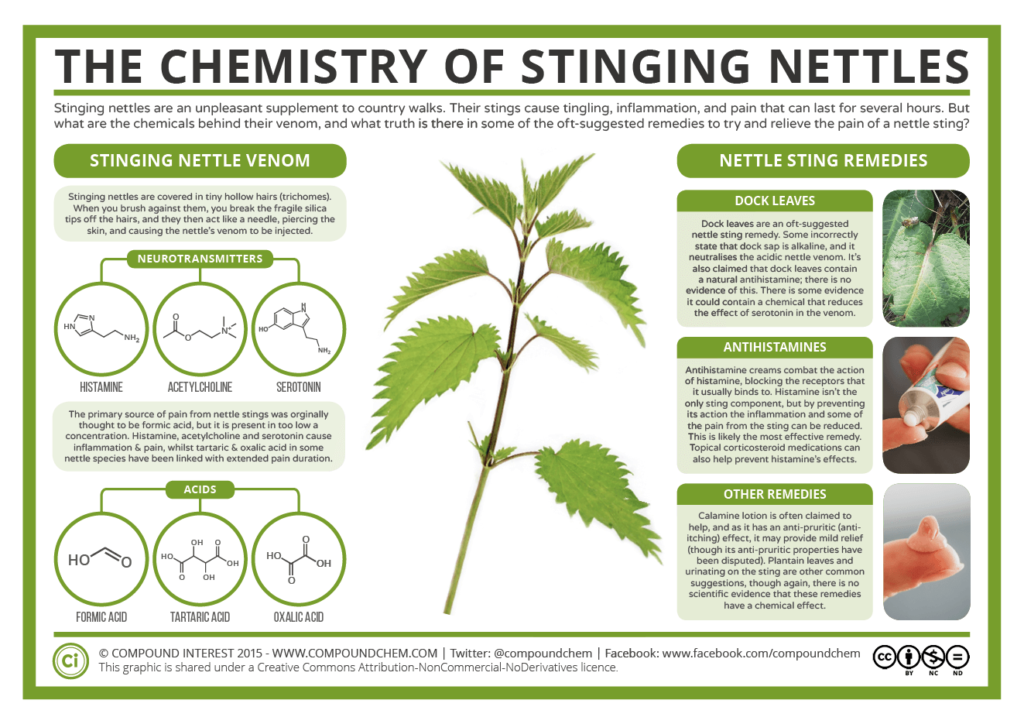
Stinging nettle, scientifically known as Urtica dioica, is a perennial herbaceous plant native to Europe, Asia, North Africa, and North America. While it’s often regarded as a nuisance due to its stinging properties, this article will delve into the biological aspects of why stinging nettle hurts and explore natural remedies for relief.
The Biology of Stinging Nettle: Understanding the Role of Vacuoles
To comprehend why stinging nettle irritates, we must first examine the biology of plant cells. Within plant cells, there’s an organelle called a vacuole that can be described as a vesicle filled with various materials and performing multiple functions. For example, vacuoles are responsible for the fragrance of some flowers and regulate cell turgor pressure.
In stinging nettle, these vacuoles contain irticant substances such as histamine, serotonin, and formic acid, which are released when the plant’s hairs come into contact with human skin. The release of these irritant substances triggers an allergic reaction that manifests as a burning sensation, itching, and redness.
How Stinging Nettle Irritates: The Role of Vacuole Contents
The main culprit behind stinging nettle’s irritating effects is its ability to release histamine, serotonin, and formic acid from its vacuoles. These substances are natural defense mechanisms that help protect the plant from predators and other threats.
When we touch or brush against stinging nettle plants, the hairs come into contact with our skin and rupture, releasing these irritant substances. This leads to an immune response, where our body tries to fight off the perceived threat. The result is inflammation, which manifests as redness, swelling, and itching on the affected area.
Not All Stinging Nettle Is Created Equal: Understanding the Role of Other Plants
If you’re looking for natural remedies to relieve stinging nettle discomfort, it’s essential to understand that not all plants with similar characteristics are created equal. In this case, the Roman chicory (Rumex spp.) is a plant that shares the same habitat as stinging nettle and has been used as an alternative remedy.
Roman chicory contains compounds that can provide relief from stinging nettle’s irritant effects when applied topically to affected areas. While it may not completely eliminate the discomfort caused by stinging nettle, Roman chicory can help reduce its severity.
Other Uses of Stinging Nettle: Exploring Its Nutritional Value, Culinary Applications, and Agricultural Benefits
While some people may not appreciate the benefits of stinging nettle, it is a plant with multiple virtues. It boasts excellent nutritional properties, can be used as an ingredient in cooking, and even provides value to agriculture.
Macerated stinging nettle can be beneficial for garden maintenance, while its leaves are a versatile ingredient in soups, salads, and other dishes. In addition, stinging nettle is rich in vitamins A, C, and K, as well as minerals such as calcium, iron, and potassium.
Nutritional Benefits of Stinging Nettle
Stinging nettle is an excellent source of nutrients, including:
- Vitamins: A, C, and K
- Minerals: Calcium, iron, and potassium
- Antioxidants: Flavonoids and phenolic acids
These nutrients can help support overall health and well-being. However, it’s essential to note that stinging nettle contains oxalic acid, which can be toxic in high amounts.
Culinary Applications of Stinging Nettle
Stinging nettle is a versatile ingredient that can be used in various culinary applications. Here are some ways to incorporate stinging nettle into your cooking:
- Soups and stews: Add fresh or dried stinging nettle leaves to soups and stews for added nutrition and flavor.
- Salads: Mix stinging nettle leaves with other greens and vegetables for a nutritious salad.
- Pasta dishes: Use stinging nettle in pasta sauces or add it to cooked noodles for a burst of freshness.
Agricultural Benefits of Stinging Nettle
Stinging nettle is a valuable plant that can provide benefits to agriculture. Here are some ways to use stinging nettle in agricultural settings:
- Fertilizer: Macerated stinging nettle can be used as a natural fertilizer for plants.
- Pest control: Stinging nettle contains compounds that can help repel pests and other insects.
- Compost: Add dried or fresh stinging nettle to compost piles to improve soil health.
Conclusion: Understanding Stinging Nettle’s Benefits Beyond Its Irritation
Stinging nettle is not just a nuisance due to its irritating properties; it also has numerous benefits that make it an invaluable plant. While understanding the science behind its irritation can be helpful in finding relief from discomfort caused by stinging nettle, it’s also essential to appreciate its various uses and applications.
By exploring the nutritional value, culinary applications, and agricultural benefits of stinging nettle, we can better understand its importance and how it can be used to promote overall health and well-being.
Frequently Asked Questions (FAQs)
- Can you provide natural remedies for relieving stinging nettle pain?
- Yes, alternative plants such as Roman chicory can be used to relieve stinging nettle discomfort.
- Are there any nutritional benefits of eating stinging nettle?
- Stinging nettle has excellent nutritional properties and is a versatile ingredient in cooking.
- Is there an agricultural benefit to using stinging netle?
- Yes, macerated stinging nettle can be beneficial for garden maintenance.


