
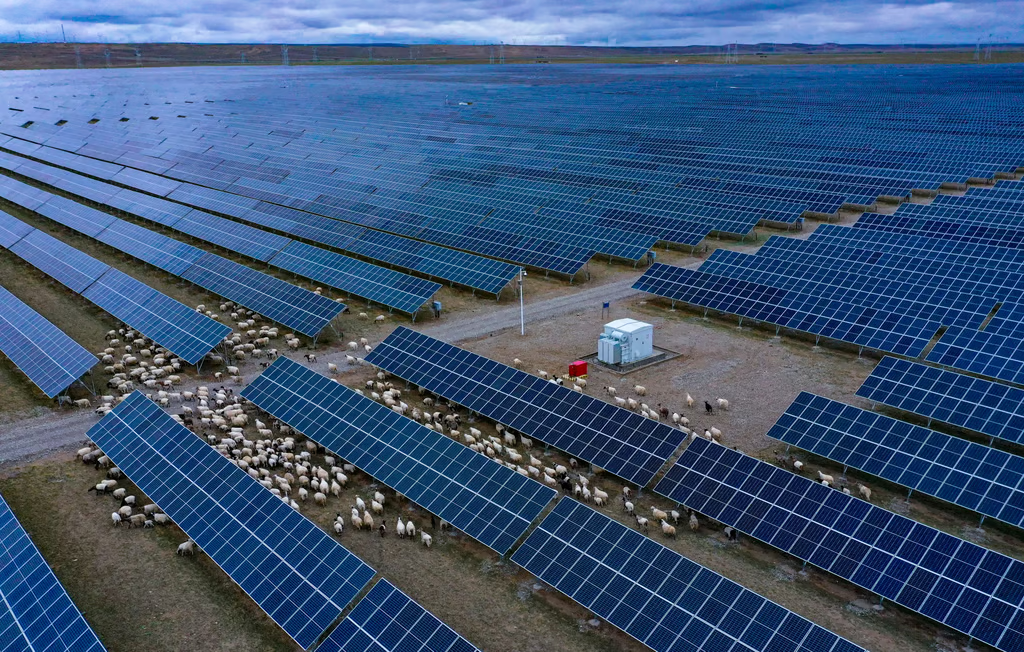
Introduction
The solar power industry has experienced significant growth in recent years, with China emerging as a major player. The country’s dominance in the European market is staggering, accounting for an impressive 80% of the continent’s solar power exports. But what drives this phenomenon? In this article, we will delve into the complexities of the Chinese solar power industry and explore its impact on the European market.
The Rise of Chinese Solar Power
In 2011, China became the largest exporter of solar panels to Europe, with a value of $35.8 billion. This surge in exports was largely driven by the Chinese government’s support for the industry, which included subsidies and other incentives. The EU, on the other hand, did not impose tariffs on imported solar panels from China, unlike the US, which introduced duties on photovoltaic products.
The European Response
In response to China’s dominance, the EU launched an anti-dumping investigation into Chinese solar panel imports. However, the situation remained unchanged until recently, when the EU initiated another investigation into Chinese subsidies for the solar power industry. The investigation aimed to uncover evidence of unfair trade practices and potential abuse of government support.
China’s Response
The Chinese government has denied any wrongdoing, claiming that its support for the solar power industry is legitimate. However, recent developments suggest that Beijing may be taking steps to address concerns about its subsidies. In September, China launched a probe into the EU’s anti-dumping investigation, sparking fears of retaliation from European companies.
The Impact on European Companies
The Chinese government’s decision to reform its solar power industry has significant implications for European companies operating in the sector. The reduction in subsidies and other support measures threatens to disrupt the industry’s supply chain and create uncertainty for businesses reliant on Chinese imports.
A New Era for Solar Power
As China seeks to rebalance its energy policy, it is clear that the solar power industry will play a crucial role in shaping the country’s future. With a growing focus on renewable energy, China aims to become a global leader in clean tech. But how will this impact European companies and the wider industry?
The Path Forward
As we navigate this complex landscape, several questions arise:
- Will EU tariffs on Chinese solar panels spark a trade war?
- How will China’s reforms affect the global supply chain for solar panels?
- What are the implications for European companies operating in the solar power sector?
In our next section, we’ll explore these questions and more.
A New Era for Solar Power: Implications and Challenges
China’s decision to reform its solar power industry has significant implications for European companies and the wider industry. But what does this mean for consumers and the environment? In this section, we’ll examine the potential benefits of China’s reforms and explore the challenges that lie ahead.
Benefits of China’s Reforms
- Increased efficiency: China’s reforms aim to increase the efficiency of its solar power industry by reducing subsidies and other support measures.
- Improved competitiveness: By reforming its policies, China can improve the competitiveness of its solar panel manufacturers and become a more attractive player in the global market.
Challenges Ahead
However, these reforms also present several challenges:
- Job losses: The reduction in subsidies could lead to job losses in the solar power sector.
- Supply chain disruptions: Changes to China’s policies could disrupt the global supply chain for solar panels.
In our next section, we’ll explore how EU tariffs on Chinese solar panels might impact European companies and the wider industry.
The Impact of EU Tariffs on Solar Panel Imports
The introduction of EU tariffs on Chinese solar panel imports has significant implications for European companies. In this section, we’ll examine the potential consequences of these tariffs and explore how they might affect the global supply chain.
Consequences of EU Tariffs
- Increased costs: EU tariffs could lead to increased costs for European consumers and businesses.
- Reduced demand: By making Chinese solar panels more expensive, EU tariffs could reduce demand for these products in Europe.
Conclusion
The rise of Chinese solar power has significant implications for the European market. As China seeks to rebalance its energy policy, it is clear that the solar power industry will play a crucial role in shaping the country’s future. But how will this impact European companies and the wider industry? In our final section, we’ll explore some frequently asked questions about Chinese solar power.
Frequently Asked Questions
- Q: What are the implications of China’s reforms for the global supply chain?
A: China’s reforms could disrupt the global supply chain for solar panels, leading to reduced demand and increased costs for European consumers and businesses. - Q: How will EU tariffs on Chinese solar panels affect European companies?
A: EU tariffs could lead to increased costs and reduced demand for solar panels in Europe.
We hope this article has provided a comprehensive overview of the rise of Chinese solar power and its implications for the European market. Whether you’re a business owner, a consumer, or simply interested in clean tech, there’s no denying that China’s solar power industry is here to stay.
Anna De Simone
The original article was published by Anna De Simone on January 4, 2013.


