
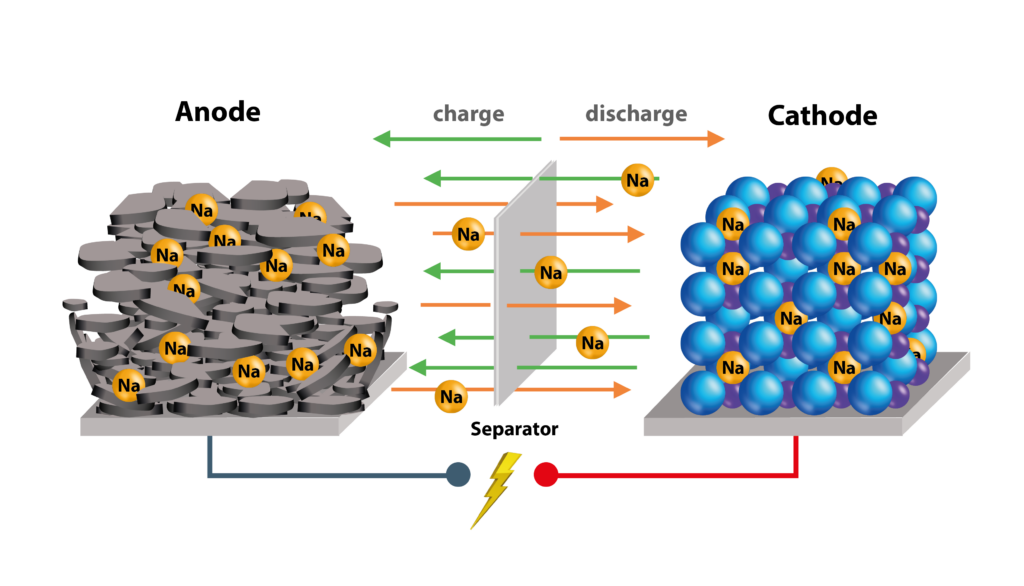
When we talk about batteries, most people think of lithium-ion or lead-acid batteries. However, there are few people who think about alkaline batteries that use a saline solution to function, but these exist – it’s the case of the saline battery and the Italian bicarbonate battery. Before presenting the model of operation of a bicarbonate battery, we will delve into the applications of the salt batteries in Italy, which have become a cult in the electric mobility sector of some foreign countries.
The technology behind alkaline batteries is a result of the FIAMM (Fabbrica Italiana Accumulatori Motocarri Montecchio), an Italian company that produces around 70% of its revenue abroad, operating in 60 countries with 3300 employees worldwide and 1200 in Italy.
In the Italian headquarters, a research center was created where innovations are studied in industrial accumulators, alkaline batteries, and acoustic alert systems. In Rome’s historic center, small electric buses use precisely the bicarbonate batteries, and not only: FIAMM alkaline batteries are used in San Paolo (Brazil), Riyadh (Saudi Arabia), and other parts of the world. Although lithium-ion batteries remain most widespread, other solutions are gaining ground on the market, just like that offered by the sodium chloride nickel battery produced already in Italy.
These alkaline batteries have an excellent thermal stability resistance and are less expensive because they do not use rare materials. Why did we talk about alkaline batteries? Simply because every opportunity is a good chance to discuss the made-in-Italy products!
Returning to the electrolyte battery, it uses two lead plates and sees the employment of an alkaline solution as elettrolite, made by dissolving half a teaspoon of sodium bicarbonate in water. To charge the accumulator, the two lead plates are connected one to the positive pole of a 4.5V battery.
The History of Alkaline Batteries
Alkaline batteries have been around for decades and were first developed in the 1950s by John Bickford and Milton Ruben at the Kodak Research Laboratory in the United States. They were initially used in film cameras but later became popular for everyday use, replacing mercury batteries.
The alkaline battery consists of a positive electrode (cathode) made of manganese dioxide, a negative electrode (anode) made of zinc, and an alkaline solution as elettrolite that separates the two electrodes. This elettrolite is what enables the chemical reaction between the zinc and manganese dioxide to occur.
The alkaline battery uses this reaction to generate electricity:
Zn + MnO2 → ZnO + Mn
During charging, oxygen from the air is added to the anode through an electrical current, while carbon dioxide reacts with water to produce hydroxide ions. The hydroxide ions then react with manganese oxide at the cathode, releasing electrons and producing heat.
The alkaline battery has a long shelf life due to its stable chemical reaction and does not contain toxic materials like mercury or lead. However, it is less powerful than lithium-ion batteries but can provide up to 20 years of usage before needing replacement.
Applications of Alkaline Batteries
Alkaline batteries have many applications, including:
- Flashlights: Alkaline batteries are commonly used in flashlights due to their high energy density and long shelf life.
- Radio Controlled Toys: Alkaline batteries power radio-controlled cars and airplanes due to their reliability and affordability.
- Smoke Detectors: Many smoke detectors use alkaline batteries, which provide a reliable source of power during emergencies.
- Medical Devices: Some medical devices, such as portable defibrillators and insulin pumps, rely on alkaline batteries for their power source.
The Bicarbonate Battery: A Sustainable Alternative
In recent years, researchers have been exploring the use of bicarbonate batteries as an alternative to traditional alkaline batteries. These batteries use a solution of sodium bicarbonate (baking soda) and water as the elettrolite, which provides a more sustainable and environmentally friendly power source.
The bicarbonate battery has several advantages over traditional alkaline batteries:
- Low Cost: Bicarbonate batteries are less expensive to produce than traditional alkaline batteries.
- Environmentally Friendly: The use of sodium bicarbonate as the elettrolite reduces the amount of waste generated by the battery industry.
- Long Shelf Life: Bicarbonate batteries have a long shelf life, reducing the need for frequent replacements.
However, there are also some challenges associated with using bicarbonate batteries:
- Limited Energy Density: Bicarbonate batteries have a lower energy density than traditional alkaline batteries, which can affect their performance.
- Short Cycle Life: The cycle life of bicarbonate batteries is shorter than that of traditional alkaline batteries.
The Future of Alkaline Batteries
Despite the challenges associated with using bicarbonate batteries, researchers are continuing to explore new technologies and materials to improve their performance and sustainability.
In addition, scientists at the Italian Research Institute for Electromobility and Energy have been working on a project to develop a battery made from zinc-carbon, which is a potential alternative to traditional alkaline batteries. This project aims to create a more efficient and sustainable battery that can be used in electric vehicles and other applications.
In conclusion, electrochemical batteries have been used for decades in our daily lives. With advancements being made on a constant basis, it is possible that we will see further development of alkaline-based batteries. The potential benefits of these batteries, including their sustainability and lower cost, make them an attractive alternative to traditional lithium-ion batteries.
Types of Alkaline Batteries
There are several types of alkaline batteries available in the market, each with its own characteristics and applications:
- Flooded Batteries: These batteries have a liquid elettrolite that flows between the electrodes, providing a more efficient power source.
- Maintenance-Free Batteries: These batteries do not require maintenance or topping up, making them ideal for use in remote areas or emergency situations.
- Sealed Batteries: These batteries are sealed and do not leak or spill their contents, making them safer to handle.
Conclusion
In conclusion, alkaline batteries have a long history of use in various applications, including flashlights, radio-controlled toys, smoke detectors, and medical devices. The bicarbonate battery is a sustainable alternative to traditional alkaline batteries, offering several advantages, including low cost, environmental friendliness, and long shelf life.
While there are challenges associated with using bicarbonate batteries, researchers are continuing to explore new technologies and materials to improve their performance and sustainability. With the potential benefits of these batteries, including their sustainability and lower cost, they offer an attractive alternative to traditional lithium-ion batteries.


