
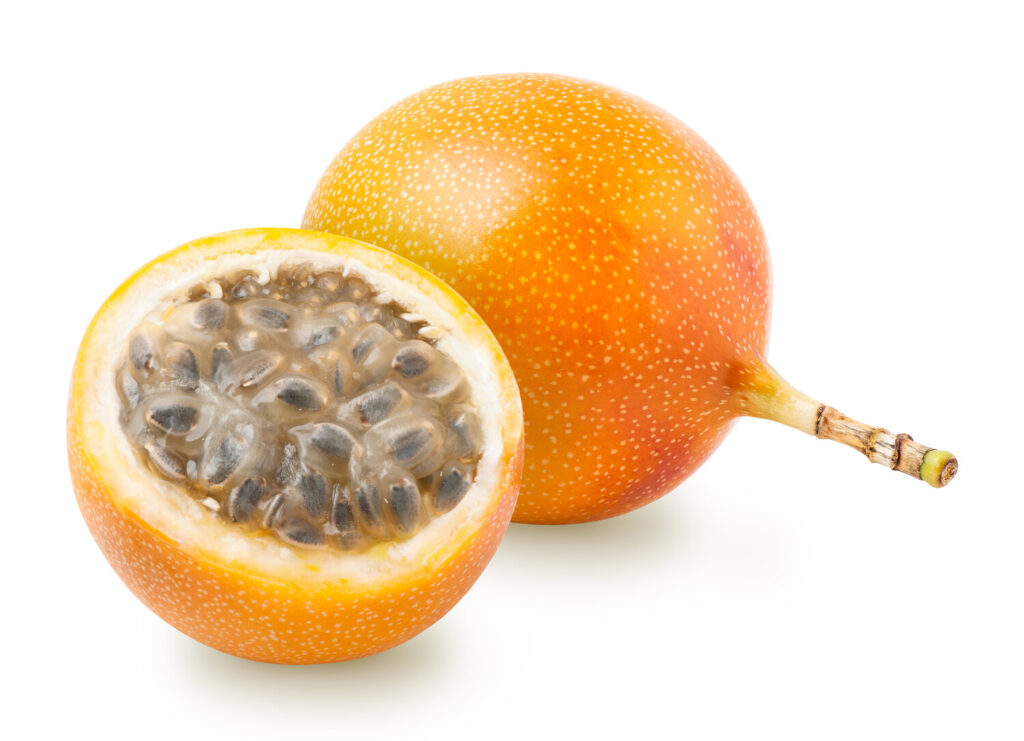
As I sit down to write about the granadilla, a tropical fruit that has left me fascinated, I find myself pondering the reasons behind its elusive nature in Italy. Born from the Andes region near the Equator, this sweet gem requires specific climate conditions to thrive, making it challenging to cultivate on a large scale beyond its native lands.
The Granadilla: A Plant with Unique Characteristics
Before delving into the fruit’s properties and uses, let’s explore the plant itself. Known as Passiflora ligularis, the granadilla is part of the passionfruit family (Passiflora edulis) and originates from the Andean region. Its native range now extends beyond its original boundaries, with sightings in Mexico, Venezuela, Bolivia, Guatemala, Argentina, Africa, Australia, and parts of Asia.
As an herbaceous plant, it grows well at medium altitudes, between 1,500 to 2,500 meters above sea level, where the climate is mild. While it can tolerate temperatures ranging from 15°C to 19°C (59°F-66°F), with slight variations, its growth is severely hindered in areas with extreme heat or cold. This makes it challenging for Mediterranean regions like Italy.
The Granadilla’s Unique Appearance
A glance at the granadilla reveals a remarkable plant with a vigorous, rampicant habit and heart-shaped leaves with an pointed tip. The plant has been named variously by different cultures: “granada china” in Mexico, “granadilla” in the Andes, “granadita,” or simply “parchita amarilla.”
The Granadilla’s Spectacular Flowers
Before enjoying its sweet fruit, we’re treated to a spectacular display of flowers. These solitary blooms are large and vibrant, with colors ranging from lila to fucsia intense, as well as white and rose-colored varieties. Some varieties even feature thin, white-violet filaments.
The Granadilla’s Delicious Fruit
The granadilla fruit is an arondiante orange-yellow color when unripe, turning a deeper shade upon ripeness. The hard but easily breakable skin gives way to a sweet, mucilaginous pulp surrounding the seeds. The flavor profile is unique, with intense sweetness and subtle acidity, accompanied by a pleasant aroma.
A Fruit with Ancient Origins
The granadilla’s name was given by Spanish conquistadors in honor of the Granada city, where it reminded them of the melagrana (passionfruit). While sharing some similarities, there are notable differences between the two fruits, particularly regarding their edibility.
The Nutritional Powerhouse
As we explore the granadilla’s properties, we find a wealth of vitamins and minerals. It contains all essential vitamins A, B, C, E, and K, along with beta-carotene, making it an excellent source of antioxidants. The granadilla is also rich in sugars, primarily in its pulp.
Relaxing Effects and Health Benefits
One of the most intriguing benefits of consuming granadilla is its ability to induce relaxation due to high levels of polifenols. This property makes it a popular choice for combating insomnia and anxiety. The fruit’s abundance of vitamin C and antioxidants also serves as an excellent remedy against free radicals, while iron present in the pulp aids those suffering from anemia.
Savoring the Granadilla: Culinary Uses
With its unique flavor profile and numerous health benefits, the granadilla is perfect for incorporating into various dishes. A simple salad with granadilla seeds adds an exotic twist to any meal. Alternatively, creating a sweet and tangy macedonia with granadilla, orange, yogurt, and honey offers a delightful treat.
Baking with Granadilla: Creating Delicious Muffins
For those with baking skills, experimenting with granadilla juice can lead to the creation of unique muffin flavors. By adding granadilla extract or juice to traditional muffin recipes, you’ll not only add an exotic twist but also leverage its health benefits.
Granadilla Tea and Infusions
Another innovative use for granadilla is as a tea or infusion. Boiling the fruit in water creates a flavorful and fragrant beverage that can be enjoyed hot or cold. The resulting liquid contains high levels of antioxidants, vitamins, and minerals, making it an excellent choice for those seeking a healthy and refreshing drink.
Granadilla Skin and Seed Uses
The granadilla’s skin is edible, but some people prefer to use only the pulp. Both the skin and seeds contain small amounts of acidity and can be used in various recipes or as natural dyes. The seeds, in particular, have been known to aid digestion and are a great addition to salads.
Growing Granadillas: Challenges and Considerations
While cultivating granadillas can be rewarding, it requires specific care and attention. To ensure success, growers must provide the right climate conditions, including moderate humidity and well-drained soil. Additionally, the plant is sensitive to extreme temperatures and may require protection from frost.
Conclusion
In conclusion, the granadilla is a fascinating fruit with numerous properties and uses that make it worth exploring. With its rich nutritional profile, unique flavor, and relaxing effects, this tropical gem has earned its place in our culinary repertoire.
Frequently Asked Questions (FAQs)
- Where can I find granadillas?
Granadillas are native to the Andean region near the Equator but have a wider distribution, with sightings in various parts of South America, Africa, Australia, Asia, and parts of Europe. - How do I cultivate granadillas?
To grow granadillas, you’ll need to provide specific climate conditions between 15°C to 19°C (59°F-66°F), with moderate humidity and well-drained soil. - What are the health benefits of eating granadilla?
Granadilla is rich in vitamins A, B, C, E, K, beta-carotene, iron, and minerals like potassium, calcium, phosphorus, sodium, and zinc. It also contains antioxidants, making it a great remedy against insomnia, anxiety, free radicals, anemia, and other health issues. - How do I prepare granadilla seeds?
Granadilla seeds can be used in salads, added to yogurt or oatmeal, or blended into smoothies for a nutritious snack. - Can I eat the entire granadilla fruit?
The whole fruit is edible, but you may want to remove the seeds before eating, as they contain small amounts of acidity. - How do I make macedonia with granadilla?
To create a delicious macedonia, combine diced granadillas, orange slices, yogurt, honey, and whipped cream for a sweet treat. - Can I bake muffins with granadilla juice?
Yes, you can incorporate granadilla juice or extract into your favorite muffin recipe to add an exotic twist and boost the nutritional profile of your baked goods.
Feel free to ask more questions!


