
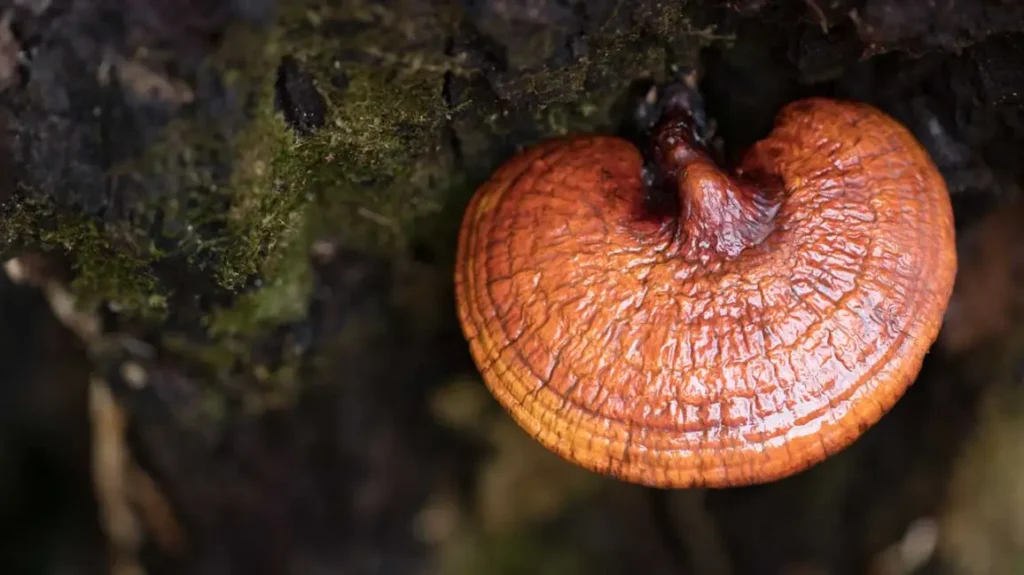
Reishi, also known as Ganoderma lucidum, is a fungus that has been touted as an elixir of life in traditional Chinese medicine for centuries. With its numerous potential therapeutic properties, it’s no wonder why Reishi has gained popularity worldwide among health enthusiasts and researchers alike. But how does this remarkable fungus work, and can we harness its power to improve our health?
Where Does Reishi Grow?
Reishi grows on decaying logs of oak and beech trees in China and Japan. It’s a parasitic fungus that thrives in moist environments, typically found from spring to autumn. The mushroom itself is brown in color and can reach up to 15 centimeters in diameter. However, it’s not suitable for immediate consumption; instead, it’s dried, ground into a powder, and used in various preparations.
Reishi grows on the roots of oak trees (Quercus spp.) and beech trees (Fagus spp.), where it forms symbiotic relationships with its host tree. This unique relationship allows Reishi to absorb nutrients from the tree while providing the tree with protection from pathogens and insects. The fungus can also break down complex organic matter, contributing to the decomposition process.
When Can Reishi Be Consumed?
To prepare the powdered Reishi for consumption, the fungus must undergo a process of drying, maceration, and grinding into small pieces. This step is crucial to unlock its full potential as a therapeutic agent. Once processed, Reishi can be made into infusions, decoctions, tinctures, or even compressed tablets with ant-inflammatory properties.
The process of preparing Reishi for consumption involves several steps:
- Harvesting: Fresh Reishi mushrooms are harvested in the autumn, typically from September to November.
- Cleaning: The mushrooms are cleaned and sorted according to size and quality.
- Drying: The mushrooms are dried to remove excess moisture and preserve their nutrients.
- Maceration: The dried mushrooms are soaked in a solvent, such as ethanol or glycerin, to extract the active compounds.
- Filtration: The resulting liquid is filtered to remove any impurities.
- Evaporation: The liquid is evaporated under heat or through distillation to produce a concentrated extract.
Reishi’s Therapeutic Properties
Numerous studies have confirmed the health benefits of Reishi, particularly in boosting the immune system. According to experts, its medicinal properties can be attributed to the high concentration of polysaccharides within the fungus. These compounds stimulate the immune system, helping to fight off infections and diseases.
Other notable compounds found in Reishi include:
- Peptidi Lz-8, which help regulate blood pressure and reduce cholesterol levels
- Germanio organico, with antiviral and anti-inflammatory properties
- Acidi oleici, contributing to its antifungal and antimicrobial effects
- Ganoderici, showing promise against allergic reactions
Mechanisms of Action
Reishi’s therapeutic properties can be attributed to several mechanisms of action:
- Immunomodulation: Reishi polysaccharides stimulate the immune system by activating natural killer cells and T-cells.
- Antioxidant activity: Reishi contains antioxidants, which help protect against oxidative stress and cell damage.
- Anti-inflammatory effects: Reishi compounds reduce inflammation by inhibiting pro-inflammatory cytokines and enzymes.
- Angiogenesis inhibition: Reishi extracts inhibit angiogenesis (the formation of new blood vessels), which can contribute to cancer development.
Important Note: While Reishi has shown promising results, it’s essential to consult a medical professional before using it as a treatment. Some individuals may experience adverse reactions or interact with medications, so caution is advised.
Reishi: Effects and Interactions
When consuming Reishi, it’s crucial to be aware of potential interactions and side effects:
- Avoid taking Reishi if you have an allergy to mushrooms or are sensitive to fungi
- Consult a doctor before using Reishi if you have low blood pressure, hypoglycemia, or take anticoagulants
- Do not consume Reishi during pregnancy or breastfeeding
Precautions and Contraindications
Reishi can interact with certain medications, including:
- Anticoagulants (e.g., warfarin): Reishi may increase the risk of bleeding.
- Immunomodulators (e.g., cyclosporine): Reishi may potentiate immunosuppression.
- Corticosteroids: Reishi may enhance steroid-induced side effects.
Conclusion
Reishi is a remarkable fungus with a wealth of therapeutic potential. By understanding its properties, preparation methods, and interactions, we can unlock its full potential to improve our health and well-being. As with any supplement, it’s essential to approach Reishi with caution and consult a medical professional before using it as a treatment.
Frequently Asked Questions (FAQs)
- What is the recommended dosage of Reishi?
Consult a healthcare professional for personalized recommendations. - Can I take Reishi with other medications?
Avoid taking Reishi with anticoagulants, immunosuppressors, and corticosteroids without consulting a doctor. - Is Reishi safe for everyone?
Consult a healthcare professional before using Reishi if you have allergies or sensitivities. - How long does it take to see results from taking Reishi?
Results may vary depending on individual factors; consult a healthcare professional for guidance. - Can I grow my own Reishi at home?
Reishi grows in specific environments; consider consulting an expert before attempting to cultivate the fungus. - Are there any potential side effects of taking Reishi?
Consult a healthcare professional for personalized advice on minimizing potential side effects. - How can I ensure quality and authenticity when purchasing Reishi supplements?
Research reputable sources, read reviews, and consult with healthcare professionals to ensure authenticity. - Can children take Reishi?
Consult a healthcare professional before using Reishi in children; dosage and frequency should be determined on an individual basis.
By understanding the potential benefits and risks of Reishi, you can make informed decisions about incorporating it into your health regimen.


