
As we’ve already wondered about the functioning of a heat pump for heating and cooling, in this article, we’ll delve deeper into the world of heat pumps to explain how they work.
The Basic Principle of a Heat Pump
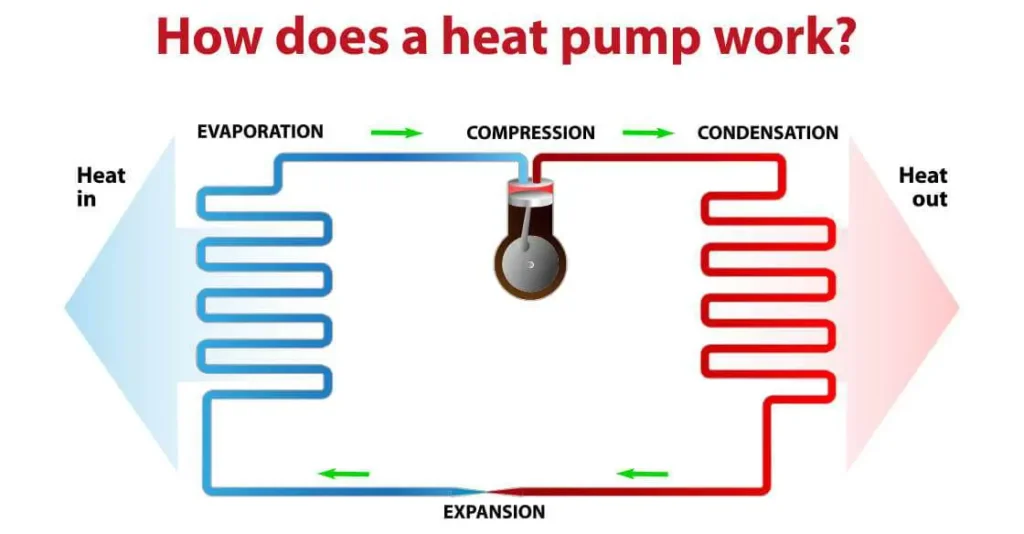
In simple terms, a heat pump is a system that uses a closed circuit to transfer heat from one location to another. The fluid refrigerant circulates through the system, changing state (liquid to vapor and back again) repeatedly. During these changes in state, temperature and pressure vary: in the evaporator, the fluid absorbs heat from the surrounding environment; the compressor extracts the heat contained in the air, water, or ground.
The Heat Pump Cycle
To summarize, here’s how a heat pump works:
- The heat pump extracts heat from an external source (air, water, or ground).
- The heat is transferred to the refrigerant.
- The compressor increases the energy of the refrigerant and prepares it for condensation.
- The refrigerant passes back through the evaporator, releasing heat usable by the heating system.
The Energy Balance
Heat pumps have a positive energy balance: in general, the energy released from the heat pump is four times greater than the electrical energy consumed by the machine. This makes heat pumps an attractive option for home and building heating systems, especially when powered by renewable energy sources like solar panels.
Inverting the Cycle
The same equipment can be used for both heating and cooling by simply inverting the cycle. With some setup, a heat pump can be employed for both purposes.
Air-Water Heat Pump Systems
In this configuration, the heat pump extracts thermal energy from outside air and transfers it to the building’s ventilation system. These systems are typically installed outside the building and connected to the household plumbing system without any issues but require an automatic drainage system.
Water-Water Heat Pump Systems
With water-water heat pumps, the thermal energy required for space heating is taken from underground sources like aquifers, lakes, or rivers, then supplied to indoor buildings. Although these systems have a higher initial investment cost for their plumbing and filtration systems, they offer complete independence from external weather conditions.
Ground-Water Heat Pump Systems
These systems utilize geothermal energy by tapping into the constant temperature of the ground. The temperature is conveyed to the heat pump via specialized probes inserted horizontally at 1-1.5 meters below the surface or vertically down tens of meters.
Types of Heat Pumps: Inverter Technology and Split Systems
Heat pumps can be broadly categorized into two types – inverter technology systems and split systems, each with its unique benefits and applications:
- Inverter Technology Systems: These heat pumps utilize advanced compressor technology that adjusts the compression speed to optimize performance. They’re quieter than traditional systems, require less energy, and have a longer lifespan.
- Split Systems: Split systems consist of an outdoor unit (the condenser) connected to an indoor unit (the evaporator). The outdoor unit is responsible for compressing refrigerant, while the indoor unit absorbs or releases heat. These systems are ideal for small spaces, like apartments or offices.
Heat Pump Benefits: Environmental Sustainability and Energy Efficiency
Heat pumps have a significant environmental impact due to their efficiency in energy use and reduced reliance on fossil fuels:
- Reduced Carbon Footprint: By using renewable energy sources, such as solar power, heat pumps minimize greenhouse gas emissions and contribute to a cleaner environment.
- Energy Savings: Heat pumps can save homeowners up to 60% of their heating bills by providing efficient heating and cooling.
Heat Pump Drawbacks: High Upfront Costs and Noise
Despite the benefits of heat pumps, there are some drawbacks:
- High Upfront Costs: While heat pumps offer long-term energy savings, they can be expensive to install, making them a significant upfront investment.
- Noise: Heat pumps can generate noise due to the compressor operation, especially when compared to traditional HVAC systems.
Conclusion: How a Heat Pump Works
In conclusion, this article has explained how heat pumps work and their benefits in terms of efficiency and renewable energy use. Whether for heating or cooling, these systems can be reversed by simply changing the operating cycle.


