
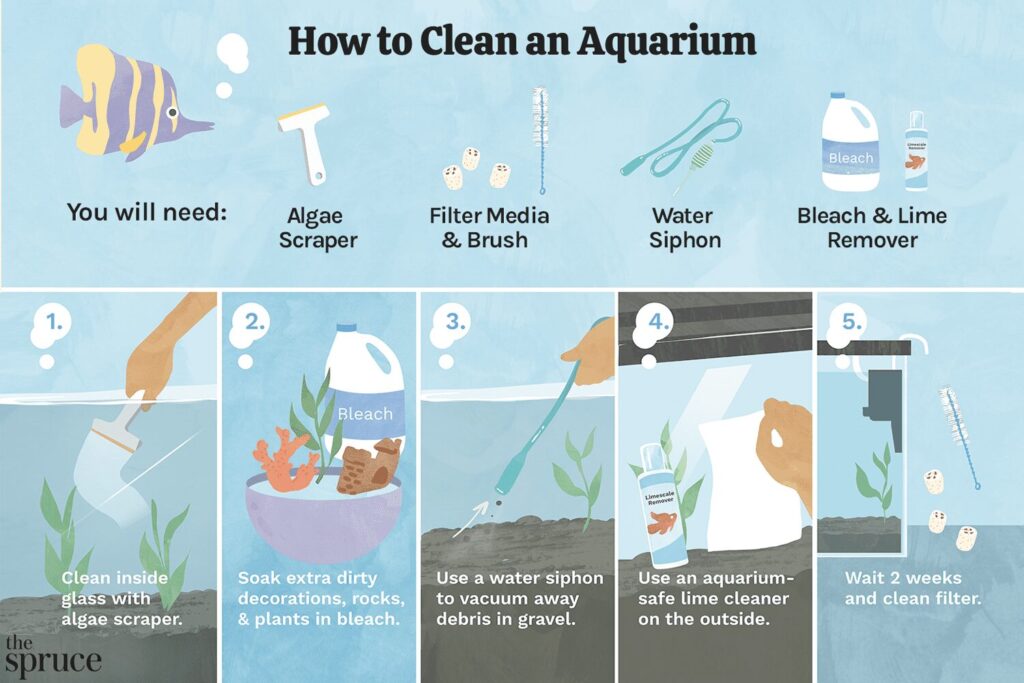
As an aquarium owner, maintaining a clean and healthy environment for your fish is crucial. Whether you have a small or large tank, it’s essential to regularly clean and maintain it to ensure the well-being of your aquatic friends. In this article, we’ll take you through the process of cleaning your aquarium, from surface cleaning to deep cleaning.
Why Clean Your Aquarium?
Cleaning your aquarium is not just about aesthetics; it’s also vital for the health and survival of your fish. A dirty tank can lead to water quality issues, stress, and even disease in your fish. Regular cleaning helps to:
- Maintain optimal water quality
- Prevent bacterial growth
- Reduce algae buildup
- Improve visibility
How Often Should I Clean My Aquarium?
It’s recommended to clean your aquarium at least once a week, but it depends on the size of your tank and the number of fish you have. As a general rule, smaller tanks (less than 10 gallons) should be cleaned every 7-10 days, while larger tanks (more than 20 gallons) can be cleaned every 2-3 weeks.
Cleaning Your Aquarium: A Step-by-Step Guide
Surface Cleaning
Before we dive into the deep cleaning process, let’s start with a surface cleaning. This involves removing any debris or algae that may have accumulated on the tank’s walls and glass. To do this:
- Turn off the equipment and remove any decorations or accessories
- Use a soft-bristled brush to gently scrub away any debris
- Rinse the tank with dechlorinated water
Removing Fish for Deep Cleaning
To perform a deep clean, you’ll need to remove your fish from the tank. Don’t worry; this won’t traumatize them! To minimize stress:
- Use a gentle net to scoop up your fish and transfer them to a separate container filled with dechlorinated water
- Place the container in a shaded area or a separate room
Deep Cleaning
Now it’s time for the deep clean. This involves scrubbing away any algae, debris, or mineral deposits that have built up on the tank’s walls and glass.
Cleaning the Filter and Equipment
Before you start cleaning, make sure to turn off the equipment and remove any decorations or accessories.
- Remove the filter media and rinse it with dechlorinated water
- Use a soft-bristled brush to gently scrub away any debris or mineral deposits
- Rinse the filter and replace the media
Cleaning the Tank Walls
Next, use a soft-bristled brush to gently scrub away any algae or debris on the tank walls.
- Mix 1 tablespoon of salt (optional) with 1 gallon of dechlorinated water
- Dip your brush into the solution and wipe down the tank walls
- Rinse the brush thoroughly and repeat if necessary
Cleaning the Glass
Now it’s time to clean the glass. Use a gentle cleaning solution and soft cloth to remove any streaks or residue.
- Mix 1 tablespoon of white vinegar with 1 gallon of dechlorinated water
- Dip your cloth into the solution and wipe down the tank walls
- Rinse the cloth thoroughly and repeat if necessary
Cleaning the Decorations
Don’t forget to clean any decorations or accessories you have in your tank.
- Mix 1 tablespoon of baking soda with 1 gallon of dechlorinated water
- Dip a soft-bristled brush into the solution and wipe down the decorations
- Rinse the brush thoroughly and repeat if necessary
Putting Everything Back Together
Once you’ve finished cleaning, it’s time to put everything back together.
- Gradually re-introduce your fish to the tank, making sure they’re comfortable and stress-free
- Replace any decorations or accessories you removed during the cleaning process
- Turn on the equipment and make sure everything is working properly
Tips and Tricks
Here are a few additional tips to keep in mind:
- Regularly check your water parameters to ensure optimal conditions for your fish.
- Avoid over-cleaning, as this can stress your fish and lead to disease.
- Consider using an algae scrubber or magnetic algae remover to help control algae growth.
Frequently Asked Questions
Here are some common questions about cleaning your aquarium:
Q: How often should I change the water in my tank?
A: It depends on the size of your tank and the number of fish you have. A good rule of thumb is to change 10-20% of the water every week.
Q: Can I clean my tank while it’s still running?
A: No, it’s not recommended to clean your tank while it’s still running. This can create a lot of stress for your fish and potentially lead to disease.
Q: What type of cleaning solution should I use?
A: A gentle cleaning solution specifically designed for aquariums is the best option. Avoid using household cleaners or harsh chemicals, as these can harm your fish.
Q: How long does it take to clean my tank?
A: The time it takes to clean your tank will depend on its size and the level of debris or algae buildup. On average, a small tank (less than 10 gallons) may take around 30 minutes to an hour to clean, while a larger tank (more than 20 gallons) may take several hours.
Q: Can I use a magnetic algae remover to control algae growth?
A: Yes, magnetic algae removers can be effective in controlling algae growth. However, they should be used in conjunction with regular cleaning and proper water parameters.
Advanced Cleaning Techniques
For more experienced aquarium owners, here are some advanced cleaning techniques you can try:
- Backwashing: This involves reversing the flow of water through the filter to remove any debris or mineral deposits that have built up on the filter media.
- Water changes: Regularly changing a portion of the tank’s water can help maintain optimal water quality and prevent algae buildup.
- Decalibration: If you’re using a magnetic algae remover, consider recalibrating it regularly to ensure it’s working effectively.
Common Mistakes to Avoid
Here are some common mistakes to avoid when cleaning your aquarium:
- Over-cleaning: This can stress your fish and lead to disease.
- Using harsh chemicals: These can harm your fish and damage the tank’s equipment.
- Not properly rinsing equipment: Failure to rinse equipment thoroughly can leave behind mineral deposits or debris.
Conclusion
Cleaning your aquarium is an essential part of maintaining a healthy and thriving environment for your fish. By following these steps and tips, you’ll be well on your way to keeping your tank clean and your fish happy. Remember to regularly check your water parameters, avoid over-cleaning, and use gentle cleaning solutions to ensure the best results.
Additional Resources
If you’re looking for more information on aquarium maintenance or want to learn about specific topics in-depth, here are some additional resources:
- Aquarium forums: Joining online forums can be a great way to connect with other aquarium owners and learn from their experiences.
- Aquarium books: There are many excellent books available that cover various aspects of aquarium maintenance and care.
- Online tutorials: Watching video tutorials or taking online courses can help you learn new skills and techniques.
By following these tips and resources, you’ll be able to keep your aquarium clean, healthy, and thriving for years to come. Happy cleaning!


