
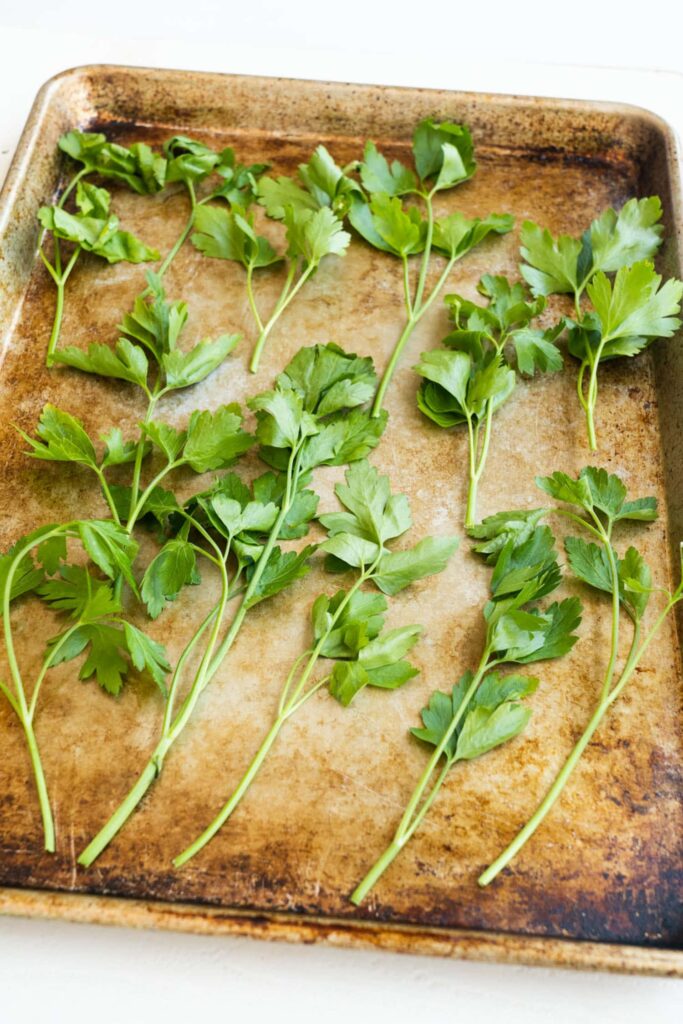
As it turns out, basil isn’t just easy to grow in your garden or on your balcony (it takes up very little space!), but it’s also a practical herb that can be dried and preserved for all year round. Once dried, basil can add flavor to many dishes.
Understanding the Benefits of Drying Basil
Basil is an aromatic herb that can be used in a variety of dishes, from pasta sauces to salads. When dried, basil can be stored for up to a year. This makes it a great addition to your pantry or spice rack. But how do you dry basil without an electric dehydrator?
Methods of Drying Basil
There are several ways to dry basil, including using the oven or microwave. However, the most effective method is often debated among cooks and gardeners.
Drying Basil in the Oven (Microwave Method)
While not the safest method for drying basil, microwaves can be a quick way to get the job done. The disadvantage of this method is that it can be tricky to monitor, as the process of dehydration begins from the inside out. If you do decide to use the microwave, follow these steps:
- Wash and dry the basil leaves thoroughly.
- Cut the stems into small pieces (about 0.5 inches) to ensure even drying.
- Place the basil on a paper towel, making sure not to overlap the leaves.
- Heat the microwave for short intervals (about 30 seconds at a time).
- Repeat the process until the basil is dry, but be cautious not to overheat.
Drying Basil in the Oven (Classic Method)
Using your oven is often considered a safer and more effective method of drying basil. Here’s how:
- Wash and dry the basil leaves thoroughly.
- Cut the stems into small pieces (about 0.5 inches).
- Soak the basil in boiling water for about 20-30 seconds, then drain and rinse with cold water.
- Dry the basil using a paper towel to remove excess moisture.
- Spread the dried basil evenly on a baking sheet lined with parchment paper.
- Bake in a low oven temperature (around 150°F) for about 2 hours, or until the basil is dry and crumbly.
Tips for Drying Basil
Here are some additional tips to keep in mind when drying basil:
- Use your oven during off-peak hours, as you’ll want to avoid heating up your kitchen unnecessarily.
- Keep an eye on the temperature to ensure it doesn’t get too high, which can cause the basil to burn or lose its flavor.
- Store dried basil in airtight containers to preserve freshness.
By following these steps and tips, you’ll be able to dry your own basil at home without needing an electric dehydrator. Happy cooking!
Frequently Asked Questions
- How long does it take to dry basil?
Drying time will vary depending on the method used and the temperature of the oven or microwave. - Can I dry basil in the sun?
While you can dry basil in the sun, this method is less effective than using an oven or microwave, as it’s more susceptible to pests and other contaminants. - How do I store dried basil?
Store dried basil in airtight containers to preserve freshness. - Can I rehydrate dried basil?
Yes, you can rehydrate dried basil by soaking it in water or broth before using it in recipes. - Why does my dried basil taste bland?
There could be several reasons for this – check the drying method and storage conditions, as well as the quality of the fresh basil used.
Benefits of Drying Basil
In addition to being a practical herb for cooking, drying basil has several other benefits:
- Long-term preservation: Dried basil can be stored for up to a year, making it a great addition to your pantry or spice rack.
- Cost-effective: By drying basil yourself, you can save money on buying dried herbs at the store.
- Customization: You can dry basil in the quantities that suit your needs and preferences.
- Flavor preservation: Drying basil helps preserve its natural flavor and aroma.
Common Uses for Basil
Basil is a versatile herb with many different uses in cooking:
- Pasta sauces: Add dried basil to pasta sauce recipes for a boost of flavor.
- Salads: Chop fresh basil leaves and add them to salads for a burst of freshness.
- Soups and stews: Use dried basil to add depth and warmth to soups and stews.
Health Benefits of Basil
In addition to being a tasty herb, basil has several health benefits:
- Antioxidant properties: Basil contains antioxidants that can help protect against cell damage and oxidative stress.
- Anti-inflammatory properties: Basil has anti-inflammatory compounds that may help reduce inflammation and improve symptoms of conditions such as arthritis.
- Digestive aid: Basil may help soothe digestive issues, such as bloating and indigestion.
Growing Basil
While drying basil is a practical way to preserve it, growing your own basil can also be a fun and rewarding experience:
- Choose the right variety: Select a compact or dwarf variety of basil that’s well-suited for indoor growing.
- Provide adequate light: Basil needs plenty of light to grow well, so choose a spot with plenty of direct sunlight.
- Water correctly: Overwatering can lead to root rot and other problems. Keep the soil consistently moist but not waterlogged.
By following these methods and tips, you can successfully dry your own basil at home. Whether you’re looking for a practical way to preserve this flavorful herb or simply want to try something new, drying basil is a great place to start!


