
What is the Gazza Ladra Pica Pica?
The Gazza ladra pica pica, also known as the magpie, is one of the most intelligent birds in the world. In fact, it’s considered to be among the top three most intelligent birds, alongside corvids and parrots. This bird can be found throughout Europe, Asia, and northern Africa, and its adaptability has allowed it to thrive in a wide range of environments.
Physical Characteristics: A Bird of Distinction
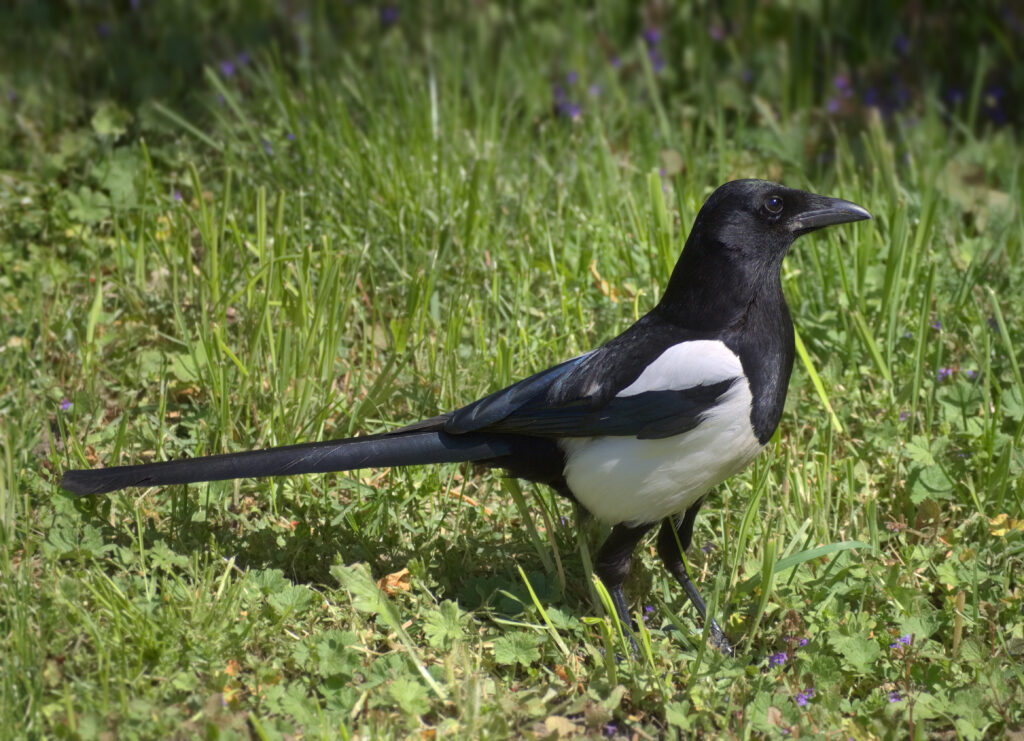
The Gazza ladra pica pica measures approximately 44-46 cm in length, with the majority of this being its tail. The bird’s body is around 20 cm long, and its wingspan can reach up to 52-62 cm. Its plumage is striking, with a black glossy sheen, greenish-metallic reflections on its head, throat, and chest, and white belly. The legs and beak are also black.
Alarming News: Not Every Magpie Has the Same Tint
If you encounter a magpie that appears dull or lacks the characteristic shimmer of its feathers, don’t worry – it’s just a young bird. Young magpies have not yet developed the same level of coloration as their parents.
Dietary Habits: A Resourceful Forager
One reason for the widespread distribution of the Gazza ladra pica pica is its ability to adapt to changing food sources. This bird is not particularly fussy about what it eats, and will take advantage of whatever is available. Its diet includes both animal and plant-based foods, such as insects, eggs, carrion, and grains.
Intelligence: A Bird of Exceptional Cognitive Ability
The Gazza ladra pica pica is renowned for its exceptional intelligence. Research has shown that it possesses a high level of cognitive ability, comparable to that of primates. In fact, studies have demonstrated that magpies are able to solve complex problems and exhibit advanced social behavior.
Territorial Behavior: A Constant Vigilance
The Gazza ladra pica pica is known for its territorial behavior, which extends throughout the year. During mating season, pairs will isolate themselves from other birds to build their nest and reproduce. Outside of this period, they are fiercely protective of their territory and will aggressively defend it against any perceived threats.
Communication: A Unique Form of Expression
While magpies do not possess a melodious song like some other birds, they have developed a distinctive form of communication known as “vocalizations.” These sounds can be described as harsh and intimidating, serving primarily to deter predators or competitors from approaching their territory.
A Musical Connection: La Gazza Ladra by Rossini
For those interested in hearing something more pleasant than the magpie’s vocalizations, consider listening to Gioachino Rossini’s famous opera, La Gazza Ladra. This work is a testament to the bird’s reputation as a symbol of cunning and intelligence.
Social Behavior: Complex Interactions with Other Birds
Magpies are known to engage in complex social behaviors, including cooperative breeding, reciprocity, and even play. They have been observed playing with sticks, rocks, and other objects, and have even been known to engage in playful interactions with other birds, such as chasing or mock-fighting.
Influence of Human Activity on Magpie Populations
Unfortunately, human activity has had a significant impact on magpie populations. Habitat destruction, hunting, and collision with windows or other human-made structures are all major threats to these intelligent birds. In some areas, magpies have even become aggressive towards humans, leading to concerns about their safety.
Conservation Efforts: Protecting the Gazza Ladra Pica Pica
In recent years, there has been a growing recognition of the importance of protecting magpie populations and habitats. Conservation efforts are underway to address the threats facing these birds, including habitat restoration, reducing hunting pressure, and implementing measures to reduce collision risk.
Conclusion
In conclusion, the Gazza ladra pica pica is an extraordinary bird that deserves our appreciation for its remarkable intelligence, adaptability, and social behavior. Its ability to thrive in diverse environments has allowed it to become one of the most widespread bird species on the planet.
Frequently Asked Questions
- Q: How often do magpies build nests?
A: Magpies typically build their nests during mating season, although they may re-use or modify existing nests throughout the year. - Q: What is the average lifespan of a Gazza ladra pica pica?
A: The average lifespan of a Gazza ladra pica pica in the wild is approximately 20-30 years. - Q: Can magpies be domesticated?
A: While it’s theoretically possible to domesticate magpies, their intelligence and independence make them challenging to tame. - Q: Are magpies intelligent enough to recognize themselves in mirrors?
A: Research has shown that some species of corvids, including magpies, possess self-awareness and can recognize themselves in mirrors. - Q: What are the most common threats to magpie populations?
A: The main threats to magpie populations include habitat destruction, hunting, and collision with windows or other human-made structures. - Q: Can magpies be trained for specific tasks?
A: While magpies are intelligent birds, their cognitive abilities are geared towards problem-solving and social behavior rather than obedience training. - Q: Are magpies social animals?
A: Magpies are known to form long-term monogamous relationships during mating season, although they may also engage in extra-pair copulations outside of this period. - Q: What is the significance of the Gazza ladra pica pica’s name?
A: The term “Gazza ladra” refers to the bird’s propensity for stealing food from other birds and humans, earning it a reputation as a cunning and resourceful species.
Interesting Facts
- Q: Do magpies have any natural predators?
A: Magpies do have some natural predators, including owls, hawks, and foxes. - Q: Can magpies fly long distances?
A: Yes, magpies are capable of flying long distances in search of food or suitable habitats. - Q: How do magpies adapt to changing weather conditions?
A: Magpies have adapted to changing weather conditions by developing a range of behavioral responses, including altering their foraging behavior and seeking shelter in trees or other cover.
Conclusion
In conclusion, the Gazza ladra pica pica is an extraordinary bird that deserves our appreciation for its remarkable intelligence, adaptability, and social behavior. Its ability to thrive in diverse environments has allowed it to become one of the most widespread bird species on the planet. By continuing to learn more about these fascinating birds, we can work towards protecting their populations and habitats for future generations.


