
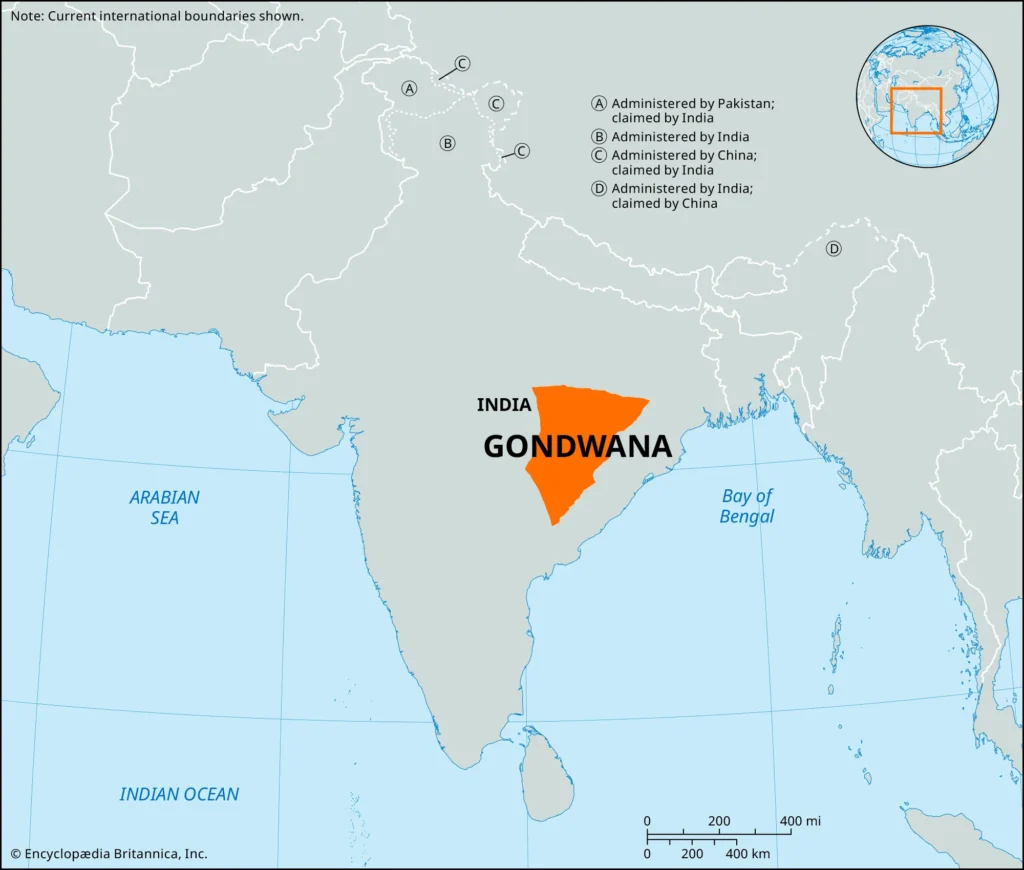
1. Introduction to Gondwana
Gondwana, often referred to as a supercontinent, has sparked intense interest among scientists and historians alike for its enigmatic existence. The question remains: where did this enormous piece of Earth exist? If we accept that Gondwana existed around 310 million years ago, what did it comprise?
The concept of a lost supercontinent is not new to scientific circles. In fact, the theory of continental drift was first proposed by Alfred Wegener in 1912, suggesting that the continents had moved over time due to plate tectonics. This idea was later supported by various lines of evidence, including geological similarities between continents and the presence of identical species on different landmasses.
2. Where Did Gondwana Exist?
When and if Gondwana truly existed, it encompassed several current continents in the Southern Hemisphere. The South America, Africa, India, parts of the Middle East, Antarctica, Australia, and even a portion of Australia made up this hypothetical supercontinent. In reality, when the Pangea supercontinent broke apart, these regions became distinct.
The existence of Gondwana is widely accepted by geologists and paleontologists, but its precise boundaries are still debated among scientists. Some researchers argue that Gondwana was not a single, continuous landmass, but rather a collection of connected continents that underwent various phases of assembly and separation over millions of years.
3. Meaning of Gondwana
So, where did the name “Gondwana” originate? This question will be answered soon enough. Initially, it was proposed to call this enormous piece of land “Urgondwana,” followed by other alternatives such as “Katania” and “Paleopangea.” Ultimately, Gondwana became the widely accepted term.
The name “Gondwana” is derived from a region in India known for its Permian-Triassic sedimentary rocks, specifically the “Gond” forest. This area was recognized by Austrian geologist Eduard Suess and HB Medlicott in 1872 as a significant geological feature that could be linked to other continents.
4. Evolution of Gondwana
Initially, Gondwana was indeed a supercontinent, but it later broke into three pieces: Laurentia, Greenland, and Laurasia, which eventually merged to form Pangea. The remaining part of Gondwana reunited with Laurasia, leading to the formation of the Varisica chain.
The breakup of Gondwana is believed to have occurred in several stages, with various continents colliding and separating over millions of years. This process was driven by plate tectonics, which continues to shape the Earth’s surface today.
5. Scientific Evidence for Gondwana
Scientifically verified continuity among continents from a geological standpoint can be seen in stratigraphic sequences, while the presence of identical species on all Gondwana-related continents provides additional evidence.
One of the most compelling lines of evidence for Gondwana’s existence comes from the matching of fossil records across different continents. For example, the same dinosaur species has been found in both Africa and South America, suggesting a common ancestry that stretches back millions of years.
6. The Role of Pangea and Laurasia
Gondwana played a pivotal role in forming Pangea about 290 million years ago, thanks to plate tectonics. It was during this time that the first supercontinent, Pangea, formed as Laurasia merged with Gondwana.
Pangea’s existence has been confirmed by various geological and paleontological findings, including the presence of identical rock formations across different continents and the discovery of similar dinosaur fossils in Africa and South America.
7. Etymology of Gondwana
The name “Gondwana” originated from a region in India known for its Permian-Triassic sedimentary rocks, specifically the “Gond” forest. The term was coined by Austrian geologist Eduard Suess and HB Medlicott in 1872.
The study of Gondwana has shed new light on our understanding of the Earth’s geological history, providing valuable insights into the processes that shaped our planet over millions of years. By exploring the mysteries of this lost supercontinent, we can gain a deeper appreciation for the complex and dynamic nature of our planet.
8. The Australian Connection to Gondwana
In Australia, we find examples of Gondwana’s existence through ancient forests, such as the Daintree Rainforest and the Atherton Tablelands. These regions are home to unique and endemic species that have survived due to their geographical isolation.
The Australian connection to Gondwana is a fascinating area of research, with scientists continuing to study the region’s geological history and the presence of ancient fossils. By exploring these connections, we can gain a better understanding of the Earth’s evolution and the processes that shaped our planet over millions of years.
9. Pronunciation of Gondwana
The pronunciation of the supercontinent’s name is /ɡonˈdwana/.
In conclusion, the existence of Gondwana remains one of the most intriguing mysteries in the field of geology and paleontology. Through continued research and exploration, we can gain a deeper understanding of this lost supercontinent and its role in shaping our planet’s history.
FAQs
- What was Gondwana?
A lost supercontinent comprising South America, Africa, India, parts of the Middle East, Antarctica, Australia, and other regions. - When did Gondwana exist?
Approximately 310 million years ago. - Where is Gondwana located?
In the Southern Hemisphere. - What was the process that formed Pangea?
Plate tectonics led to Laurasia and Gondwana merging about 290 million years ago. - How did Gondwana break apart?
Into three pieces: Laurentia, Greenland, and Laurasia. - Is there any concrete evidence of Gondwana’s existence?
Stratigraphic sequences and identical species across continents provide evidence. - What is the connection between Gondwana and Australia?
Ancient forests in Australia feature unique, endemic species that have survived due to their geographical isolation.
By exploring the mysteries of Gondwana, we can gain a deeper understanding of our planet’s history and the complex processes that shape it over millions of years.


