
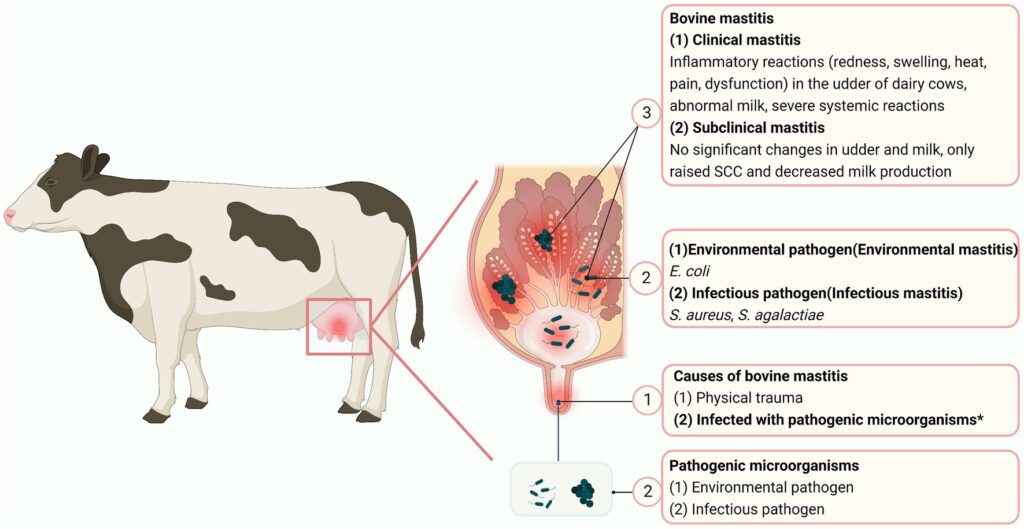
Mastitis is a bacterial infection of the mammary gland that requires regular monitoring to protect dairy herds. Regular visits and sampling help develop a strategic plan or implement a control program to safeguard the herd’s productivity.
What is Mastitis? Causes and Prevention in Livestock Farms
Mastitis is an inflammation of the mammary gland, which must be monitored through periodic screening. Regular screenings enable the development of a strategic plan or implementation of a control program to protect dairy herds from mastitis.
Diagnosing Mastitis
The diagnosis of contagious mastitis is crucial to prevent the presence of infectious agents. Not all inflammatory conditions affecting the mammary gland (mastitis) are contagious.
Types of Diagnostics and Screening Methods
There are various methods for diagnosing mastitis, each with its pros and cons. The most commonly used method for diagnosing contagious mastitis is the analysis of milk samples from individual quarters. This approach provides an accurate identification of affected quarters and low false-negative rates. However, this method requires more time and resources.
Causes of Mastitis in Cows
Mastitis can be caused by various microorganisms, including:
- Streptococcus agalactiae: a common cause of mastitis in cows
- Staphylococcus aureus: the most prevalent pathogen responsible for contagious mastitis
- Mycoplasma: a bacterium that can contribute to the development of mastitis
- Corynebacterium bovis: another microorganism that may cause mastitis
The most severe cases of mastitis are often linked to environmental factors such as Escherichia coli and other Gram-negative bacteria. However, these pathogens do not transmit mastitis; they can only trigger the disease.
Cellular Analysis in Milk
Milk samples from dairy cows contain a higher number of somatic cells when there is an inflammatory response. This increase in cell count can be an indicator of mastitis. However, this method may produce false positives due to natural fluctuations in temperature and milk production.
Symptoms of Mastitis
The symptoms of mastitis can be observed by examining the milk or the appearance of the udder. The most common signs include:
- Clotted Milk
- Fibrinous Fissures (Fustols)
- Serous Appearance
These symptoms are often accompanied by changes in the shape and size of the udder, as well as decreased milk production.
Somatic Cell Count in Milk
The somatic cell count is another indicator of mastitis. A higher cell count in milk can be an indication of inflammation. However, this method may also produce false positives due to natural fluctuations in temperature and milk production.
Mastitis Symptoms in Cows with Chronic Mastitis
When the inflammatory response in the mammary gland becomes chronic, several symptoms can appear:
- Persistent Increase in Somatic Cell Count
- Presence of Nodules
- Gradual Induration of Mammary Tissue
A more detailed explanation of mastitis and its causes can be found on our dedicated page: Mastitis Causes.
Preventing Mastitis
There are several steps that farmers can take to prevent mastitis in their dairy herds. These include:
- Proper Sanitation and Cleaning: Regular cleaning and sanitation of the udder and teat area can help reduce the risk of mastitis.
- Regular Vaccination: Vaccinating against Staphylococcus aureus and other pathogens can help prevent mastitis.
- Proper Handling and Milking: Proper handling and milking techniques can also help reduce the risk of mastitis.
- Dietary Management: A balanced diet that includes adequate nutrients and minerals can help support immune function.
Strategies for Controlling Mastitis
While prevention is key, controlling mastitis in dairy herds is also important. This can be achieved through:
- Early Detection and Treatment: Early detection of mastitis through regular screening can help reduce the risk of complications.
- Targeted Therapy: Targeted therapy that targets specific pathogens or causes of mastitis can help control the disease.
Conclusion
Mastitis is a bacterial infection of the mammary gland that requires regular monitoring to protect dairy herds. By understanding the signs, symptoms, and causes of mastitis, farmers can take steps to prevent and control this disease in their dairy herds. Regular screening, proper sanitation and cleaning, vaccination against common pathogens, proper handling and milking techniques, and dietary management can all help reduce the risk of mastitis.
By following these strategies, farmers can help protect their herd’s productivity and maintain a healthy milk production.


