
Introduction
As we strive to reduce our environmental footprint, it’s essential to explore alternative uses for resources that would otherwise be discarded. One such resource is the water produced by air conditioning units, commonly known as condenser water. While this water may not be potable on its own, it can be recycled and reused in various ways, reducing waste and conserving precious resources. In this article, we’ll delve into the world of condenser water recycling and explore its potential uses.
What is Condenser Water?
Condenser water is the result of a process called condensation, where air is cooled to produce refrigerated air. This process involves the removal of heat from the indoor air, resulting in water vapor being condensed onto a heat exchanger or condenser coil. The resulting water is demineralized and lacks any impurities, making it suitable for various applications.
Is Condenser Water Distillate or Demineralized Water?
While condenser water shares similarities with distilled and demineralized water, it cannot be classified as either. Distilled water is water that has been purified through distillation, resulting in a highly pure form of water. Demineralized water, on the other hand, has had its mineral content removed.
Condenser water falls somewhere in between, having undergone condensation but lacking any significant mineral content. Its purity level is significantly lower than distilled or demineralized water, making it unsuitable for human consumption.
History of Condenser Water Recycling
The concept of recycling condenser water dates back to the 1970s and 1980s, when companies began exploring alternative uses for waste water. However, it wasn’t until the 1990s that the industry started to adopt more sustainable practices, recognizing the potential benefits of condenser water reuse.
Today, many organizations around the world are leveraging this resource to reduce their environmental impact. From large corporations to small businesses and individuals, there is a growing trend towards condenser water recycling and reusing.
Benefits of Condenser Water Recycling
- Reduced Waste: By reusing condenser water, we can significantly reduce the amount of waste generated by these air conditioning units.
- Water Conservation: Reusing condenser water conserves fresh water resources, which are becoming increasingly scarce in many parts of the world.
- Energy Efficiency: Condenser water recycling can help reduce energy consumption associated with cooling systems.
- Cost Savings: Using reclaimed condenser water can save businesses and organizations significant amounts of money on their water bills.
How to Start Recycling Condenser Water
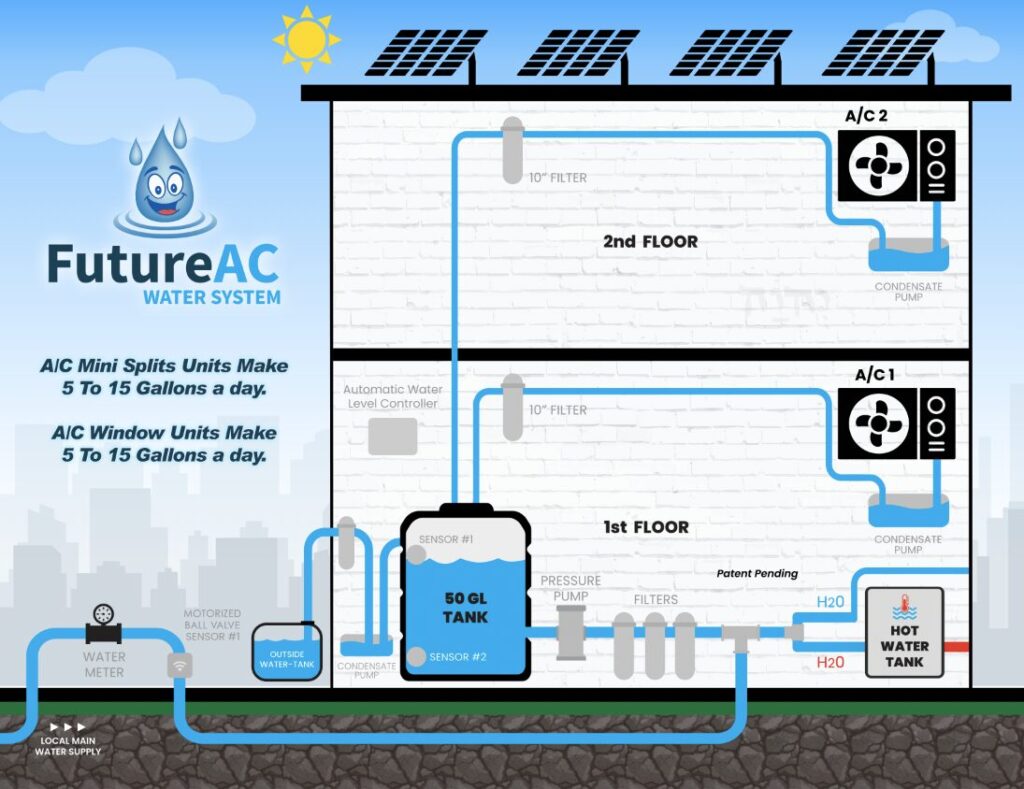
- Collecting Condenser Water: First, you need to collect the condenser water from your air conditioning unit.
- Purification Methods: Depending on your requirements, you may need to purify or treat the condenser water using various methods such as boiling, filtration, or UV treatment.
- Storage Containers: Use suitable storage containers to store the purified condenser water until it’s ready for use.
Using Condenser Water for Different Purposes
- Ferrous Metals: Use condenser water to clean ferrous metals, as it won’t leave any mineral deposits behind.
- Automotive Maintenance: Apply condenser water to the radiator or other components of your car’s cooling system to remove mineral deposits and maintain its performance.
- Household Cleaning: Utilize condenser water for cleaning purposes, such as washing windows or mirrors.
Using Condenser Water for Plant Irrigation
Contrary to popular belief, condenser water can be used for plant irrigation without harming the plants. In fact, many plants that prefer well-draining soils and low nutrient levels will thrive with this water.
Some examples of plants that can tolerate or even benefit from condenser water include:
- Cacti and succulents
- Grasses and groundcovers
- Flowering shrubs
However, it’s essential to note that certain plants, such as carnivorous species, require a diet rich in minerals and nutrients. In these cases, using condenser water may not provide the necessary nutrients.
Using Condenser Water for Personal Care
- Soap Making: Mix condenser water with soap flakes or other cleansing agents to create a natural soap that’s gentle on skin.
- Shampooing: Use condenser water as a rinse aid for shampooing hair, helping to reduce mineral buildup and improve hair health.
Potential Challenges in Condenser Water Recycling
- Corrosion: The demineralized nature of condenser water can lead to corrosion of pipes and equipment.
- Bacterial Growth: If not properly treated or stored, condenser water can harbor bacteria that may pose a health risk.
- Scalability: Condenser water recycling requires significant investment in infrastructure and equipment.
Best Practices for Condenser Water Recycling
- Regular Maintenance: Regularly inspect and maintain your storage containers to prevent bacterial growth and corrosion.
- Purification Methods: Use effective purification methods to remove any impurities from the condenser water.
- Storage Containers: Choose suitable storage containers that are resistant to corrosion and can withstand regular use.
Frequently Asked Questions
- Q: Is condenser water safe for human consumption?
A: No, condenser water is not suitable for drinking due to its low mineral content and potential bacterial contamination. - Q: Can I use condenser water in my washing machine?
A: While it’s technically possible, using condenser water may affect the performance of your washing machine over time. - Q: How do I purify or treat condenser water for reuse?
A: You can use various methods to purify or treat condenser water, such as boiling, filtration, or UV treatment. - Q: Can I use condenser water in my swimming pool?
A: Yes, but it’s essential to test the water quality and pH levels before using it, as mineral content can affect the pool’s performance. - Q: How often should I replace condenser water containers?
A: Regularly inspect and clean your storage containers to prevent bacterial growth and maintain water quality. - Q: Can I reuse condenser water in my air conditioning unit?
A: No, using reused condenser water can compromise the performance of your AC system and lead to increased energy consumption. - Q: How do I dispose of used condenser water containers?
A: Properly dispose of used containers by recycling or reusing them whenever possible. - Q: Can I use condenser water for other household purposes?
A: Yes, explore alternative uses for condenser water in your home, such as cleaning the garage floor or washing outdoor furniture.
Conclusion
As we explore the potential of condenser water recycling, it becomes clear that this resource is much more valuable than we initially thought. By understanding its properties and uses, we can unlock new possibilities for reducing waste and conserving resources.
Whether you’re a homeowner, gardener, or simply looking for eco-friendly alternatives, the possibilities are endless when it comes to repurposing condenser water.
By adopting sustainable practices and exploring alternative uses for this resource, we can work together towards a more environmentally friendly future.


