
Mass Spectrometry: Unlocking the Secrets of Unknown Substances
Introduction
In the world of chemistry and physics, there are times when we need to identify substances that we don’t know their nature. This is where mass spectrometry comes in – a technique used to provide clarity when faced with unknown substances. Let’s explore how it works and when it’s useful.
What is Mass Spectrometry?
Mass spectrometry is an analytical technique used to identify unknown substances and analyze the presence or absence of other substances, even in small quantities. It’s often performed in combination with gas chromatography and liquid chromatography (HPLC) to provide a more comprehensive understanding of a substance’s nature.
How Does Mass Spectrometry Work?
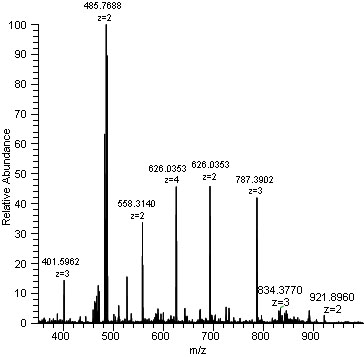
Mass spectrometry is based on the principle that ions can be separated based on their mass-to-charge ratio, typically using static or oscillating magnetic fields. The process begins by ionizing molecules from the sample, usually by passing them through an electron beam. The resulting ions are unstable and fragment into lighter ions according to their chemical structure. The resulting spectrum is known as a mass spectrometry (MS) spectrum.
Types of Ions in Mass Spectrometry
When performing mass spectrometry, you’ll encounter various types of ions that can form during ionization. The most useful ones are:
- Molecule ions
- Isotopic ions
- Fragment ions
- Metastable ions
- Multicharged ions
- Ion-interaction ions
- Negative ions
These ions provide valuable information about the substance’s structure and composition.
Determining Structure with Mass Spectrometry
To determine a substance’s structure, you have two approaches:
- Top-down approach: Starting from the molecule ion, analyzing fragments to understand its structure.
- Bottom-up approach: Analyzing fragments to determine the structure of smaller molecules, which can be combined to form larger molecules.
Mass spectrometry is also used to study the composition of air samples, including volatile organic compounds (VOCs).
The Mass Spectrometer: A Tool for Analysis
The mass spectrometer is an instrument that measures the mass of ions. It separates ions with different masses based on their charge-to-mass ratio. There are specialized detectors and instruments designed for specific types of analysis, such as isotopic abundance measurement.
For example, the magnetically tuned detector developed by Arthur Jeffrey Dempster in 1920 and later improved upon by Francis William Aston is specifically designed to measure isotopic abundances.
Dating Ancient Artifacts with Mass Spectrometry
Mass spectrometry has been used to date ancient artifacts with greater precision. In 2018, a team of researchers from Germany used mass spectrometry to date the Idolo di Sigir, an ancient wooden statue found in Russia. The result revealed that it was created around 11,500 years ago, making it one of the oldest known wooden sculptures.
This discovery highlights the power of mass spectrometry in providing new insights into our past.
Applications of Mass Spectrometry
Mass spectrometry has a wide range of applications across various fields, including:
- Chemistry: Mass spectrometry is used to identify and analyze unknown substances, as well as to study the structure and composition of molecules.
- Physics: Mass spectrometry is used to study the properties of matter at the atomic and molecular level.
- Biology: Mass spectrometry is used to study the structure and function of biomolecules, such as proteins and nucleic acids.
Consequences of Mass Spectrometry
The consequences of mass spectrometry are significant, both scientifically and practically. Some of these consequences include:
- Improved Understanding of Matter: Mass spectrometry provides a detailed understanding of the structure and composition of molecules, which has led to numerous breakthroughs in chemistry and physics.
- Advancements in Medicine: Mass spectrometry is used to study the structure and function of biomolecules, which has led to the development of new medicines and treatments.
- Environmental Monitoring: Mass spectrometry is used to study the composition of air samples, including volatile organic compounds (VOCs), which helps us understand and mitigate environmental pollution.
Limitations of Mass Spectrometry
Mass spectrometry has its limitations, such as requiring large amounts of sample material and being less sensitive for small quantities of substances. However, these limitations can be overcome with advancements in technology and instrumentation.
Future Directions
The future of mass spectrometry is exciting, with ongoing research and development focused on improving the technique’s sensitivity, specificity, and efficiency. Some potential areas of focus include:
- High-Throughput Analysis: Developing high-throughput analysis techniques that allow for the rapid analysis of large numbers of samples.
- Machine Learning Applications: Developing machine learning algorithms that can be used to analyze mass spectrometry data and identify patterns and trends.
- Synthetic Biology: Using mass spectrometry to study the structure and function of biomolecules, which has led to the development of new medicines and treatments.
Conclusion
Mass spectrometry is a powerful analytical technique used to identify and analyze unknown substances. Its applications extend beyond chemistry and physics, with implications for art history and archaeology. By understanding how mass spectrometry works and its various techniques, researchers can gain valuable insights into the nature of substances and their composition.
FAQs
- What is mass spectrometry used for?
Mass spectrometry is an analytical technique used to identify unknown substances, analyze their structure, and determine their composition. - How does mass spectrometry work?
Mass spectrometry works by ionizing molecules from a sample and separating the resulting ions based on their mass-to-charge ratio using magnetic fields or other methods. - What types of ions are present in mass spectrometry?
The most useful ions in mass spectrometry include molecule ions, isotopic ions, fragment ions, metastable ions, multicharged ions, and ion-interaction ions. - How do you determine a substance’s structure using mass spectrometry?
To determine a substance’s structure, researchers can use either the top-down or bottom-up approaches. - What are some applications of mass spectrometry beyond chemistry and physics?
Mass spectrometry has implications for art history and archaeology. - How precise is the dating of ancient artifacts using mass spectrometry?
The results from mass spectrometry can provide more accurate dates than those obtained through other methods like radiocarbon dating. - What are some limitations of mass spectrometry?
Mass spectrometry has its limitations, such as requiring large amounts of sample material and being less sensitive for small quantities of substances.
By answering these frequently asked questions about mass spectrometry, you can gain a better understanding of this powerful analytical technique and its applications.


