
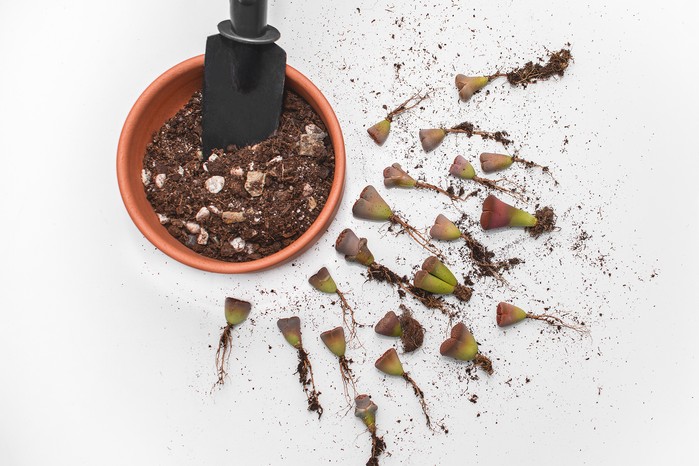
As a succulent enthusiast, you’ve probably come across Lithops, also known as “living stones” or “stone plants.” These unique plants have captivated many with their miniature, stone-like appearance and low-maintenance requirements. In this article, we’ll delve into the world of Lithops, exploring their care, cultivation, and propagation.
Choosing the Right Species
With over 90 species of Lithops, it can be overwhelming to decide which one to cultivate. Here are some popular and easy-to-grow species:
- Lithops salicola: A favorite among succulent enthusiasts, this species produces large white flowers and can grow up to 3 cm tall.
- Lithops bromfieldii: This species produces yellow flowers and has a unique, rounded shape.
- Lithops pseudotruncatella groendrayensis: Similar to Lithops salicola, but with a uniform green color.
Caring for Your Lithops
To keep your Lithops thriving, follow these care guidelines:
Lighting and Temperature
Place your Lithops in full sun to partial shade. They can tolerate high temperatures (up to 23°C) but prefer cooler temperatures between 17-20°C.
Watering
Unlike other succulents, Lithops don’t require frequent watering. In fact, they’re adapted to dry environments and should be watered sparingly:
- Water your Lithops with a nebulizer during the growing season (spring-fall).
- Reduce watering during the winter months when the plant is dormant.
- Avoid getting water on the leaves or crown, as this can cause rot.
Soil
Use a well-draining potting mix specifically designed for cacti and succulents. A mix of sand, perlite, and organic matter will provide your Lithops with the necessary nutrients.
Fertilization
Lithops don’t require fertilization, but if you want to give them an extra boost, use a balanced, water-soluble fertilizer at half the recommended strength.
Propagation and Division
To propagate your Lithops, follow these steps:
- Sowing seeds: Sow seeds on a moistened paper towel or seed starting mix. Keep the soil consistently moist until germination (usually 1-3 weeks).
- Dividing plants: Divide established plants in the spring when they’re actively growing. Use a sharp knife or pruning tool to separate the offsets.
Common Issues and Troubleshooting
If you encounter any issues with your Lithops, here are some common problems and solutions:
| Issue | Solution |
|---|---|
| Overwatering | Reduce watering and improve drainage. |
| Underwatering | Increase watering during the growing season. |
| Pests | Inspect plants regularly for pests like mealybugs or spider mites. |
Tips for Growing Lithops Indoors
Growing Lithops indoors can be a rewarding experience, but it requires some special considerations:
- Lighting: Make sure your Lithops receive sufficient light (at least 4 hours of direct sunlight per day) to prevent weak and spindly growth.
- Temperature: Keep the temperature between 17-23°C to ensure optimal growth.
- Humidity: Maintain a relatively low humidity level (around 40-50%) to prevent fungal diseases.
Propagation Methods for Lithops
In addition to sowing seeds, there are several other methods of propagation that you can use:
- Leaf cuttings: Take leaf cuttings from mature plants and allow them to dry out for a few days before planting.
- Stem cuttings: Cut the stems of young plants and allow them to dry out for a few days before planting.
Tips for Caregiving Lithops
To keep your Lithops thriving, follow these tips:
- Monitor temperature: Keep an eye on the temperature and adjust it if necessary.
- Watch for pests: Regularly inspect your plants for signs of pests or diseases.
- Avoid overwatering: Be careful not to overwater your Lithops, as this can lead to root rot.
Conclusion
Lithops are fascinating, low-maintenance plants that can add a touch of uniqueness to your succulent collection. By following these care guidelines and propagation tips, you’ll be well on your way to becoming a Lithops expert.
Frequently Asked Questions (FAQs)
1. What is the best time to propagate Lithops?
The best time to propagate Lithops is in the spring when they’re actively growing.
2. How often should I water my Lithops?
Water your Lithops sparingly, usually once a month during the summer months and less frequently during the winter months.
3. Can I fertilize my Lithops?
While Lithops don’t require fertilization, you can use a balanced, water-soluble fertilizer at half the recommended strength to give them an extra boost.
4. How do I propagate Lithops seeds?
To propagate Lithops seeds, sow them on a moistened paper towel or seed starting mix and keep the soil consistently moist until germination (usually 1-3 weeks).
5. Can I grow Lithops in indoor conditions?
Yes, Lithops can thrive in indoor conditions as long as they receive sufficient light (at least 4 hours of direct sunlight per day) and are kept at a comfortable temperature between 17-23°C.
6. Are Lithops toxic to humans or pets?
Lithops are non-toxic to humans and pets, but it’s still important to keep an eye on your plants to ensure they don’t get damaged or eaten by pets.
7. Can I grow Lithops in pots or planters?
Yes, Lithops can be grown in pots or planters, as long as the pot has good drainage holes and is well-ventilated.
8. How long do Lithops take to bloom?
Lithops typically bloom within 1-3 years after planting, depending on factors like light, temperature, and watering conditions.


