
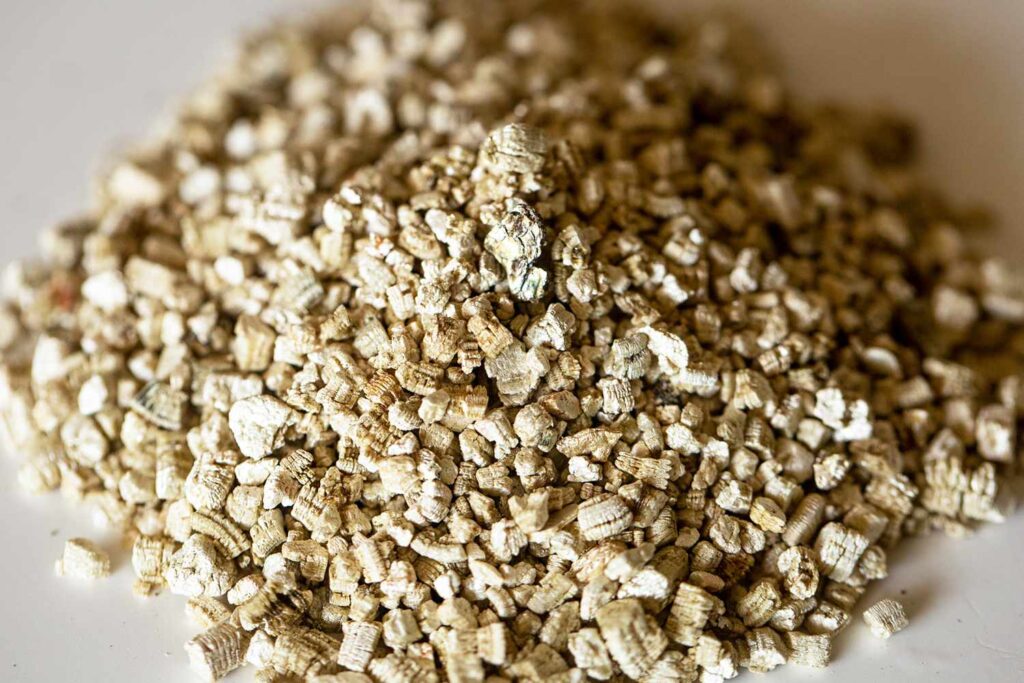
Vermiculite is a versatile mineral that has been widely used in both construction and agriculture for its unique properties. By undergoing a thermal treatment process known as “exfoliation” at extremely high temperatures, the vermiculite expands up to thirty times its original volume and loses its water content, resulting in a granular, eco-friendly, and chemically inert product that is used as an excellent isolating material.
In this article, we’ll delve into where vermiculite is mined naturally, its key characteristics, how it’s utilized in building and agriculture, its applications, costs, and more.
Where Vermiculite is Mined Naturally
This mineral can be found in various parts of the world, including Africa, Australia, but primarily in America. The most prominent deposits are located in North Carolina, Montana, Pennsylvania, Colorado, Argentina, and Canada. It often occurs where there’s contact between intrusive and basic rocks or areas with argillaceous tendencies.
Key Characteristics of Vermiculite
In addition to its exceptional insulating properties, vermiculite has several other interesting characteristics that make it a valuable material for various applications in construction, agriculture, and horticulture. Some of its notable features include:
- Refractivity: It is capable of reducing the thermal conductivity of materials.
- Combustibility: Non-flammable
- Atoxicity: Chemical stability and non-toxic nature make it a safe choice for various applications.
- Permeability: Impermeable to gases and liquids
- Odor: Inodorous
- Humidity regulation: Excellent at regulating humidity levels
- Stability over time: Highly resistant to degradation and long-lasting
Utilization of Vermiculite
Vermiculite is utilized in a wide range of applications, including:
- As an insulator for heat and sound
- In industrial settings for insulation purposes
- For making fonoassorbenti intonaci antincendio products
- For packaging hazardous materials
- In agriculture and horticulture
Uses of Vermiculite in Building
In the construction industry, vermiculite is primarily used as an insulating material. It’s available in various types, including:
- Calcestruzzo: Fine-grained type for high performance insulation applications
- Medium type: Mid-range grade suitable for general insulation needs
- Fine type: Coarser particle size ideal for decorative or aesthetic purposes
Uses of Vermiculite in Agriculture
In agriculture and horticulture, vermiculite is used extensively. It’s particularly useful:
- As a cover material for seed trays to reduce moisture loss and promote germination
- As an amendment in potting mixes due to its sterile nature, high water-holding capacity, and light weight
- As a fertilizer and soil conditioner
Curious Uses of Vermiculite
While primarily used as an insulating material, vermiculite has several other unconventional uses:
- In terrarium building for maintaining humidity levels
- As a substrate in mushroom cultivation, particularly for the cultivation of Psilocybe cubensis
- In decorative purposes due to its unique appearance
Where to Buy Vermiculite and Cost
Vermiculite is widely available from specialized retailers selling construction materials, agricultural supplies, or gardening products. Prices can vary depending on quantity:
- A 5-liter bag of vermiculite costs around €11.84
- Larger quantities (50 liters) may cost between €18-€24
Prices can fluctuate based on local suppliers and their offerings.
For more information about using humidity control, check out our related article on risalita moisture levels.
Alternatives to Vermiculite
While vermiculite is a unique material with several benefits, there are other insulation materials available that may be suitable for specific applications. Some alternatives include:
- Fiberglass
- Cellulose insulation
- Recycled denim insulation
- Spray foam insulation
Precautions When Handling Vermiculite
When handling vermiculite, it’s essential to take precautions to avoid exposure to its particles and minimize the risk of respiratory problems. Some guidelines include:
- Wear protective clothing, including a face mask, gloves, and safety glasses
- Use a dust-suppressing spray or vacuum cleaner when handling large quantities
- Avoid inhaling vermiculite particles
Conclusion
Vermiculite is an excellent isolating material with numerous benefits for various applications. Its unique properties make it a valuable resource in construction, agriculture, and horticulture. By understanding where to buy vermiculite, its uses, and costs, individuals can explore its potential applications and make informed decisions about their projects.
For more information on this topic, check out our related article on the benefits of insulation in buildings.
This content was created by Evelyn Baleani on July 22, 2021.


