
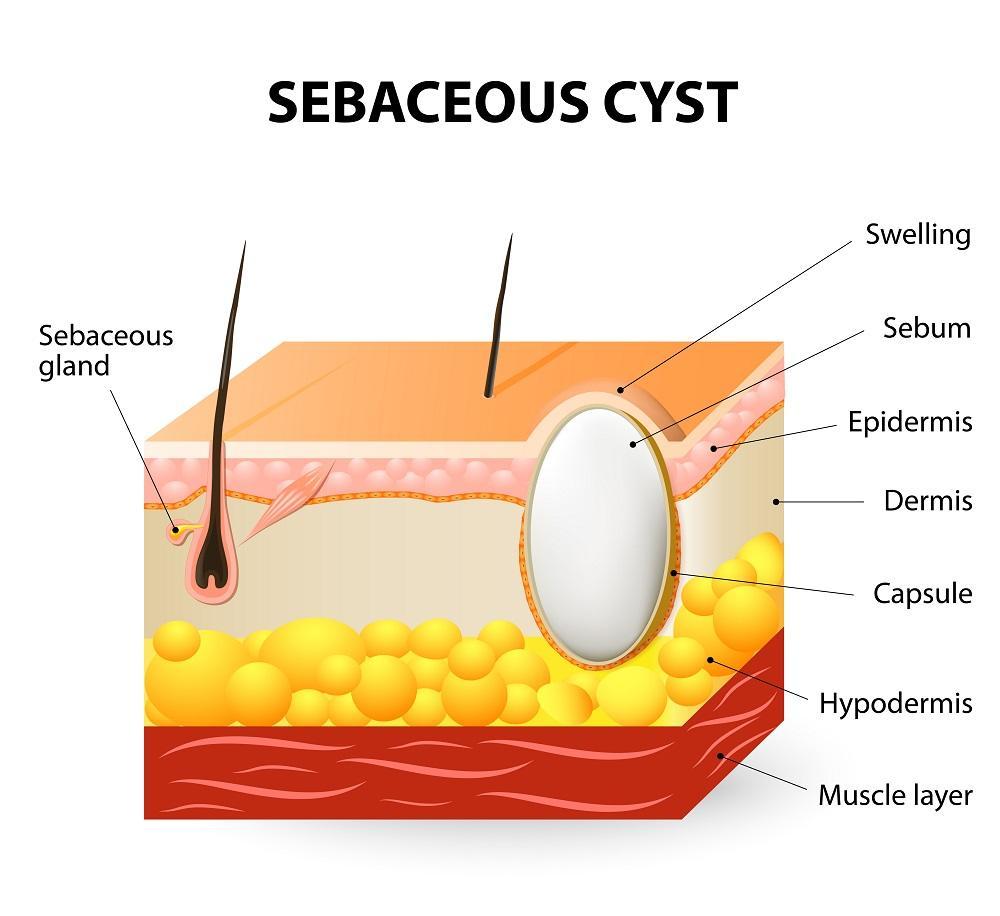
Sebaceous cysts are a common type of non-cancerous skin growth that can appear on the face, neck, or torso. These fluid-filled sacs can grow slowly over time, but they usually don’t cause any harm to your health unless they become large enough to be noticeable.
What Causes Sebaceous Cysts?
Sebaceous cysts are formed when the sebaceous gland, which produces an oily substance called sebum, becomes blocked or damaged. This blockage can occur due to a trauma, such as a cut or scratch, or due to other underlying conditions like a deformed duct or damage during surgery.
Other causes of sebaceous cysts include genetic disorders like Gardner syndrome or basal cell nevus syndrome. These conditions can increase your risk of developing sebaceous cysts, but it’s essential to note that not everyone with these conditions will develop cysts.
Symptoms of Sebaceous Cysts
Sebaceous cysts are usually not painful, but large ones can be quite uncomfortable and even painful. Large cysts on the face and neck can cause pressure and discomfort, while smaller ones might not be noticeable at all. The most common areas where sebaceous cysts occur include:
- Scalp
- Face
- Neck
While most sebaceous cysts are soft to the touch, some larger ones may feel firm or hard.
Diagnosing Sebaceous Cysts
A healthcare professional will typically diagnose a sebaceous cyst after a simple physical examination. If the cyst is unusual, additional tests might be ordered to rule out cancer. These tests can include:
- X-rays (CT scans)
- Ultrasound
- Biopsy
In some cases, a biopsy might be necessary to confirm that the growth is not cancerous.
Treatment Options for Sebaceous Cysts
The primary goal of treatment is usually to remove the cyst and alleviate any discomfort it may cause. Treatment options include:
- Drenaging: This involves draining the cyst with a needle or surgical incision.
- Chirurgical removal: Surgical excision can be done to completely remove the cyst, often resulting in minimal scarring.
There are two main methods of surgical removal:
- Conventional excision: This method involves cutting the skin around the cyst and removing it entirely, leaving a noticeable scar.
- Minimal excision: This approach leaves a smaller scar while still removing the cyst, but carries a risk that the cyst may return.
A laser can also be used to remove some parts of the cyst along with a biopsy to check for cancer cells. The laser creates an opening into the cyst and allows doctors to drain its contents while preserving as much skin tissue as possible.
Surgical Removal: What to Expect
If surgical removal is necessary, it’s essential to understand what to expect during the procedure:
- Preparation: You will be given local anesthesia to numb the area. This may involve injecting a numbing agent into the surrounding skin.
- Incision: The surgeon will make an incision in the skin to access the cyst.
- Removal: The cyst is then removed, and any damaged tissue is repaired.
- Closure: The incision is closed with stitches or staples.
Aftercare
Following surgical removal, you can expect some swelling, redness, and bruising around the affected area. To promote healing:
- Keep the wound clean and dry
- Apply antibiotic ointment to reduce the risk of infection
- Take pain medication as directed by your doctor
- Avoid heavy lifting or strenuous activities for several days
Conclusion
Sebaceous cysts are generally non-cancerous, but large ones can become uncomfortable. While they don’t typically harm your health, it’s best to have them removed if you find them aesthetically unpleasing or causing discomfort. The choice of treatment depends on the size and location of the cyst, as well as your personal preferences.
Frequently Asked Questions
- Can sebaceous cysts cause cancer?
- While not typically cancerous themselves, sebaceous cysts can become infected.
- What are the symptoms of a sebaceous cyst?
- Generally not painful, but large ones can be uncomfortable and even painful
- How are sebaceous cysts diagnosed?
- Typically diagnosed after a physical examination, with additional tests ordered if necessary
- Can sebaceous cysts be treated without surgery?
- Sometimes possible, but often requires removal for aesthetic or comfort reasons
- Are there any complications from sebaceous cyst treatment?
- Rarer risks include infection and scarring
Preventing Sebaceous Cysts
While it’s not always possible to prevent sebaceous cysts entirely, you can take steps to reduce your risk:
- Maintain good skin hygiene by washing your face regularly
- Avoid picking or popping pimples or other skin lesions
- Wear protective clothing and sunscreen when spending time outdoors
By understanding the causes, symptoms, and treatment options for sebaceous cysts, you can make informed decisions about your care. If you’re concerned about a sebaceous cyst, consult with a healthcare professional to determine the best course of action.
Lifestyle Changes to Reduce Risk
In addition to maintaining good skin hygiene and wearing protective clothing, here are some lifestyle changes that may help reduce your risk of developing sebaceous cysts:
- Eat a balanced diet rich in fruits, vegetables, and whole grains
- Stay hydrated by drinking plenty of water
- Get regular exercise to improve circulation and overall health
By adopting these habits, you can promote healthy skin and reduce your risk of developing sebaceous cysts.
Natural Remedies for Sebaceous Cysts
While there are no guaranteed natural remedies for sebaceous cysts, some people have reported success with certain treatments:
- Tea tree oil: Some studies suggest that tea tree oil may help reduce inflammation and promote healing
- Aloe vera: Aloe vera has anti-inflammatory properties that may help soothe the skin and reduce swelling
- Coconut oil: Coconut oil is rich in fatty acids that may help nourish the skin and promote healing
It’s essential to note that these remedies should not be used as a replacement for medical treatment. Consult with a healthcare professional before trying any new treatments, especially if you have a pre-existing condition or are taking medications.
Conclusion
Sebaceous cysts can appear on anyone, regardless of age, sex, or skin type. While they’re generally non-cancerous, large ones can cause discomfort and affect self-esteem. By understanding the causes, symptoms, and treatment options for sebaceous cysts, you can make informed decisions about your care.
Treatment options range from drenaging to surgical removal, each with its own benefits and risks. In some cases, a biopsy may be necessary to rule out cancer.
By taking steps to prevent sebaceous cysts and adopting healthy lifestyle habits, you can reduce your risk of developing these skin growths.
Additional Resources
If you’re concerned about a sebaceous cyst or need more information, consider consulting with the following resources:
- National Institute of Skin and Cancer
- American Academy of Dermatology
- Mayo Clinic
These organizations offer reliable information on sebaceous cysts, treatment options, and lifestyle changes to promote healthy skin.
Conclusion
Sebaceous cysts are a common condition that can affect anyone. While they’re generally non-cancerous, it’s essential to understand their causes, symptoms, and treatment options.
By making informed decisions about your care, you can reduce the risk of developing sebaceous cysts and promote healthy skin.
What to Expect After Sebaceous Cyst Treatment
After treatment for a sebaceous cyst, you may experience some changes in your skin. Here are some things to expect:
- Swelling: The treated area may be swollen or red for several days after surgery.
- Scarring: Depending on the size and location of the cyst, scarring may occur.
- Infection: There is a small risk of infection with any surgical procedure. Follow your doctor’s instructions to minimize this risk.
- Healing time: The healing process can take several weeks or even months.
How to Care for Yourself After Sebaceous Cyst Treatment
To ensure proper healing and minimize complications, follow these tips:
- Keep the wound clean: Gently wash the treated area with soap and water twice a day.
- Apply antibiotic ointment: This can help reduce the risk of infection.
- Take pain medication: Follow your doctor’s instructions for managing pain after surgery.
- Avoid strenuous activities: Give yourself time to rest and recover before returning to your normal routine.
What to Do if You Experience Complications
If you experience any complications, such as increased swelling or redness, contact your doctor immediately. They can provide guidance on how to manage the issue and may need to take further action.
Sebaceous Cyst Treatment: A Comprehensive Guide
Sebaceous cysts are a common type of skin growth that can appear anywhere on the body. These fluid-filled sacs are usually non-cancerous, but large ones can become uncomfortable and affect self-esteem.
Treatment options for sebaceous cysts range from drenaging to surgical removal, each with its own benefits and risks. In some cases, a biopsy may be necessary to rule out cancer.
By understanding the causes, symptoms, and treatment options for sebaceous cysts, you can make informed decisions about your care. Treatment typically involves removing the cyst, either by draining it or surgically excising it.


