
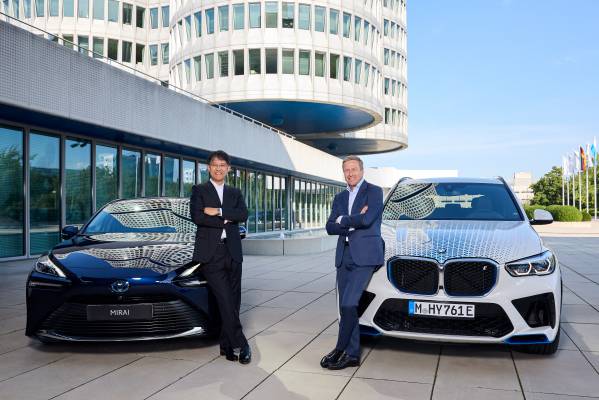
The FCEV Alliance: A Strategic Partnership Between Big Players in the Mobility Industry
As we explore the future of sustainable mobility, a new alliance is being formed between some of the world’s leading companies in the automotive and energy sectors. Daimler, Renault-Nissan, and Ford have joined forces to accelerate the commercialization of Fuel Cell Electric Vehicles (FCEVs), also known as hydrogen fuel cell vehicles.
What are FCEVs?
Let’s take a step back and understand how these innovative vehicles work. A FCEV uses hydrogen as its primary source of energy, which is combined with oxygen to produce electricity. This electricity powers the vehicle, resulting in zero emissions. The only byproduct of this process is water.
The Alliance: A Strategic Partnership for Sustainable Mobility
The agreement between Daimler, Renault-Nissan, and Ford aims to develop a common system based on hydrogen fuel cell technology. This will facilitate the widespread adoption of FCEVs, which are seen as a crucial step towards reducing greenhouse gas emissions from transportation.
Benefits of the Alliance
By joining forces, the three companies can reduce their individual investment costs, making FCEVs more competitive in the market. However, this collaboration also raises concerns about reduced competition and limited product diversity.
When Can We Expect to See FCEVs on the Market?
The timeline for the launch of FCEVs is impressive. The partnership is expected to yield its first concrete results by mid-2017, with the introduction of the world’s first commercially available FCEV. This milestone marks a significant step towards making sustainable mobility a reality.
Investment and Infrastructure
The investment in this initiative will be evenly distributed among the three companies. The collaboration is also necessary to reduce costs associated with developing hydrogen fuel cell technology.
A Global Alliance for Sustainable Mobility
This partnership brings together companies from Europe, America, and Asia, sending a strong message to suppliers, policymakers, and the industry as a whole: it’s time to focus on developing infrastructure that supports the widespread adoption of FCEVs.
Key Features of FCEVs
FCEVs have several advantages over traditional vehicles:
- Zero emissions
- Only water is produced as a byproduct
- Powered by electricity generated from hydrogen and oxygen
Market Penetration and Future Prospects
While some companies, such as Hunday, Kia Motors, Honda, and Toyota, have already developed FCEVs, there’s still a need for significant market penetration. The new alliance may help drive adoption and make sustainable mobility more accessible to the masses.
Challenges Ahead
Despite the potential of FCEVs, several challenges must be addressed:
- Hydrogen production costs
- Infrastructure development
- Public acceptance
Conclusion
The FCEV alliance represents a significant step forward in the quest for sustainable mobility. By working together, these industry leaders can accelerate the development and commercialization of hydrogen fuel cell vehicles, paving the way for a cleaner, greener future.
FAQs
- What is the purpose of the FCEV alliance?
The partnership aims to accelerate the commercialization of Fuel Cell Electric Vehicles (FCEVs) by developing a common system based on hydrogen fuel cell technology. - How will the investment be distributed among the companies?
The investment will be evenly distributed among Daimler, Renault-Nissan, and Ford. - When can we expect to see FCEVs on the market?
The partnership is expected to yield its first concrete results by mid-2017, with the introduction of the world’s first commercially available FCEV. - What is the significance of this global alliance?
This partnership brings together companies from Europe, America, and Asia, emphasizing the need for infrastructure development that supports the widespread adoption of FCEVs. - How do FCEVs compare to traditional vehicles in terms of emissions?
FCEVs have zero emissions, producing only water as a byproduct.
Industry Trends and Insights
The automotive industry is rapidly evolving, driven by technological advancements, changing consumer preferences, and increasing environmental concerns. The development of sustainable mobility solutions like FCEVs is expected to play a crucial role in shaping the future of transportation.
Hydrogen Fuel Cell Technology: A Key Enabler for Sustainable Mobility
Hydrogen fuel cell technology has been gaining momentum in recent years, driven by its potential to power zero-emission vehicles. The partnership between Daimler, Renault-Nissan, and Ford marks an important milestone in this journey.
Challenges and Opportunities in the Development of FCEVs
While significant progress is being made in the development of FCEVs, several challenges must be addressed:
- Hydrogen production costs
- Infrastructure development
- Public acceptance
Despite these challenges, there are opportunities for growth and innovation:
- Advancements in fuel cell efficiency
- Improved hydrogen storage technologies
- Increased public awareness and acceptance
Future of FCEVs: Market Penetration and Adoption
The widespread adoption of FCEVs will depend on several factors, including market penetration, regulatory support, and technological advancements.
Conclusion
The FCEV alliance represents a significant step forward in the quest for sustainable mobility. By working together, these industry leaders can accelerate the development and commercialization of hydrogen fuel cell vehicles, paving the way for a cleaner, greener future.


